Quick Facts
- Fill Power measures the "loft" or quality of down (cubic inches per ounce), while Fill Weight measures the total amount of down inside the jacket.
- 800-fill-power down provides about 33% more loft and compressibility per ounce than 600-fill down, making it the gold standard for backcountry expeditions.
- The warmest jackets aren't just high fill power; they combine high quality with high quantity (fill weight).
- Waterproof ratings of 20,000 MM offer double the moisture resistance of entry-level shells, crucial for preventing down from getting wet and losing its heat.
Introduction: The Secret to Surviving the Deep Freeze
I still remember a late-November trek in the High Sierras where I learned the hard way that "puffy" doesn't always mean "warm." I was wearing a brand-new, expensive-looking down jacket, but as the sun dipped behind the peaks and the temperature plummeted into the teens, I felt the chill seeping through. Meanwhile, my buddy was grinning in a jacket half as thick as mine.
That was the day I realized that buying a winter jacket without understanding technical specs is a gamble you usually lose. In the world of outdoor gear, there is a massive difference between a jacket designed to look good at a ski resort and one engineered to keep you alive in sub-zero conditions. If you’ve ever found yourself staring at a hangtag wondering why one "800-fill" jacket costs $200 and another costs $800, you aren't alone.
The truth is, understanding warmth is about more than just one number. It’s an equation of quality, quantity, and construction. Whether you are prepping for a solo expedition or just trying to survive a brutal commute, this guide will break down the science of down so you never have to shiver through a winter again.
What Exactly is Down Fill Power?
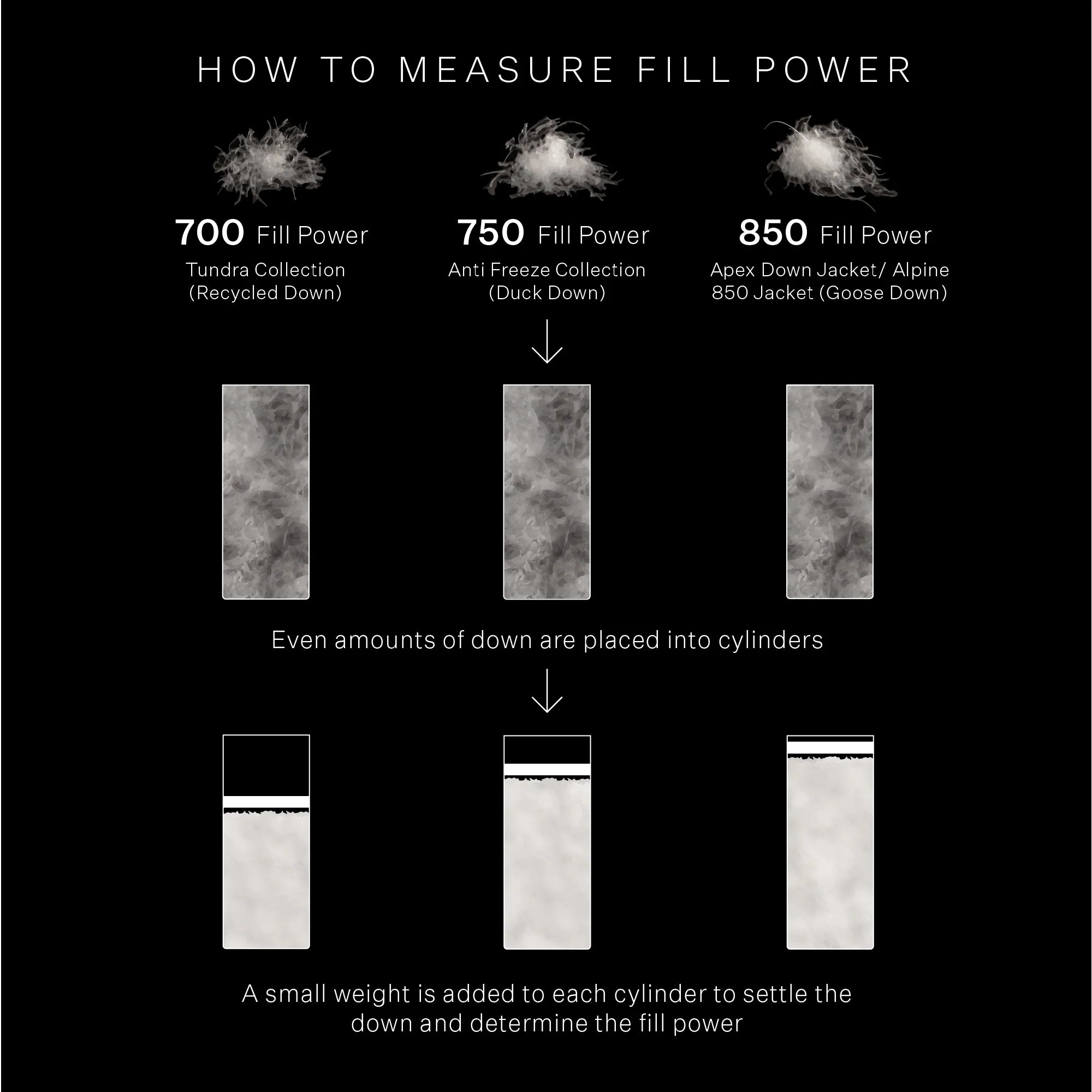
When we talk about "Fill Power," we are talking about quality. Specifically, down fill power is a measurement of loft, representing how many cubic inches one ounce of down occupies. Think of it as the "fluffiness" factor.
In a laboratory, one ounce of down is placed in a graduated cylinder and compressed. The volume it occupies after the weight is removed is the fill power. An 800-fill power down occupies 800 cubic inches per ounce, while 600-fill occupies only 600.
Why does this matter? Because down doesn't actually generate heat; it traps the heat your body already produces. The more "loft" or air pockets the down creates, the more heat is trapped. We've found in our comparative testing of premium winter parkas that 800-fill-power down offers approximately 33% more loft and compressibility per ounce compared to standard 600-fill-power down. This means you can get the same amount of warmth with significantly less weight and bulk.
Fill Power Comparison Table
| Fill Power | Quality Tier | Best Use Case | Compressibility |
|---|---|---|---|
| 600 - 650 | Entry/Mid-Level | Casual winter wear, heavy parkas | Moderate |
| 700 - 750 | Performance | Skiing, mountaineering, high-end lifestyle | High |
| 800 - 900+ | Ultralight/Elite | Alpine climbing, ultralight backpacking | Extreme |
The Warmth Equation: Fill Power vs. Fill Weight
This is where most people get tripped up. I see it all the time: someone buys a super-thin "800-fill" ultralight hoodie and wonders why they are freezing in a blizzard.
The total warmth of a jacket is determined by the combination of fill power (quality) and fill weight (quantity).
Think of it like insulation in your attic. Fill power is the type of insulation (fiberglass vs. foam), while fill weight is the thickness of the layer. An 800-fill jacket with only 3 ounces of down is a "mid-layer"—perfect for active use but not enough to stand still in the cold. Conversely, a heavy expedition parka might use 12 ounces of 650-fill down. Even though the down quality is lower, there is so much more of it that the parka ends up being significantly warmer than the ultralight 800-fill jacket.
Visualizing the Loft: How Air Pockets Create the Thermal Barrier
To stay warm, you need "dead air." High fill power down is comprised of thousands of tiny plumules that branch out to trap air. When you have a high fill weight of high fill power down, you create a massive, lightweight barrier that prevents your body heat from escaping into the freezing environment. This is why high-end gear feels so "airy"—it’s literally mostly air.
Marcus’s Pro Tip: If you're looking for a "standing around" jacket—like for a football game or waiting for a bus—look for a jacket with a high fill weight (at least 200g/7oz of down). If you're moving fast and climbing, prioritize fill power (800+) to keep the weight down.
Down vs. Synthetic: Which is Right for Your Climate?
The "Down vs. Synthetic" debate is the oldest one in the outdoors, and the answer depends entirely on your local weather.
Down insulation is ideal for dry, freezing climates due to its lightweight heat retention and unmatched longevity. If you take care of a down jacket, it can last 10–20 years. However, down has a fatal flaw: if it gets wet, the plumules collapse, the air pockets disappear, and you lose almost all your warmth.
Synthetic insulation is preferred for wet environments because the polyester fibers are moisture-resistant. They maintain their loft and warmth even when damp. If you're hiking in the Pacific Northwest or the UK where "cold and rainy" is the standard, synthetic is your best friend.
Comparing the Materials
Down Insulation
- Pros: Best warmth-to-weight ratio, extremely compressible, stays lofty for decades.
- Cons: Expensive, useless when wet, requires specialized cleaning.
Synthetic Insulation
- Pros: Works when wet, dries quickly, more affordable, hypoallergenic.
- Cons: Heavier, bulkier, breaks down and loses warmth after a few seasons of compression.

Weatherproofing the Shell: Membranes and DWR
Even the best down in the world is useless if the outer shell lets water in. When you're shopping, you need to look at the "face fabric." Most down jackets use nylon or polyester, but the secret is in the coating and the membrane.
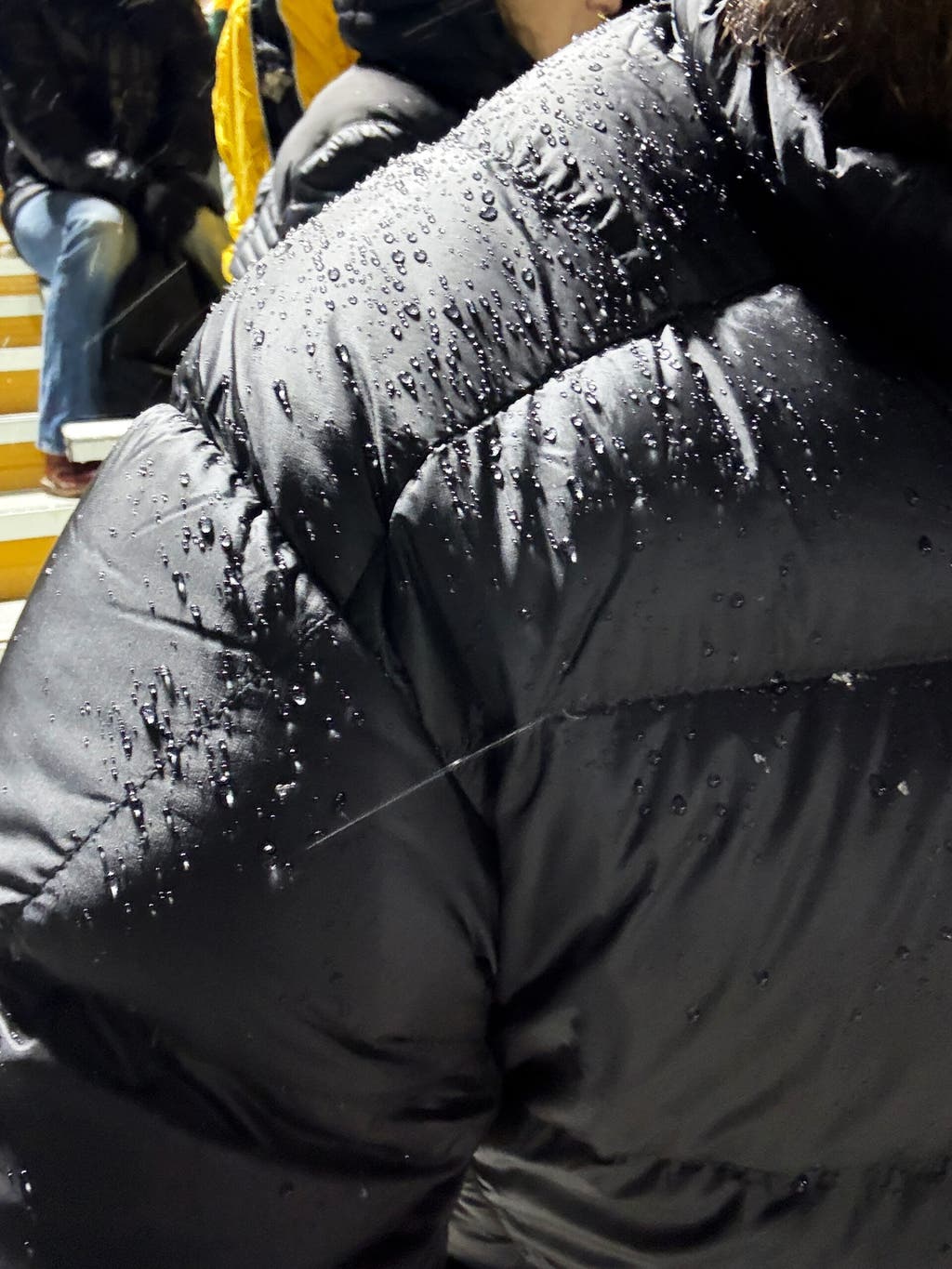
Standard jackets often come with a DWR (Durable Water Repellent) coating. This isn't "waterproof"; it just makes water bead off the surface. For real protection in snow or sleet, you need a waterproof-breathable membrane like Gore-Tex or Pertex.
The industry uses a "Millimeter (MM)" scale to rate waterproofness. We’ve found that premium 20,000 MM membranes provide 100% more moisture pressure resistance than entry-level 10,000 MM shells. If you're going to be in heavy snow for hours, that 20k rating is the difference between staying dry and having your down turn into a soggy, cold mess.
Critical Features Beyond Insulation
I’ve tested jackets that had amazing down but failed because of "cold spots." When you're choosing your layer, look for these design details that separate the pros from the amateurs:
- Baffle Construction: Look for "Box-Wall" construction in heavy parkas. This means each section of down is a 3D box, preventing the down from shifting and creating thin, cold spots. "Stitch-through" construction is lighter but allows heat to leak through the seams.
- Hood Design: A good winter hood should be insulated and have a "cinch" to seal out the wind. For extreme cold, a ruff (natural or synthetic fur) creates a pocket of warm air in front of your face, protecting your skin from frostbite.
- Draft Management: Check for a "storm flap" over the main zipper. Zippers are notorious for letting cold air in. Internal elasticized cuffs (gaiters) are also a must-have to keep snow out of your sleeves.
- Storage: I always look for internal mesh "drop pockets." These are perfect for keeping your water bottle or climbing skins warm using your body heat.

Explore Professional Expedition Parkas →
Ethics and Sourcing: What to Look For
In 2025, there is no reason to buy a jacket that doesn't prioritize animal welfare. The down industry has made massive strides in transparency. When you see the RDS (Responsible Down Standard) or Global TDS (Traceable Down Standard) logo, it means the down was not sourced from birds that were live-plucked or force-fed.
Beyond the ethics, traceable down often correlates with higher quality. Brands that care about where their down comes from usually care about how it’s processed, cleaned, and sorted, leading to a longer-lasting and higher-performing product.
Conclusion: Selecting Your Perfect Winter Layer
Choosing the right jacket isn't about finding the highest number on the shelf; it's about matching the tool to the task.
If you are an active explorer—skiing, snowshoeing, or climbing—focus on high fill power (800+) and low fill weight to maximize breathability and packability. If you are a static observer—walking the dog in Minnesota or standing on a frozen lake—forget the "ultralight" gear and go for a heavy-duty parka with a high fill weight and a durable 20,000 MM shell.
Winter is beautiful, but only if you're warm enough to enjoy it. Check your labels, understand your "warmth equation," and I'll see you out there in the snow.
FAQ
Q: Is 800 fill power always warmer than 600 fill power?
A: Not necessarily. 800 fill power is higher quality, but if the 600-fill jacket has twice as much down (fill weight), it will be warmer. Always look at both numbers.
Q: Can I wash my down jacket at home?
A: Yes, but never use regular detergent, which strips the natural oils from the down. Use a specific "Down Wash" and tumble dry on low heat with 3–4 clean tennis balls to "beat" the clumps out and restore the loft.
Q: How do I know if a jacket is waterproof or just water-resistant?
A: Look for the MM rating. If it’s 10,000 MM or higher and has "taped seams," it is waterproof. If it only lists "DWR," it is merely water-resistant and will eventually soak through in steady rain.
Join the Adventure
Found this guide helpful? Subscribe to our newsletter for more field-tested gear reviews and expedition stories delivered straight to your inbox.