Quick Facts
- Mechanical Simplicity: Hardtails feature suspension only in the front fork, while full-suspension bikes have a rear shock and a complex system of pivots and bearings.
- The Weight Divide: A high-quality hardtail, such as the Ibis DV9, can weigh as little as 26 lbs 8 oz—often 4 to 6 pounds lighter than a full-suspension bike at the same price point.
- Maintenance Math: Expect to shell out an additional $200 to $400 annually for full-suspension upkeep, covering rear shock servicing and pivot bearing replacements.
- Skill vs. Forgiveness: Hardtails demand precise "line choice" and body positioning, making them incredible tools for skill-building, whereas full-suspension bikes offer more "forgiveness" on chunky, technical descents.
The Great MTB Debate: Hardtail vs. Full-Squish
Mountain bikes are expensive—there is no way around it. It feels like every year the prices creep higher, and the technology gets more complex. I remember my first real mountain bike; it was a rigid steel frame that rattled my teeth out on every descent. Today, we are spoiled for choice. But that choice usually boils down to a fundamental fork in the road: Do you want the "pure" efficiency of a hardtail or the "couch-like" comfort of a full-suspension rig?
The "Hardtail Revival" is a real thing. While the industry moved toward full-suspension dominance over the last decade, many seasoned riders are returning to the hardtail for its simplicity and the way it connects you to the trail. On the flip side, modern full-suspension bikes have become so efficient at climbing that the old "bobbing" penalty is nearly a thing of the past.
If you’re standing in a bike shop staring at a $3,000 hardtail and a $3,000 full-suspension bike, you’re looking at two very different experiences. One gives you top-tier components and a featherweight frame; the other gives you a rear shock but often at the cost of heavier wheels and entry-level shifting. Let’s break down which one actually deserves your hard-earned cash.
Direct Comparison: The Quick Verdict
The primary difference is that a hardtail has only front suspension, making it lighter, cheaper, and easier to maintain, while a full-suspension bike has a rear shock for better traction and comfort on rough terrain. For beginners, a hardtail is often recommended to build fundamental skills like line choice and body positioning, whereas a full-suspension bike offers more forgiveness and confidence on technical descents.
Choose a hardtail if: You ride mellow or flowy trails, you prioritize climbing efficiency, you have a limited budget, or you want to minimize the time and money spent on maintenance.
Choose a full-suspension if: You ride multiple times a week on aggressive, rocky terrain, you suffer from back pain or joint fatigue, or you want to push your limits on technical "black diamond" descents.
The Case for the Hardtail: Efficiency and Skill
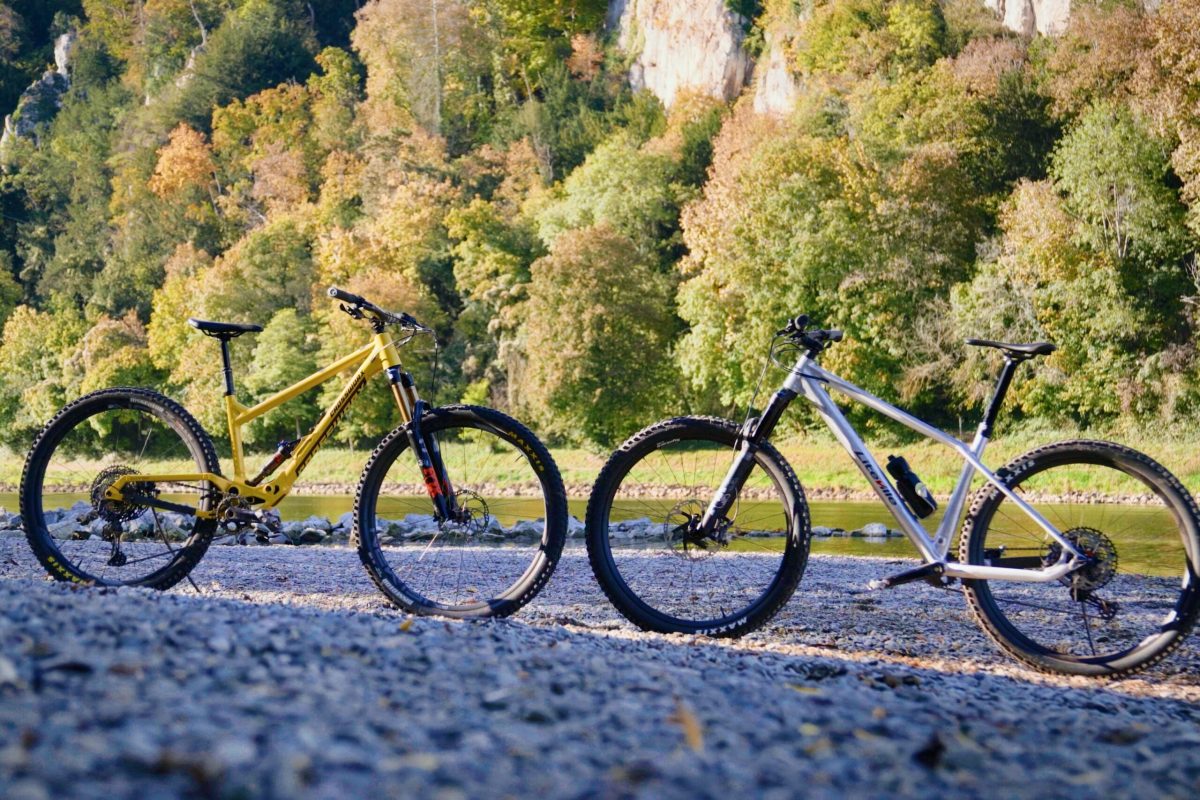
There is a certain honesty to a hardtail. When you stomp on the pedals, there is no suspension "squish" absorbing your energy. Every watt goes directly into the rear wheel. This makes hardtails the undisputed kings of fire-road climbs and smooth, rolling cross-country (XC) trails.
Beyond speed, there’s the "Skill Building" factor. I’ve always said that every rider should spend a year on a hardtail. On a full-suspension bike, you can "point and shoot"—the bike eats up your mistakes. On a hardtail, if you pick a bad line through a rock garden, the bike will let you know. You learn to be light on your feet, to use your legs as secondary suspension, and to find the smoothest path through the "chunder."
- Weight Advantage: You really feel the 4-6 lb weight difference when the trail points upward. A bike like the Ibis DV9 NX weighs in at a svelte 26 lbs 8 oz, making it a rocket ship on the climbs.
- Direct Power Transfer: Without a rear pivot, the frame is stiffer, providing an immediate response when you're sprinting out of a corner.
- Recommended Terrain: Mellow trails, groomed flow tracks, pump tracks, and long-distance XC adventures.
If you aren't racing, don't ignore "Aggressive Hardtails" like the Commencal Meta HT. These bikes use longer-travel forks and "slack" geometry (the front wheel sits further out) to handle surprisingly steep terrain, proving that you don't always need a rear shock to get rowdy.
The Case for Full Suspension: Confidence and Capability
Let’s be real: most of us aren't professional athletes with infinite energy and perfect technique. We ride for fun. And for many, "fun" means staying glued to the trail when things get messy. A full-suspension bike uses its rear shock to keep the tire in contact with the ground. This isn't just about comfort; it's about traction. When you're braking through a washboard corner or trying to claw up a technical, root-infested climb, that rear suspension is working overtime to find grip.
The biggest benefit I’ve found as I’ve gotten older is the reduction in rider fatigue. A two-hour ride on a hardtail through a rock garden is a full-body workout. On a bike like the Ibis Ripmo V3 or the Santa Cruz Hightower, the bike absorbs the "trail chatter," leaving you with more energy for the final descent.
- Traction and Control: The rear tire tracks the ground better, which means more effective braking and more grip on slippery climbs.
- Forgiveness: If you case a jump or hit a square-edged rock, the suspension saves your rims (and your ankles).
- Capability: These bikes are built for Red and Black trail centers. They allow you to ride faster and with more confidence on terrain that would be "survival mode" on a hardtail.
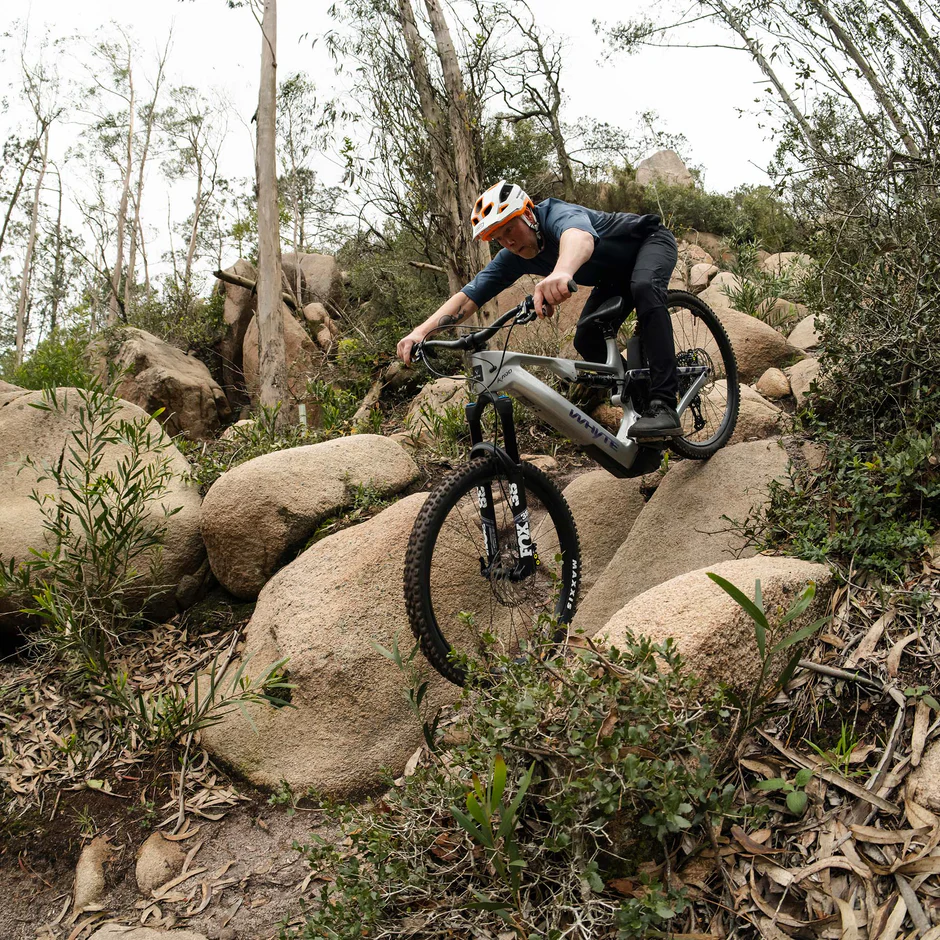
The 'Hidden' Costs: Maintenance and Weight
This is where the marketing brochures usually go quiet. A full-suspension bike is a more complex machine, and complexity costs money. I’ve seen many riders buy a budget full-suspension bike only to be shocked by the shop bill a year later.
Annual Maintenance Comparison
| Feature | Hardtail | Full Suspension |
|---|---|---|
| Front Fork Service | $100 - $150 | $100 - $150 |
| Rear Shock Service | $0 | $100 - $180 |
| Pivot/Bearing Service | $0 | $100 - $250 |
| Drivetrain Wear | Standard | Higher (due to mud/dirt in pivots) |
| Total Estimated Annual Cost | $100 - $150 | $300 - $550 |
Expert Tip: If you live in a wet, muddy climate, your pivot bearings will wear out twice as fast. If you don't like wrenching on your bike (or paying someone else to do it), the hardtail starts looking a lot more attractive.
Then there’s the "Weight Penalty." Entry-level full-suspension bikes often weigh between 31 and 34 lbs. Compare that to a sub-27 lb hardtail at the same price. On a long ride with 2,000 feet of climbing, you will absolutely feel those extra pounds.
Choosing Based on Your Terrain
I always ask people: "Describe your favorite trail." Your answer usually dictates the bike you need.
Type A: The Smooth Cruiser
If your local trails are mostly canal paths, well-maintained forest roads, or "flow trails" where the biggest obstacles are the occasional puddle, a full-suspension bike is overkill. You’re carrying around extra weight and complexity for a benefit you'll never use. A fast, light hardtail will be more fun and more responsive.
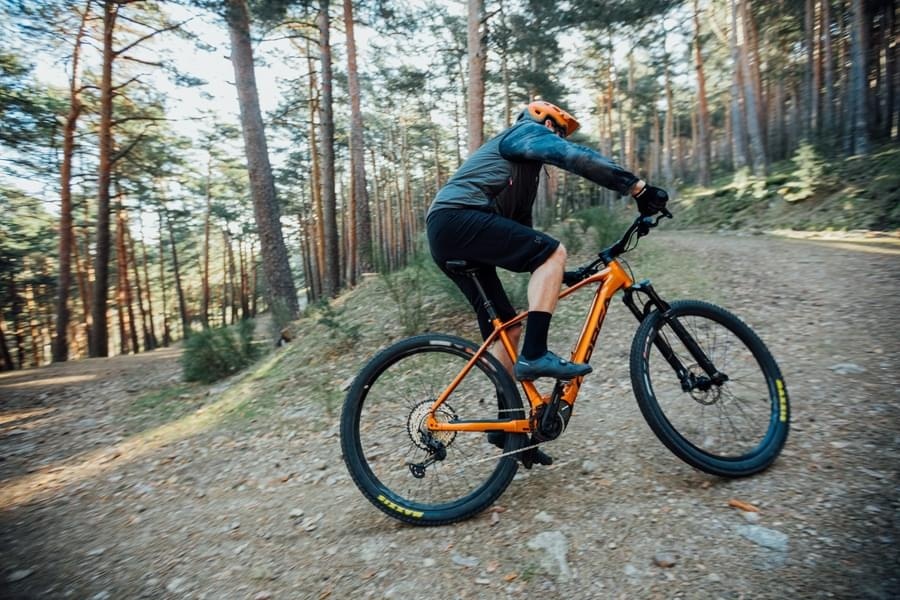
Type B: The Technical Shredder
If you live in places like the Pacific Northwest, the Rockies, or any area defined by roots, rocks, and "chunder," the full-suspension bike is a game-changer. It allows you to maintain speed through sections where a hardtail would get hung up. It’s the difference between feeling like you're fighting the bike and feeling like you're flying.
Type C: The Budget-Conscious Beginner
If you have $1,500 to spend, buy a hardtail. A $1,500 full-suspension bike will have heavy wheels, a subpar fork, and a rear shock that feels more like a pogo stick than a performance tool. A $1,500 hardtail, like the Giant Fathom, will come with a solid air fork, a dropper post, and a reliable drivetrain.
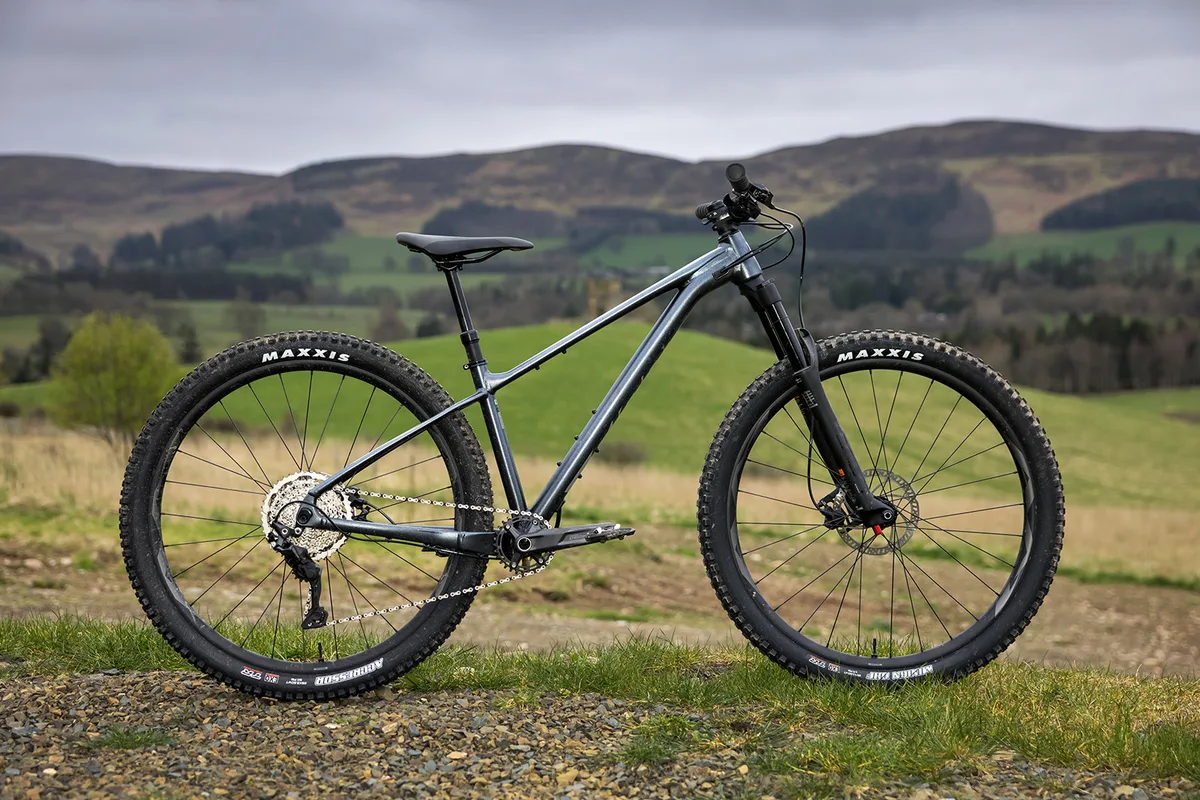
Critical Gear: Frame Material and Wheel Size
Once you've decided on the "squish," you need to look at the bones of the bike.
Carbon vs. Alloy vs. Steel:
- Carbon is light and stiff, but it’s expensive.
- Alloy (Aluminum) is the workhorse—light enough and affordable.
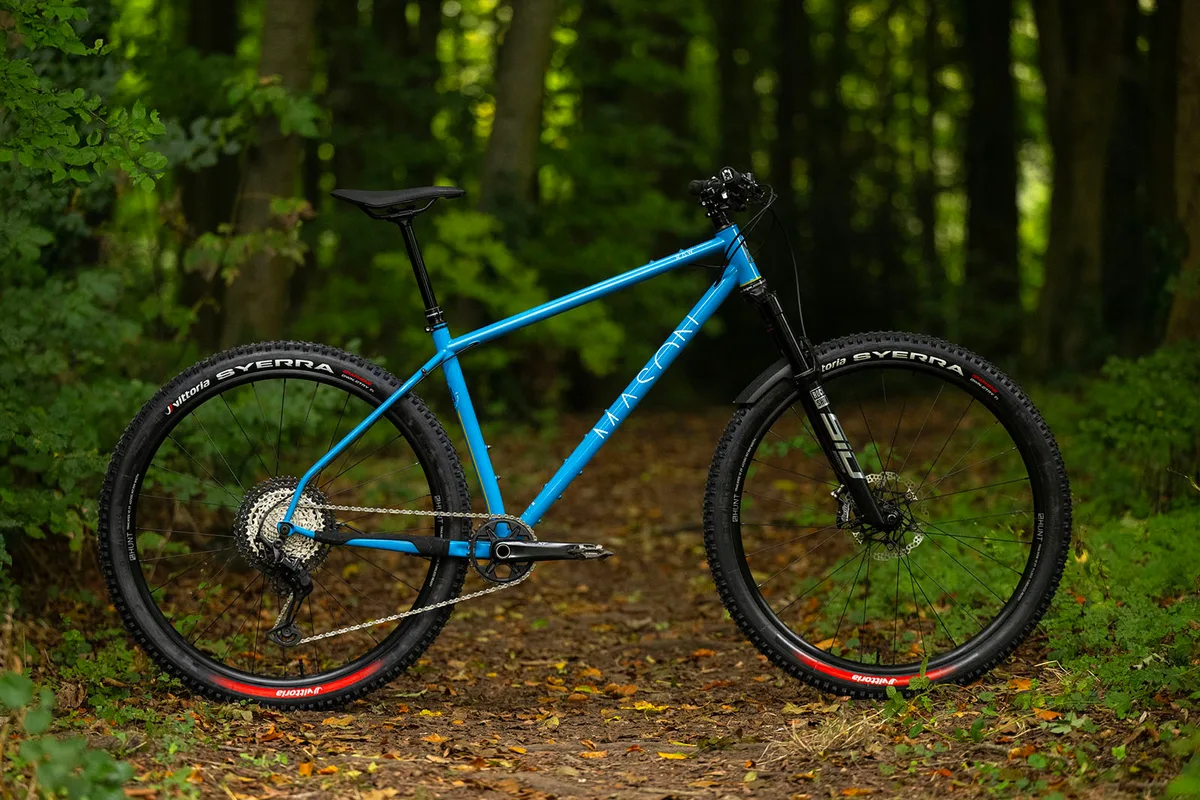
- Steel is making a massive comeback in the hardtail world. Why? Because "Steel is Real." It has a natural vibration-damping quality that aluminum lacks. A high-quality steel frame, like those from Mason or Ritchey, provides a "compliant" ride that takes the edge off the trail.
The Dropper Post Non-Negotiable: Regardless of which bike you choose, do not buy a mountain bike in 2024 without a dropper post. Being able to lower your saddle at the push of a button for descents is the single greatest advancement in mountain bike safety and fun in the last 20 years.
FAQ: Your Hardtail vs. Full-Sus Questions Answered
Q: Is a hardtail bad for my back? A: If you have chronic lower back issues, a full-suspension bike is a wise investment. The rear shock absorbs the "micro-impacts" that travel up the seatpost and into your spine. However, for a healthy rider, standing up on the pedals through rough sections on a hardtail is often enough to mitigate discomfort.
Q: Can I ride a hardtail at a bike park? A: Yes, but your legs will be screaming by the end of the day. You'll need to be much more selective with your lines and perhaps run slightly lower tire pressure (with inserts like CushCore) to protect your rims.
Q: Which is better for bike-packing? A: Hardtails are generally preferred for bike-packing because the frame triangle is wide open, allowing for a much larger frame bag. They are also more reliable for long-distance trips where a failing rear shock or pivot could end your journey.
Final Verdict: Which One Should You Buy?
If I could only have one bike in my garage, and I had a healthy budget, I’d choose a mid-travel full-suspension bike. The versatility to ride everything from local flow to technical alpine terrain is hard to beat.
However, if you are just starting out, or if your local trails aren't a literal rock garden, the hardtail is the smarter buy. You will become a better rider, you’ll spend less time at the bike shop, and you’ll have a lighter bike that's easier to throw on a car rack.
Don't buy into the hype that you need rear suspension to be a "real" mountain biker. Some of the fastest, most talented riders I know still prefer the raw, connected feel of a rigid rear end.
Ready to find your next ride? Check out these 2024 favorites:
Explore the Santa Cruz Hightower →
Get out there, get dirty, and I'll see you on the trails!