Quick Facts
- What it is: Wearable shelter is a category of multi-functional survival gear that transforms from high-performance technical clothing into a functional tent or survival pod.
- Key Innovation: The Adaptable Shelterwear Collection by Yoon Myat Su Lin uses a specialized system of ripstop nylon and YKK fastening to convert backpack sleeves and jacket panels into emergency structures.
- Weight Profile: These hybrid systems are remarkably efficient, weighing only about 15% more than a standard technical winter parka while providing a full-scale shelter.
- 2026 Trend: Following the 2025 Myanmar earthquake, the industry has pivoted toward "all-in-one" modular gear like the Mantis hammock and Kua Hybrid Bivvie, prioritizing rapid deployment and weight reduction.
- Market Shift: There has been a documented 40% increase in global search interest for "transformable survival gear" as climate and geopolitical instability drive the demand for portable protection.
The Evolution of Survival: Why Clothing is the New Fortress
I’ve spent the better part of two decades testing gear in the world’s most unforgiving corners, from the humidity of the Darién Gap to the thin air of the Karakoram. If there’s one thing I’ve learned, it’s that in a crisis, your gear is only as good as your ability to carry it. For years, "emergency preparedness" meant a heavy 72-hour bug-out bag that stayed in the trunk of your car or a closet. But the paradigm is shifting. We are moving away from bulky, static kits and toward integrated systems where the line between what you wear and where you sleep completely disappears.
This isn't just about convenience; it’s about psychological and physical survival. We saw this reality play out vividly during the 2025 Myanmar earthquake. When thousands were displaced in minutes, the traditional tents buried in rubble were useless. The survivors who fared best were those who had their protection literally on their backs. That tragedy became a catalyst for innovation, forcing the outdoor tech industry to rethink the "Go-Bag." The result? A new generation of adaptable shelterwear that treats your clothing as your primary fortress.
What is a Wearable Shelter?
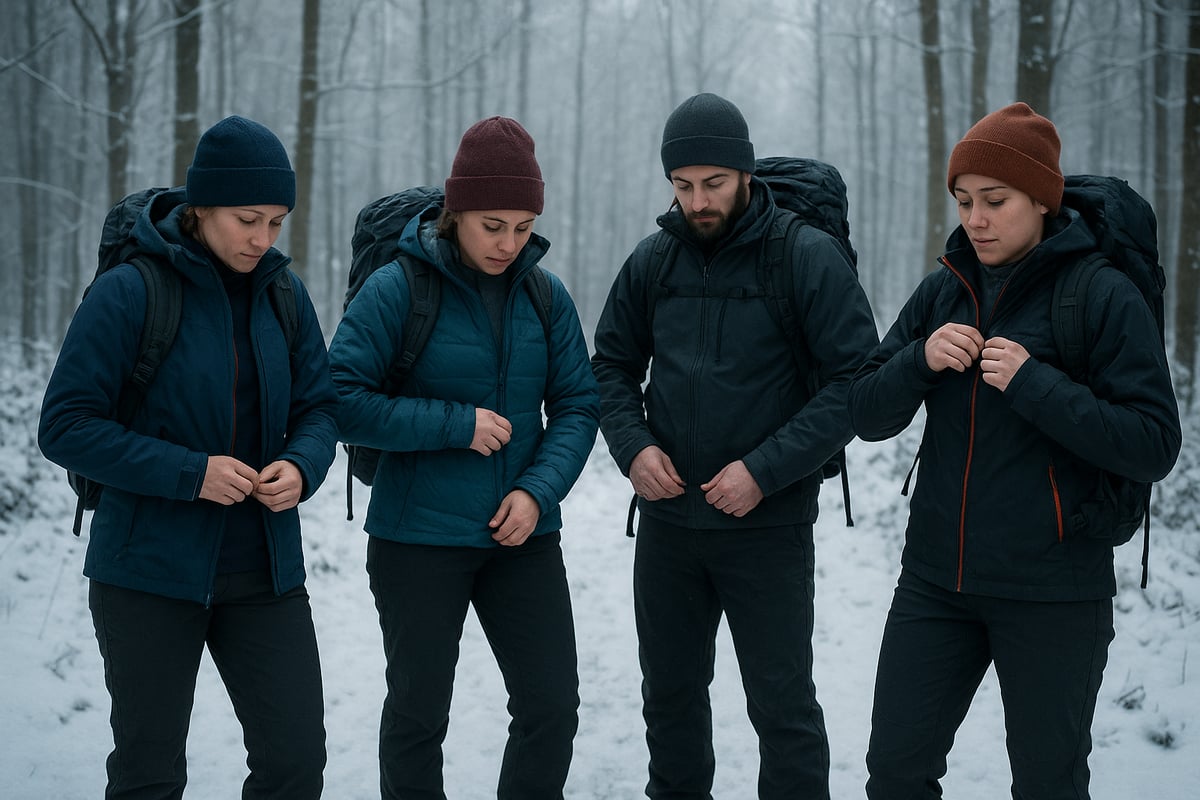
At its core, a wearable shelter is a multi-functional garment designed to transform from a standard piece of technical outerwear into a functional tent or survival pod. Think of it as "convertible zip-off pants," but taken ten steps further into the realm of architectural engineering. These aren't just oversized ponchos; they are sophisticated survival systems designed to provide immediate protection in high-stakes environments where every second counts.
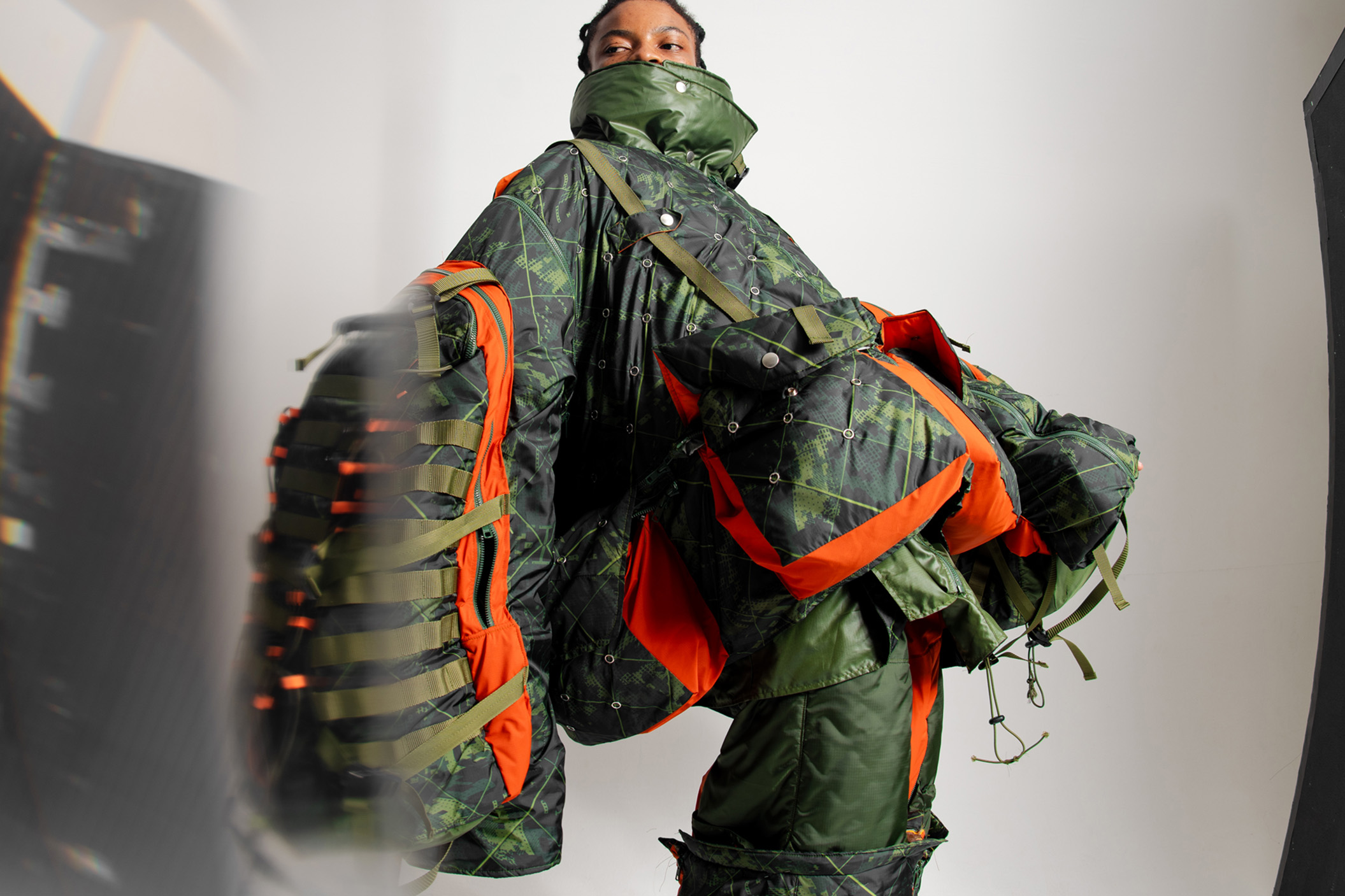
The most notable breakthrough in this space is the Adaptable Shelterwear Collection, spearheaded by designer Yoon Myat Su Lin. This system utilizes high-grade ripstop nylon and industrial-strength YKK fastening systems to bridge the gap between fashion and survival. The philosophy here is simple: immediate protection. By integrating the shelter directly into the garment, you eliminate the time spent fumbling with tent poles in the dark or battling the wind to stake out a tarp. You are the tent, and the tent is you.
Spotlight: The Adaptable Shelterwear Prototype
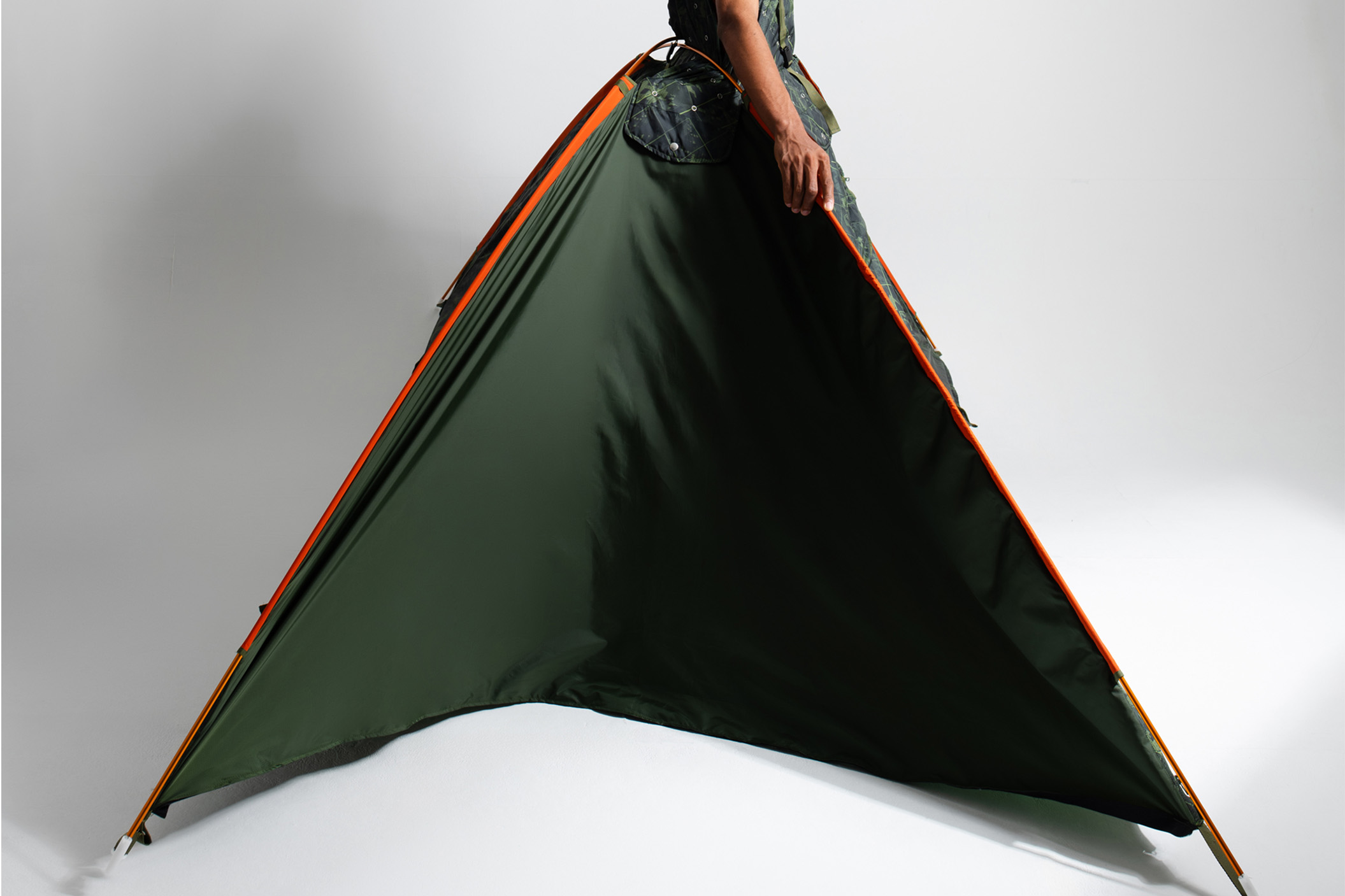
When I first got my hands on the Adaptable Shelterwear prototype, I expected it to feel like wearing a heavy-duty tarp. I was wrong. The genius of this design lies in its modularity. The system operates through a series of zipped backpack sleeves and detachable jacket panels. In "walking mode," it looks like a high-end, slightly oversized technical parka. However, when it’s time to hunk down, the backpack sleeve unfolds to form the main body of a tent, while the jacket panels serve as the structural reinforcement and vestibule.
The technical specs are where the "wow" factor really kicks in. Despite integrating a full-scale tent system—including lightweight collapsible poles that tuck into the seams—the entire outfit maintains a weight profile only 15% heavier than a standard technical winter parka. For an expedition leader or a solo traveler, that 15% trade-off for a guaranteed roof over your head is a no-brainer.
- Material Integrity: The use of 20D Ripstop Nylon with a silicone/PU coating ensures the garment remains breathable as a jacket but entirely waterproof as a shelter.
- Fastening Systems: The YKK zippers are specifically chosen for their "no-fail" reputation; when you’re converting your jacket in a freezing rainstorm, the last thing you want is a jammed slider.
- Thermal Regulation: The air gap created during the transformation provides a layer of insulation that significantly outperforms traditional bivvie bags.
Standard Gear vs. Wearable Shelterwear: The Breakdown
To truly understand why this trend is taking over the outdoor tech sector in 2026, we have to look at the numbers. In survival situations, the "holy trinity" of gear metrics is weight, setup time, and mobility.
| Feature | Standard Tent + Parka | Wearable Shelterwear (2026 Gen) |
|---|---|---|
| Combined Weight | 4.5 - 6.0 lbs | 2.8 - 3.5 lbs |
| Setup Time | 5 - 10 minutes | Under 90 seconds |
| Mobility | Low (must pack/unpack) | High (instant transition) |
| Wind Resistance | High (staked) | Moderate to High (tension-based) |
| Footprint | Requires clear ground | Can be deployed in tight/urban spaces |
2026 Survival Gear Trends: Hybridity and Modularity
The shift toward wearable shelters is part of a much larger movement we’re seeing in the 2026 gear cycle. We call it "The Rise of the Hybrids." It’s no longer enough for a piece of gear to do one thing well. It has to do three things exceptionally. Beyond clothing, we’re seeing this philosophy manifest in gear like the Mantis all-in-one hammock, which integrates a sleeping pad, bug net, and rainfly into a single deployable unit, and the Kua Hybrid Bivvie, which utilizes "no-pole" airframe technology to inflate into a rigid structure in seconds.
The common thread here is the reduction of friction. In the wild, friction is anything that slows you down—poles that won't snap together, stakes that won't go into frozen ground, or a heavy pack that drains your energy. The 2026 trend is all about removing those barriers through modularity.
Why the World is Searching for Transformable Gear
The statistics don't lie. Following the 2025 Myanmar earthquake, search trends for "transformable survival gear" and "portable emergency shelters" saw a documented 40% increase in the outdoor tech sector. This wasn't just a blip; it represents a fundamental change in how the public perceives safety. People are no longer looking for "camping gear"; they are looking for "survival autonomy."
We are living in an era where the environment is less predictable than ever. Whether it’s an urban disaster or a backcountry expedition gone wrong, the priority for 2026 is modularity. People want gear that allows them to be agile. If you have to move, you don't want to spend 20 minutes striking camp. You want to zip up, click in, and go. This "on-person" readiness is the driving force behind the 40% surge in interest. It’s the peace of mind that comes with knowing that no matter where you are, you are already home.
How to Choose Adaptable Shelterwear for Your Go-Bag
If you’re looking to integrate shelterwear into your own kit, don't just buy the first "tent jacket" you see on an ad. Here is what I look for when I'm vetting this gear for a solo expedition:
- Check the Denier: For true survival, you want a minimum of 20D (denier) ripstop nylon. Anything lower might be lighter, but it won't stand up to a jagged rock or a stray branch.
- Test the Ergonomics: Put the garment on and move. Can you climb? Can you reach for a climbing hold? Can you sit comfortably? A wearable shelter that compromises your mobility is a liability, not an asset.
- Waterproof Ratings: Look for a hydrostatic head (HH) rating of at least 5,000mm. Since this garment will be compressed and rubbed against your body, you need a high-quality membrane (like Gore-Tex or similar proprietary tech) to prevent "wet-through."
- Sustainability: In 2026, the best tech is also the most responsible. Many of the top-tier shelterwear brands are now using 100% recycled nylon and PFC-free DWR coatings. If the gear is designed to help you survive the environment, it shouldn't destroy it in the process.
Marcus’s Pro Tip: Always practice the transformation in your backyard before you take it into the field. I spent 15 minutes fumbling with a prototype in a rainstorm in the Olympics because I hadn't mastered the sleeve-to-pole transition. Don't be that guy.
Shop the 2026 Survival Collection →
FAQ
Q: Is wearable shelterwear warm enough for winter survival? A: Most shelterwear is designed as a "shell" system. While it provides excellent windproofing and keeps you dry (which is 90% of the battle), you still need a proper base layer and mid-layer for thermal insulation. Think of it as your outer fortress, not your entire wardrobe.
Q: How do you wash a jacket that has tent poles inside it? A: Most modern designs, like the Yoon Myat Su Lin prototype, feature removable structural elements. You simply slide the carbon-fiber poles out of their sleeves and the rest of the garment is machine washable on a gentle cycle. Always hang dry to preserve the waterproof membrane.
Q: Can these shelters withstand heavy snow loads? A: They are generally designed for 3-season use. While they can handle a light dusting, they lack the steep angles and heavy-duty frame of a dedicated 4-season alpine tent. In a heavy blizzard, you’ll need to periodically knock the snow off to prevent the fabric from sagging.
The Verdict
Is adaptable shelterwear the future? Absolutely. While we are still in the "early adopter" phase, the integration of clothing and shelter is the most logical step in the evolution of outdoor gear. It solves the weight problem, it solves the deployment problem, and most importantly, it solves the "immediate safety" problem.
Whether you’re a hardcore solo explorer or someone just looking to beef up their emergency preparedness kit for a "just in case" scenario, the move toward modular, transformable gear is a trend you can't afford to ignore. Stay safe, stay mobile, and I'll see you out on the trail.
Found this guide helpful? Sign up for our "Off-The-Grid" newsletter for more first-hand gear reviews and expedition reports from Marcus Rivera.