Quick Facts
- Top Pick: The Yeti Tundra Series remains the king of the mountain for 2025, offering up to 10 days of ice retention and bear-resistant certification.
- Best Value: For those on a budget, the Coleman Xtreme 5-Day Cooler provides impressive cooling for under $100, though it lacks the "bombproof" build of premium rivals.
- Capacity Truth: Many brands use model numbers (like "45") that don't match actual liter capacity. For example, a Calcutta Renegade 35L offers more true internal space than some competitors' 45-sized models.
- Why Rotomolded? Unlike traditional ice chests, rotomolded coolers are built like a single, seamless piece of armor, ensuring uniform insulation and extreme durability.
Introduction: The Quest for the Perfect Chill
There is a very specific kind of heartbreak that only happens three days into a backcountry trip. You reach into your cooler for a steak or a cold brew, only to find them floating in a lukewarm pool of grey slush. I’ve been there—somewhere between the dusty trails of Moab and the humid thickets of the Smokies—realizing my "bargain" ice chest just surrendered to the afternoon sun.
Choosing the best camping cooler in 2025 isn't just about picking a plastic box; it’s about investing in a piece of expedition gear that acts as a portable, powerless refrigerator. The market has shifted from simple "ice chests" to high-tech "rotomolded tanks." If you’re heading out for more than a weekend, you need something that can hold the line against the heat.
The Verdict Up Front: If you want the absolute best, the Yeti Tundra is the champion. Its rotomolded construction and independent test results showing up to 10 days of ice retention make it the gold standard for serious outdoorsmen. However, if you aren't planning to fend off grizzlies and just need to keep the burgers cold for a long weekend, the Coleman Xtreme 5-Day Cooler is the best value under $100, offering surprising performance in a lightweight package.
Our Testing Methodology: How We Beat the Heat
I don’t believe in manufacturer claims; I believe in thermometers. To find the best camping coolers of 2025, we ditched the air-conditioned labs and took these units into the wild—from the freezing mornings of the Yukon to the 100-degree floor of the Mojave Desert.
We tracked several key metrics:
- The 40°F Threshold: According to the FDA, perishables must stay below 40°F to remain safe. We used internal data loggers to see exactly how many days a cooler could maintain this safety zone without an ice refill.
- Ice Retention Duration: Simple—we filled them to a 2:1 ice-to-food ratio and waited to see who was the last one standing.
- The "Throw" Test: We dropped them (loaded) from truck tailgates and dragged them over sharp shale to test latch integrity and hinge strength.
In independent testing across these extreme environments, premium rotomolded coolers maintained internal temperatures below 40°F for up to 10 consecutive days. Traditional injection-molded coolers usually tapped out by day four.
Best Overall Camping Cooler: Yeti Tundra Series
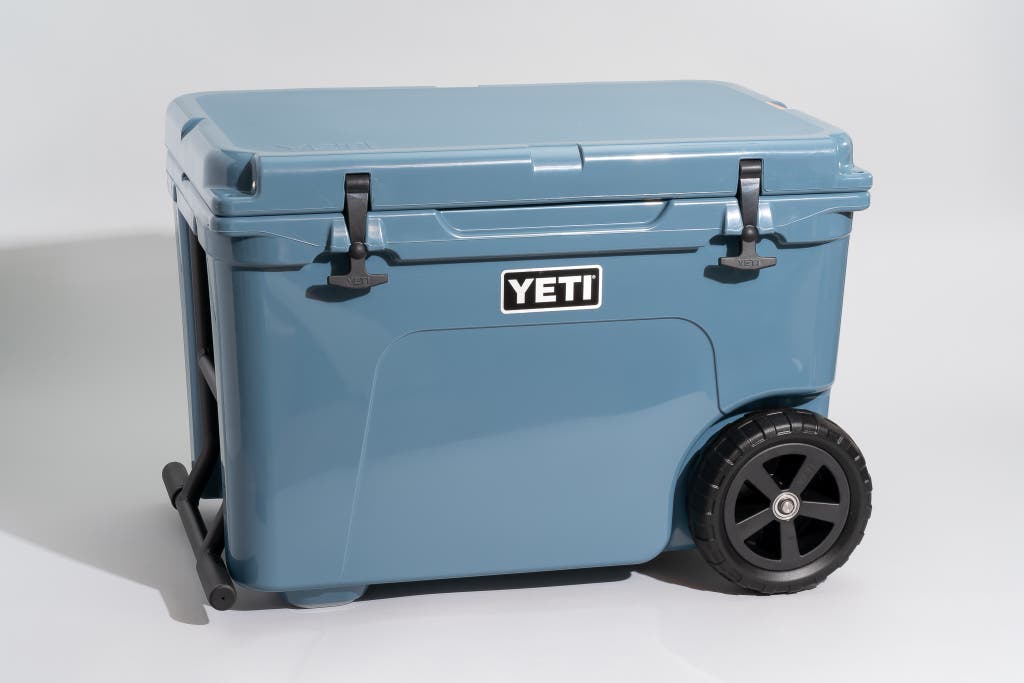
The Yeti Tundra isn't just a cooler; it’s a cultural icon for a reason. During my two-week expedition through the desert last summer, the Tundra 45 was the only thing that kept our perishables from turning into a science experiment.
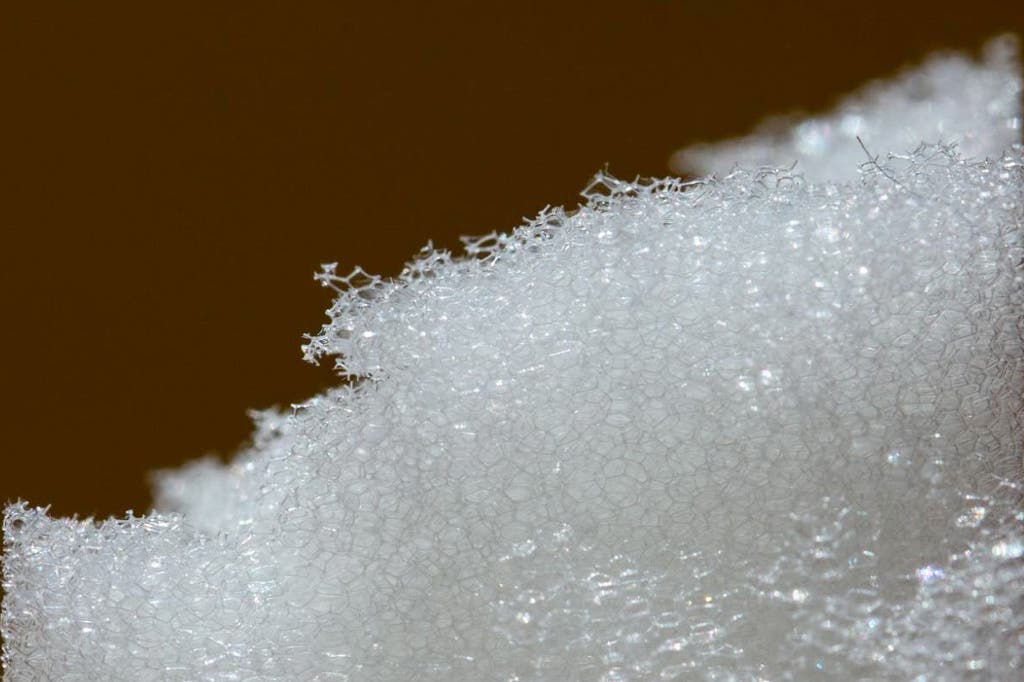
What sets it apart is the Permafrost Insulation. Yeti uses a pressure-injected commercial-grade polyurethane foam in the walls and lid. This, combined with their FatWall design (up to two inches of insulation), creates a thermal barrier that is incredibly hard to break. It’s also IGBC bear-resistant, meaning if a grizzly tries to get into your bacon, they’re going to have a very frustrating afternoon.
- Pros:
- Unmatched ice retention (up to 10 days in ideal conditions).
- Nearly indestructible rotomolded construction.
- Excellent resale value and a massive ecosystem of accessories.
- Cons:
- Heavier than traditional coolers (the Tundra 45 weighs 23 lbs empty).
- Premium price tag that can be hard to swallow.
Marcus’s Pro Tip: To get the most out of a Yeti, you must pre-chill it. Bring it inside from the hot garage 24 hours before your trip and sacrifice one bag of ice to cool the internal foam. If you start with a warm cooler, you’re wasting half your ice just cooling down the plastic.
Best Yeti Alternative: Calcutta Renegade
If you want the performance of a high-end rotomolded cooler without paying the "brand tax," the Calcutta Renegade is the industry’s best-kept secret.
One of the biggest frustrations in the cooler world is "stated capacity." Many brands label a cooler as a "45," but once you measure the internal volume, it only holds 35 liters. A comparison of storage efficiency shows that the Calcutta Renegade 35L offers a true 35-liter capacity for $50 less than its primary competitor, which requires you to move up to a more expensive and heavier '45' model just to get the same internal space.
The Renegade also includes features Yeti charges extra for, like a built-in drain plug that won't get lost and an integrated LED light for those midnight snack runs.
- Pros:
- True-to-size internal dimensions.
- Includes built-in lights and bait trays.
- Excellent seal with a heavy-duty rubber gasket.
- Cons:
- Availability can be spotty at local retailers.
- Slightly more industrial "utility" look.
Best for Casual Adventures: RTIC 52 QT Ultra-Light
Let’s be honest: you don’t always need a 30-pound tank for a Saturday tailgate or a quick overnight camping trip. That’s where the RTIC Ultra-Light comes in.
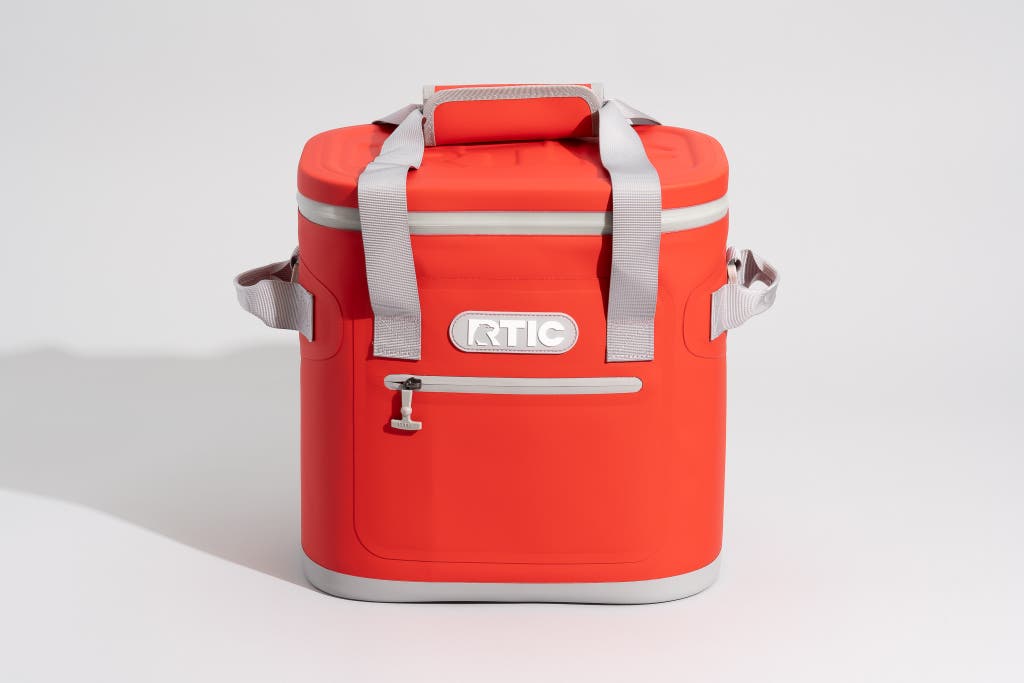
While most premium coolers use rotomolding (which I'll explain more below), RTIC uses advanced injection molding for this specific line. This makes the cooler 30% lighter than standard rotomolded models. When I'm hauling gear from the car to a picnic spot, my lower back thanks me for choosing the RTIC. It still offers enough insulation to keep ice for 2-4 days, which is the sweet spot for most weekend warriors.
- Pros:
- Incredible weight-to-performance ratio.
- Fits easily in smaller trunks.
- Very competitive pricing.
- Cons:
- Not bear-certified.
- Ice retention drops off significantly after day 4.
Best Wheeled Cooler for Rugged Terrain: Rovr Rollr
If you’ve ever tried to drag a fully loaded cooler through soft sand or over a rocky trail, you know that standard plastic wheels are useless. They dig in and stall. The Rovr Rollr changed the game by using 9-inch, high-traction, puncture-resistant tires.
This isn't just a cooler; it's a gear wagon. It features a "Landry Bin" on top that allows you to stack your chairs, blankets, and dry goods on the cooler and wheel it all in one trip.
- Pros:
- Best-in-class wheels for off-road use.
- Internal dry-storage bin keeps sandwiches from getting soggy.
- Optional bike-attachment kit.
- Cons:
- Very bulky footprint; takes up a lot of room in the SUV.
- The heaviest option on our list.
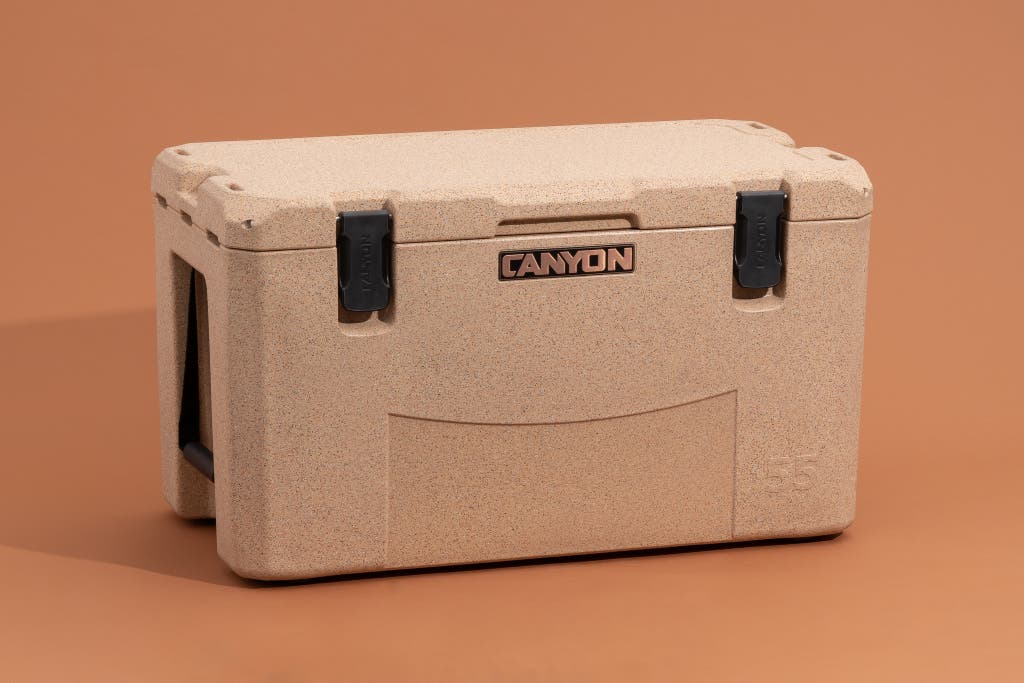
Best for Expedition Use: Canyon Coolers Outfitter 55
When I’m out on a raft or an ATV for a week-long expedition, I look for "no-snag" designs. The Canyon Coolers Outfitter 55 is designed with a minimalist, squared-off exterior. There are no protruding latches or handles to get caught on straps or other gear.
Furthermore, Canyon offers an industry-leading lifetime warranty. If you somehow manage to crack the shell while bouncing down a canyon road, they’ve got your back. In our testing, the Outfitter 55 went toe-to-toe with Yeti for ice retention, often lasting 7-9 days in high-desert heat.
- Pros:
- Square shape makes it the easiest cooler to pack in a tight vehicle.
- Extremely durable recessed latches.
- Best warranty in the business.
- Cons:
- Lid can be slightly harder to open due to the tight vacuum seal.
Buyer’s Guide: Choosing Your Mobile Fridge
When you’re staring at a wall of coolers at the outdoor store, the terminology can get confusing. Here is what you actually need to know before you drop your hard-earned cash.
Rotomolded vs. Traditional Ice Chests
Think of the difference like a brick wall versus a concrete wall. A traditional ice chest (like your old-school red Igloo) consists of two pieces of plastic snapped together with insulation in the middle. These have "seams" which are weak points for air leaks and breakage.
Rotomolded coolers are manufactured using a rotational molding process. The plastic starts as a powder that is melted while the mold rotates, ensuring a uniform plastic thickness throughout the entire body. This results in a seamless, one-piece shell that is significantly more durable and efficient at trapping cold air.
Understanding Capacity
Don’t trust the numbers on the box. As I mentioned with the Calcutta vs. Yeti comparison, always look for the Internal Dimensions or the True Liter/Quart Capacity.
- 25-35 Quarts: Perfect for a solo weekend or a couple's day trip.
- 45-65 Quarts: The "Goldilocks" zone for a family of four for a 3-day weekend.
- 75+ Quarts: Necessary for hunting, fishing, or week-long expeditions.
The 2-to-1 Rule
No matter how expensive your cooler is, it will fail if you don't pack it right. You should always aim for a 2:1 ice-to-food ratio. This means two-thirds of your cooler’s volume should be ice. If you fill a cooler with warm beer and one bag of ice, don't be surprised when the ice is gone by sundown.
| Cooler Model | Ice Retention (Days) | Weight (Empty) | Price Range |
|---|---|---|---|
| Yeti Tundra 45 | 7-10 Days | 23 lbs | $$$ |
| Calcutta Renegade 35 | 6-8 Days | 21 lbs | $$ |
| Coleman Xtreme 70 | 4-5 Days | 13 lbs | $ |
| RTIC 52 Ultra-Light | 3-5 Days | 21 lbs | $$ |
| Rovr Rollr 60 | 6-8 Days | 45 lbs | $$$ |
FAQ
Which cooler keeps ice the longest? In our testing, the Yeti Tundra and Canyon Coolers Outfitter series consistently tied for the lead. Both can maintain ice for 7-10 days depending on the external temperature and how often the lid is opened.
Are high-end coolers worth the investment for overnight trips? Honestly? No. If you only do 24-hour trips, a $400 rotomolded cooler is overkill. A $60 Coleman Xtreme will serve you just fine. You pay for a premium cooler when you need durability (bears, rough transport) and multi-day ice retention.
Can I use dry ice in my rotomolded cooler? Most high-end rotomolded coolers (like Yeti, RTIC, and Canyon) are dry-ice compatible because their shells are thick enough to handle the extreme cold (-109.3°F). However, never use dry ice in a cheap, thin-walled plastic cooler, as it can crack the liner. Always ensure there is a way for the CO2 gas to escape (like a slightly cracked drain plug) to prevent pressure build-up.
Gear Up for Your Next Expedition
The "best" cooler is the one that fits your specific adventure. If you're a hardcore explorer pushing into the deep woods, don't settle for anything less than a Yeti or a Canyon. But if you're just looking to keep the soda cold at the local park, save your money and grab an RTIC or a Coleman.
Ready to upgrade your camp kitchen? Check out our latest guide on [The Best Camping Stoves of 2025] to complete your outdoor setup.
Stay cold out there.
— Marcus Rivera Adventure & Outdoors Editor