Jimmy Durham’s black F-350 kicked up a plume of red Oklahoma dust as we rattled toward the long-range shooting platform at Cross Bell Ranch. Jimmy isn't a man of many words, but when he speaks about ballistics or the "grindy" nature of a DIY hunt, you listen. This wasn't a typical guided hunt where you’re a passenger in your own experience. This was day one of the Outdoor Solutions Field to Table Masterclass, and before I could even think about a harvest, I had to prove I could handle the steel at 400 yards.
A Field to Table hunting experience is a comprehensive workshop covering the full cycle of the hunt, from precision shooting and guided harvesting to professional butchering and gourmet culinary preparation. It’s designed to bridge the gap between "just a hunter" and a competent craftsman who understands the anatomy of the animal and the chemistry of the kitchen. Outdoor Solutions facilitates approximately 20 Field to Table guided hunting experiences annually, prioritizing the educational process of meat preparation and culinary arts over mere trophy counting.
For many of us, the traditional hunting cycle ends at the butcher’s drop-off window. We hand over a carcass and receive back a box of white-wrapped mystery meat. This masterclass is the antidote to that disconnect, turning the "field to freezer" journey into a transparent, high-skill endeavor.
The Training Grounds: From Oklahoma to Montana
The backdrop for these experiences is as rugged as the curriculum. Outdoor Solutions hosts these specialized experiences at premier locations including the Cross Bell Ranch in Oklahoma, as well as dedicated sites across Texas and Montana.
I found myself in the heart of Osage country at the Cross Bell. It’s a landscape of rolling bluestem prairies and hidden draws that test your ability to glass and move with intent. Whether you’re chasing whitetail in the Oklahoma brush, stalking Axis deer in the Texas Hill Country, or pursuing antelope across the vast Montana plains, the environment serves as the first teacher. These aren't manicured parks; they are working ranches where the wildlife is wild, and the weather is indifferent to your comfort.
The program typically commands an all-inclusive investment ranging from $3,200 to $3,800. This covers everything: the lodging, the professional guides, the expert shooting instruction, the butchering workshop, and the gourmet meals you’ll eventually learn to cook yourself.
Phase 1: Precision Under Pressure
Before a single round is chambered in the field, every student spends time on the range. The philosophy here is simple: you cannot respect the animal if you cannot guarantee an ethical shot.
We weren't just "sighting in." Under the watchful eye of Army veterans and long-range experts like Jimmy Durham, we learned to read the wind and understand the "dope" on our rifles. We moved from the comfort of a bench to functional shooting positions—using tripods, boulders, and fence posts. This is where the "Masterclass" title earned its keep. Jimmy pushed us to find our "natural point of aim" while our heart rates were spiked from a short sprint, simulating the adrenaline of a real stalk.
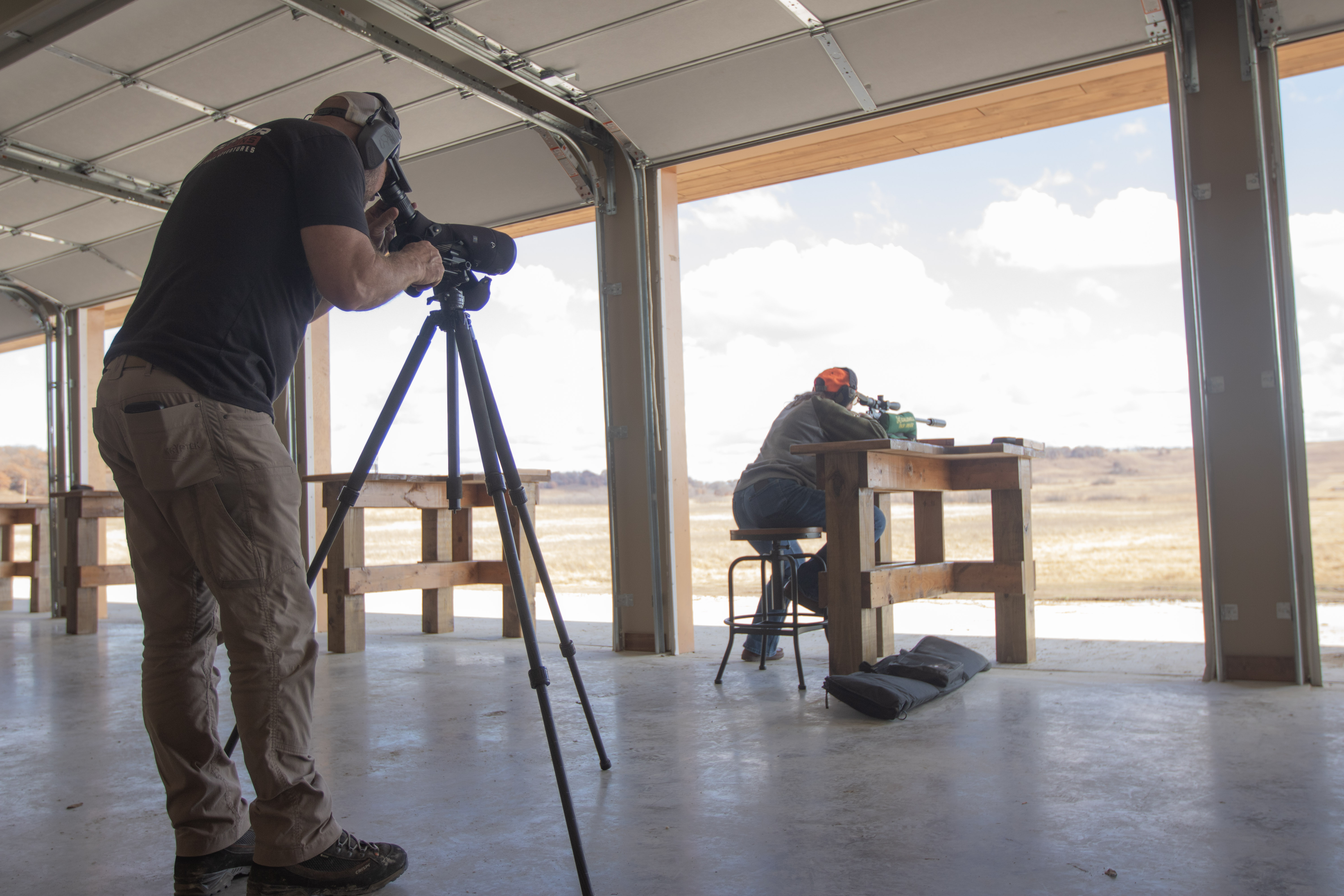
Pro Tip from the Range: Don't fight the wobble. Accept your arc of movement and learn to squeeze the trigger as your crosshairs drift across the "V" of the vitals. Precision is as much about patience as it is about optics.
Phase 2: The Harvest Strategy
The hunt itself is designed as a "layup" for educational purposes, but don't mistake that for "easy." The goal is to ensure every participant has an animal to process during the butchering phase. Whether it's wild hogs, whitetail, or axis deer, the harvest is the raw material for the rest of the week.
There is a profound shift in mindset when you know you are responsible for every ounce of meat on that animal. You aren't looking for a "wall hanger"; you’re looking for high-quality protein. When I finally squeezed the trigger on a management hog on the second evening, the excitement was immediately followed by a sense of duty. The real work was just beginning.
Phase 3: The Butchering Masterclass
This is the heartbeat of the program. Chef Albert Wutsch, a certified executive chef and culinary educator, leads the butchering masterclass, teaching students how to process wild game with professional precision and efficiency.
Chef Wutsch doesn't use saws. He uses "seam butchering." This technique involves identifying the natural silver-skin boundaries between muscle groups and letting the knife glide through the connective tissue. By separating muscles at their natural seams, you preserve the integrity of the meat and eliminate the "gamey" flavor often caused by bone dust or fat left on the cut.
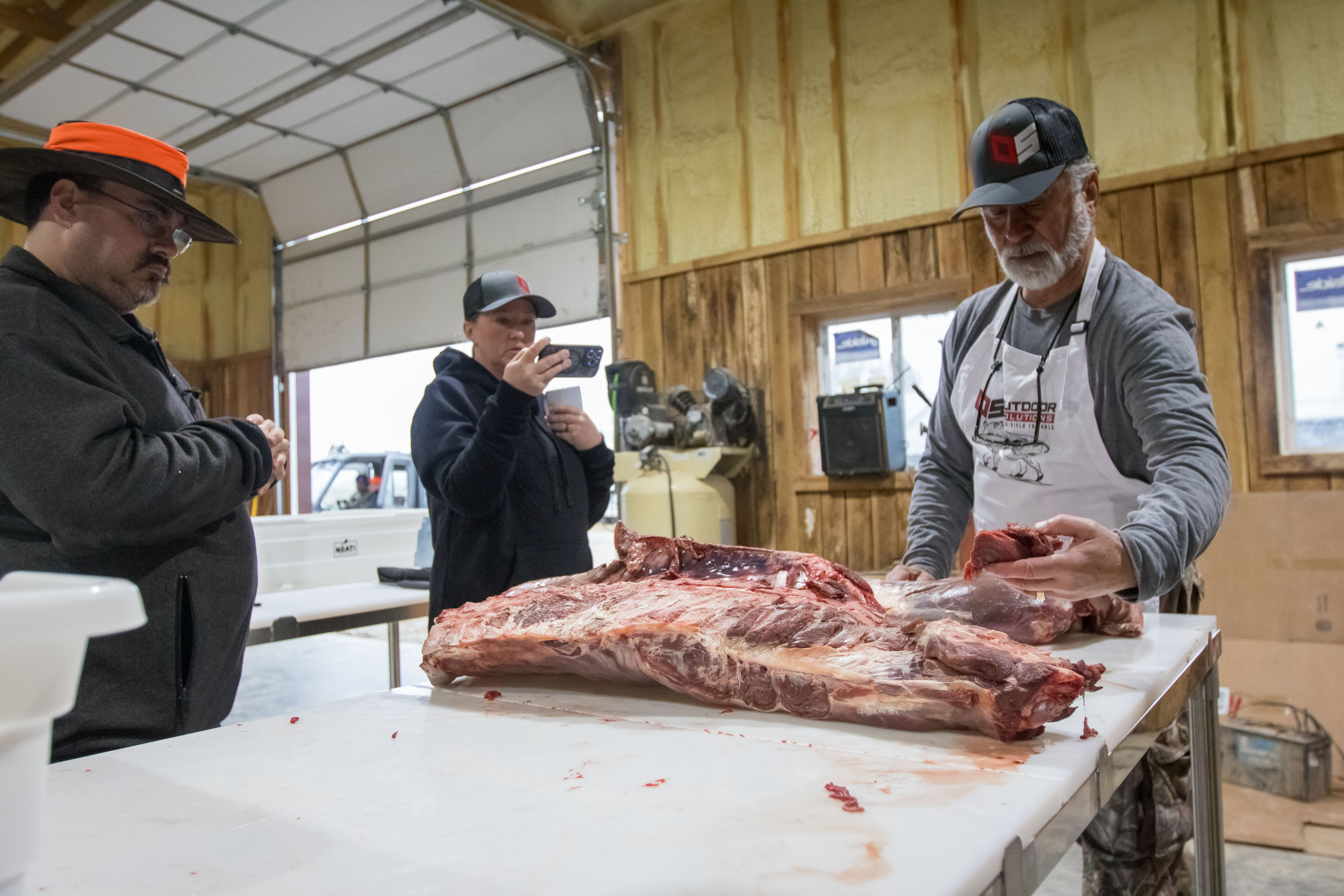
Watching Chef Wutsch work is like watching a sculptor. He transforms a haunch of venison into recognizable roasts, steaks, and stew meat in minutes. Under his guidance, I learned to identify the "football" (the sirloin tip) and the "eye of the round," understanding exactly which muscles are best for high-heat searing and which require a low-and-slow braise.
Phase 4: From Field to Freezer
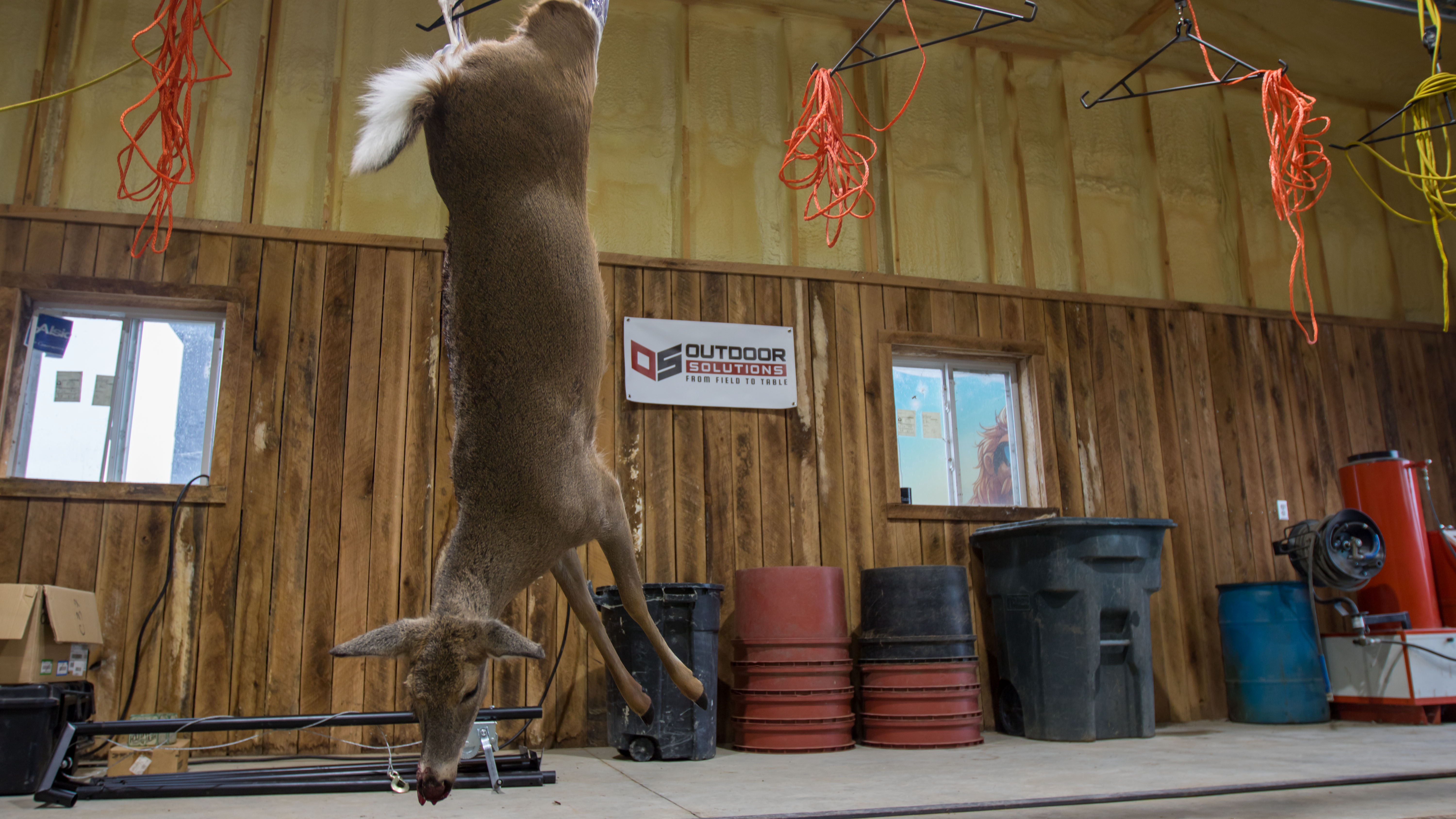
The transition from a warm carcass to a chilled, age-ready product is the most critical hour of the hunt. If you fail here, the best chef in the world can’t save the flavor.
- Immediate Cooling: The clock starts the moment the animal hits the ground. Field dressing must be efficient. We learned to "gutless" process when necessary, but more importantly, how to get the internal temperature down quickly.
- Aging and Hanging: We moved the carcasses to a controlled walk-in cooler kept between 34-40°F. This allows the enzymes to break down the connective tissue, tenderizing the meat.
- The Double Layer Defense: To prevent freezer burn, we utilized a two-step packaging process: high-grade plastic wrap to remove all air pockets, followed by heavy-duty butcher paper or vacuum sealing.
Phase 5: The Culinary Finale
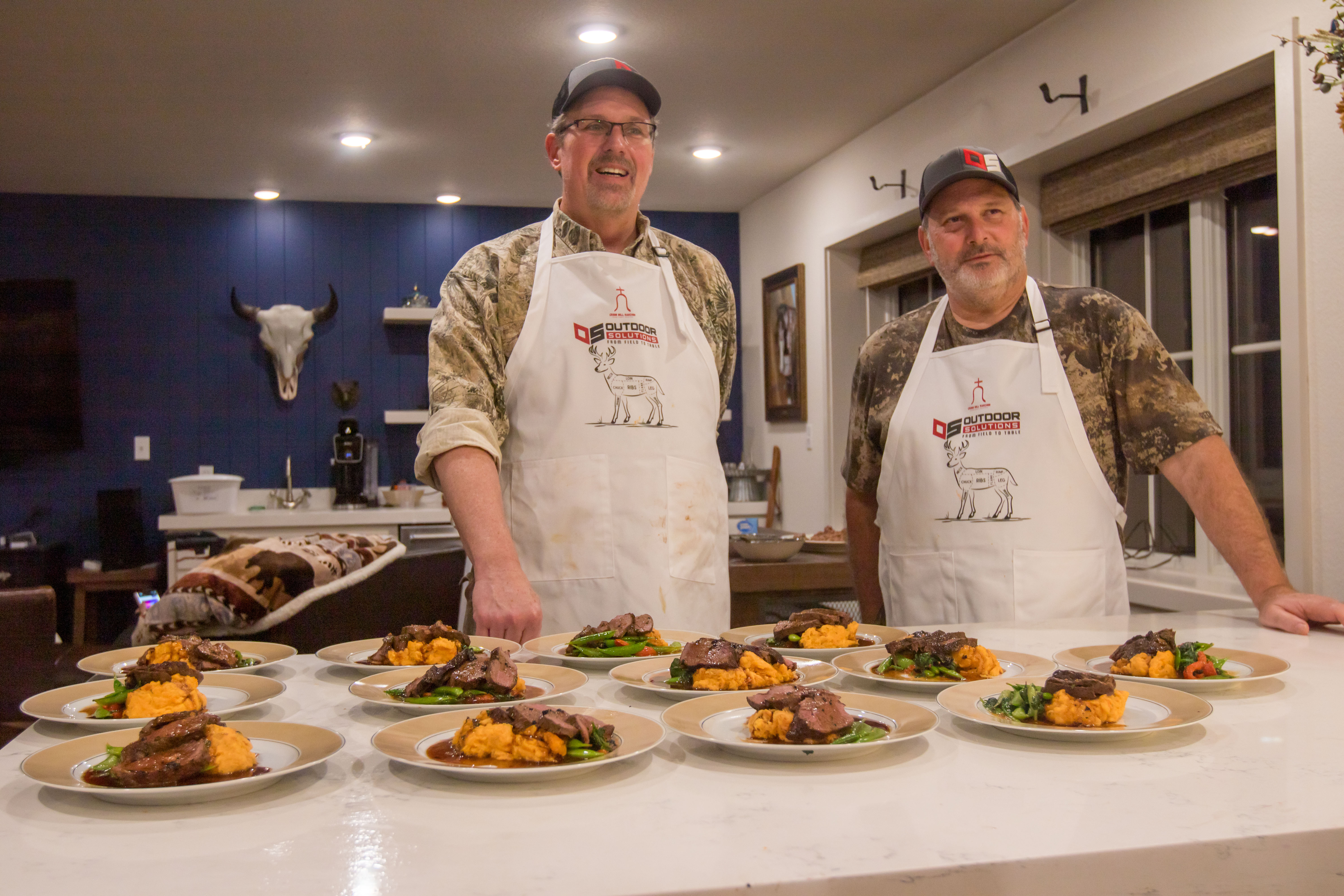
The final night of the masterclass is what Chef Wutsch calls the "Hell’s Kitchen" experience. The students are divided into teams, and under the Chef's direction, we prepare a multi-course gourmet meal using the very animals we harvested 48 hours prior.
The energy in the kitchen was electric. One team was reducing a red wine demi-glace for the backstrap medallions, another was preparing liverwurst hors d’oeuvres (an incredible use of offal), and I was tasked with searing heart skewers over a screaming hot flame.
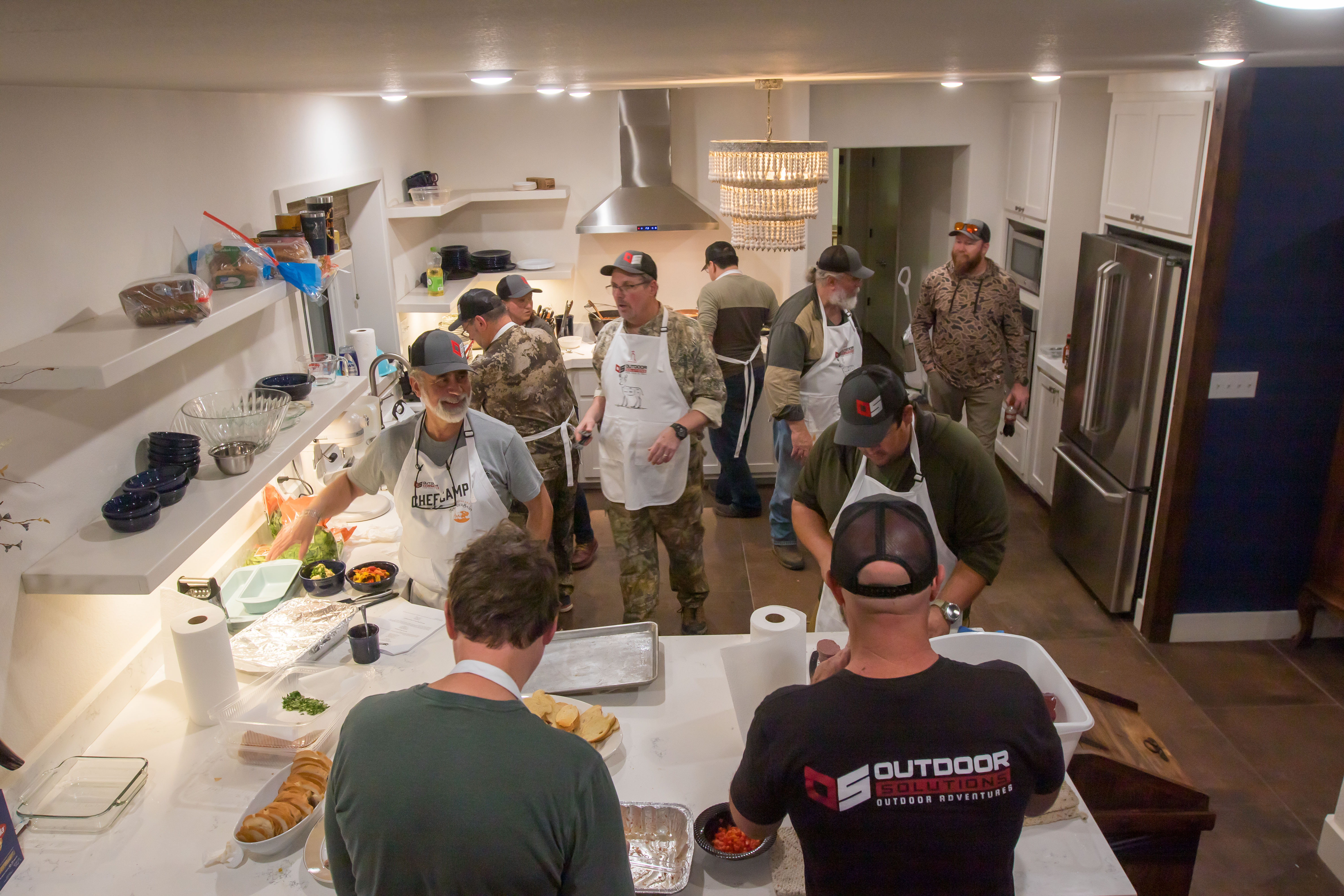
This is where the transformation from hunter to craftsman is completed. There is a specific kind of pride in serving a dish where you can point to the map where the animal was taken, describe the shot, explain how you seamed the muscle, and finally, how you balanced the acidity in the sauce. It’s a "Chef Experience" that most restaurant-goers will never understand.
Logistics: Planning Your 2026 Adventure
If you’re tired of the "black box" of commercial processing and want to take full ownership of your food chain, it’s time to book for 2026. These spots fill up fast because the groups are kept small to ensure one-on-one time with the instructors and chefs.
2026 Event Schedule (Tentative)
| Location | Primary Game | Typical Month | Skill Focus |
|---|---|---|---|
| Cross Bell, OK | Turkey & Wild Hog | April / May | Small Game & Pork Processing |
| Texas Hill Country | Axis Deer | June / July | Exotic Game & Summer Butchery |
| Montana Plains | Antelope / Mule Deer | October | Big Game Seam Butchering |
| Osage County, OK | Whitetail Deer | November | Traditional Venison Mastery |
The $3,200 to $3,800 price tag might seem steep compared to a DIY public land hunt, but when you factor in the thousand-dollar shooting clinics, the professional butchering school, and the gourmet lodging, it’s an investment in a lifetime of self-reliance. You aren't just paying for a trip; you're paying for the ability to never have to rely on a commercial butcher again.
FAQ
Do I need to bring my own rifle? While you are encouraged to bring your own setup to gain familiarity, Outdoor Solutions provides high-end rifles and optics (often from partners like Remington and Zeiss) for those who prefer not to travel with firearms.
I’ve never butchered an animal before. Is this too advanced? Not at all. Chef Wutsch starts with the absolute basics. Whether you’re a seasoned hunter or a complete novice, the "seam butchery" method is intuitive once you see it demonstrated.
What happens to the meat I harvest? You process it! Most students take their meat home in coolers. If you are flying, the staff helps you pack it for airline travel or arranges for shipping.
The Final Word
Standing at the long table on that final night, clinking glasses with men and women who were strangers three days prior, I realized that the "Field to Table" movement isn't just a culinary trend. It’s a return to form. It’s about knowing exactly where your food comes from and having the calloused hands and sharpened knives to prove it. If you're ready to stop being a spectator in your own hunts, I’ll see you on the range in 2026.