Quick Facts
- Ultimate Backcountry Rigs: Truck campers and Class B camper vans are the gold standard for remote exploration due to their high ground clearance and compact footprints.
- Critical Specs: For 2026, aim for a minimum of 12 inches of ground clearance, all-terrain tires, and a dry weight under 3,000 lbs if towing with a mid-sized SUV.
- The BLM Advantage: Over 245 million acres of BLM land in the U.S. offer prime "boondocking" opportunities, provided your rig is equipped for off-grid survival.
- Budget & Tech: Expect to invest between $32,000 and $95,000 for a 2026 model featuring advanced composites and lithium-ion power systems.
The Philosophy of the Detour: Why We Go Remote
Let’s cut to the chase: you don’t buy a ruggedized RV to travel faster or to sit in a paved "resort" with 500 neighbors and a communal pool. You buy one to slow down, to disappear, and to find the places where the cell signal dies and the stars actually look like spilled milk across the sky. In my years leading expeditions from the Mojave to the Yukon, I’ve learned that the true reward of the "less-traveled" scenic byway is the silence it offers—a silence that most modern travelers never get to hear.
The overlanding revolution is no longer just a niche hobby for gearheads; it’s a full-blown movement fueled by the "Remote Work" era. We are seeing a massive shift toward vehicles that prioritize capability over square footage. If you’re serious about backcountry camping in 2026, you need to understand that your rig is a tool for access. The best RV for backcountry camping is typically a truck camper or a Class B camper van because their compact dimensions allow you to navigate unmaintained dirt roads and narrow trails that would swallow a traditional Class A or large fifth-wheel whole.

The Backcountry Survival Checklist: Essential Specs for 2026
When you’re thirty miles from the nearest paved road, "good enough" engineering can turn an adventure into a rescue mission. Choosing an off-road RV is about more than just a rugged-looking paint job; it’s about the mechanical soul of the machine. For 2026, the technical thresholds have shifted as manufacturers embrace more aggressive designs.
First, let’s talk Ground Clearance. This is the single most important metric for backcountry survival. You should prioritize a minimum of 12 inches, though many of the top-tier 2026 models are now pushing 18 to 20 inches. Why? Because a stray boulder or a deep rut on a BLM access road can easily high-center a standard trailer, tearing out your plumbing or gray water tanks in seconds.
Second is the Chassis and Suspension. We are seeing a move away from traditional solid axles toward independent suspension systems with heavy-duty coil springs and off-road shocks (like the Cruisemaster or Timbren systems). These allow each wheel to move independently, soaking up the washboard roads that would otherwise vibrate your interior cabinets into a pile of sawdust.
Marcus’s Pro-Tip: The Weight Equation "Weight is the enemy of exploration. If you are towing with a mid-sized vehicle like a Tacoma or a Colorado, you must keep your dry weight under 3,000 lbs. Rugged terrain amplifies the strain on your transmission and brakes; a lightweight rig isn't just easier to pull, it's safer to stop on steep, loose descents."
Navigating BLM Land: 245 Million Acres of Freedom
The United States offers a staggering 245 million acres of Bureau of Land Management (BLM) land, the vast majority of which is open for dispersed camping. This is the holy grail for boondockers. However, "freedom" on BLM land comes with the responsibility of self-sufficiency. There are no hookups, no water spigots, and no trash cans.
For 2026, the standard for a "backcountry ready" rig has evolved to include sophisticated energy management. You cannot rely on a noisy generator if you want to respect the wilderness (and your neighbors). We are seeing 400W to 800W solar arrays becoming the baseline, integrated directly into the roofline or using portable "suitcase" expansions to track the sun.

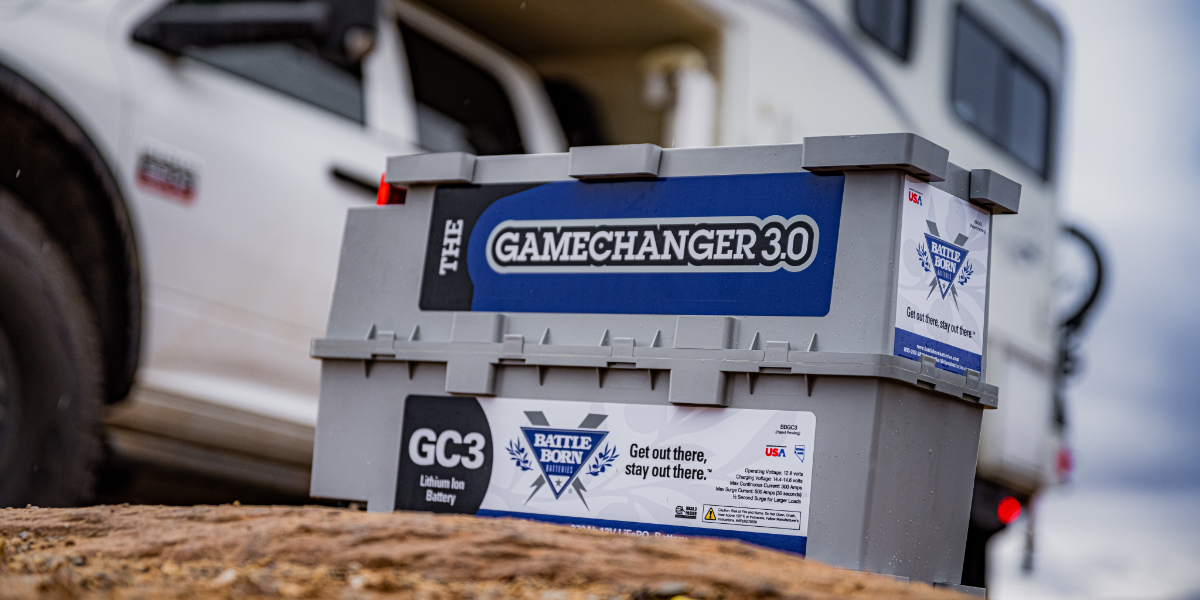
Hand-in-hand with solar is the shift to Lithium Battery Banks (LiFePO4). Unlike traditional lead-acid batteries, lithium allows you to use 100% of your capacity without damaging the cells. This means you can run your lights, fridge, and even a high-efficiency AC or Starlink terminal for days without a single drop of fuel.
Choosing Your Rig: Solo Expeditions vs. Group Adventures
The "best" rig depends entirely on who is coming along and how deep into the woods you plan to go.
- Truck Campers: For solo travelers or couples seeking the most remote areas, a truck camper is often superior. It keeps your hitch free for towing a boat or a trailer full of dirt bikes, and it offers the smallest possible footprint. If the truck can fit, the camper can fit.
- Class B Camper Vans: These provide the ultimate "stealth" and convenience. Being able to move from the driver's seat to the bed without stepping outside is a massive safety and comfort advantage in bad weather or sketchy terrain.
- Off-Road Travel Trailers: These are the choice for "basecamping." You can haul a specialized expedition trailer into a remote spot, unhook it, and then use your unencumbered 4x4 vehicle to scout even more technical trails.
2026 Market Trends: Lightweight Tech and Price Points
The 2026 off-road RV market is defined by a flight toward advanced materials. We are seeing a significant shift away from wood-and-staple construction toward carbon fiber, aerospace-grade aluminum, and advanced composites. These materials offer a 20-30% weight reduction while being virtually immune to rot and mold—critical for rigs that spend their lives in the elements.
Market statistics show a widening range for every budget. Specialized expedition trailers now range from 1,500 lbs for ultra-light teardrops (perfect for Subarus and small crossovers) to over 3,000 lbs for luxury off-grid units. Price points reflect this tech, generally falling between $32,000 for entry-level rugged trailers and $95,000 for high-end, fully outfitted expedition pods.
Top Off-Road Models for 2026
To help you narrow down the search, I’ve categorized the standout performers for the upcoming season. These rigs have been tested in the dirt, not just on paper.
| Model | Category | Approx. Price | Ground Clearance | Dry Weight |
|---|---|---|---|---|
| Taxa Outdoors Mantis | Best Overall | $55k - $65k | 14" | 2,900 lbs |
| Escapod TOPO2 | Best Compact | $32k - $38k | 20" | 1,900 lbs |
| Black Series HQ19 | Best Luxury | $62k - $72k | 16" | 6,100 lbs |
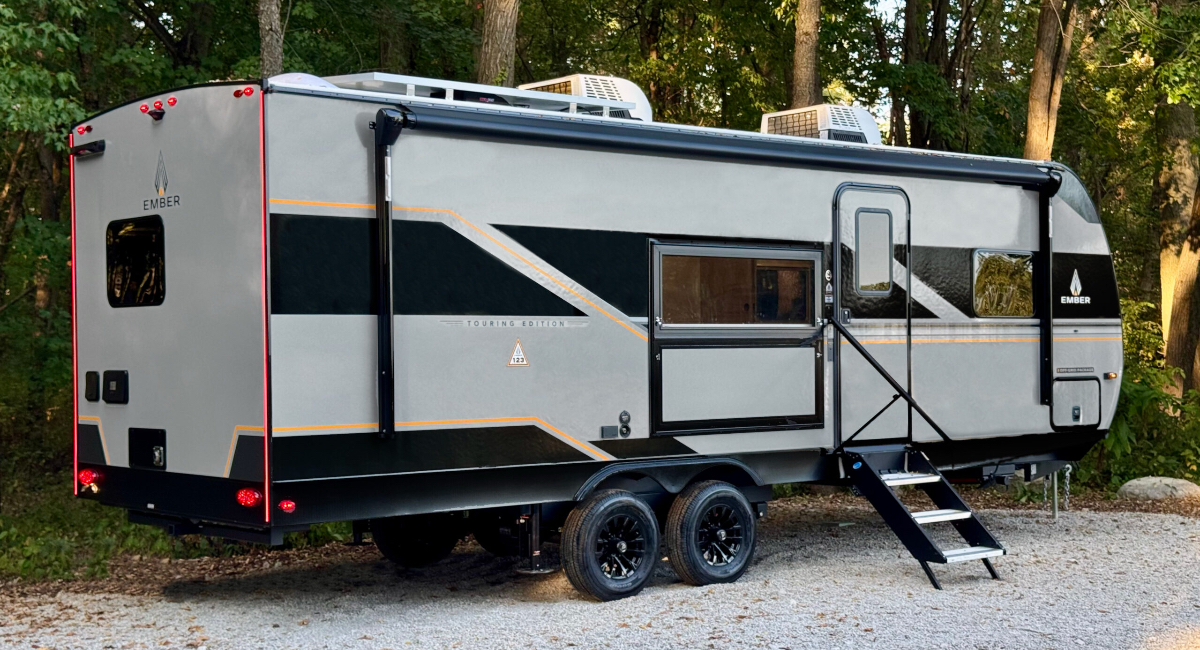
| Ember RV Overland | Best Tech | $45k - $55k | 15" | 3,500 lbs |
For families looking for a balance between price and capability, the Forest River No Boundaries (NOBO) line continues to be a top contender, offering adaptable storage for kayaks and bikes at a more accessible price point.
Explore 2026 Off-Road Models →
Operational Excellence: Mastering the Backcountry Trail
Buying the rig is only half the battle; knowing how to drive it is where the real adventure begins. When I'm out in the backcountry, I follow a strict protocol to ensure I don't end up on a YouTube "off-road recovery" channel.
1. The Scouting Protocol Never drive a technical section with your RV attached unless you’ve walked it first. Put the truck in park, get out, and look for "diff-killers"—rocks that will hit your differential—or soft shoulders that could cause a trailer to slide.
2. Tire Management Airing down is your best friend. Dropping your tire pressure to 20-25 PSI increases your footprint, providing significantly better traction in sand and mud while softening the ride for your trailer's components. Just make sure you carry a high-volume onboard compressor to air back up before you hit the pavement.
3. Leave No Trace Ethics Backcountry camping is a privilege. We operate on a "Pack it in, Pack it out" basis. This means managing your greywater—never dump soapy water near alpine lakes or desert washes. Use biodegradable soaps and carry a portable waste tank if your rig doesn't have one integrated.
Marcus’s Pro-Tip: Water Conservation "In the backcountry, water is more valuable than gold. I carry a pressurized 'Road Shower' on the exterior for rinsing gear and dogs, saving the internal fresh water tank strictly for drinking and cooking. In 2026, look for rigs with 'recirculating showers' that filter and reuse water—it's a game-changer for 10-day stints."
FAQ
Q: Do I need a 4x4 vehicle to tow an off-road RV? A: While 4WD is highly recommended for the most remote BLM spots, a high-clearance 2WD vehicle with a locking differential can handle many graded dirt roads. However, for 2026-style overlanding, 4x4 offers the peace of mind needed when the weather turns and a dry trail turns into a mud bog.
Q: Can I use a standard RV for backcountry camping? A: You can, but it’s a gamble. Standard RVs are built for highways. The vibrations from washboard roads can loosen plumbing fittings and crack frames, and the low-hanging waste valves are easily torn off by rocks.
Q: How much solar power do I really need? A: If you're running a fridge, lights, and charging laptops, 400W is the sweet spot. If you plan on using an induction cooktop or a small AC unit, you’ll want to push toward 800W and a 400Ah lithium battery bank.
Ready to Find Your Frontier?
The backcountry is calling, and for 2026, the gear has finally caught up to our ambitions. Whether you’re a solo explorer in a compact truck camper or a family setting up a basecamp in a rugged travel trailer, the key is to prioritize clearance, weight, and self-sufficiency.
Don't just watch the horizon—drive toward it.