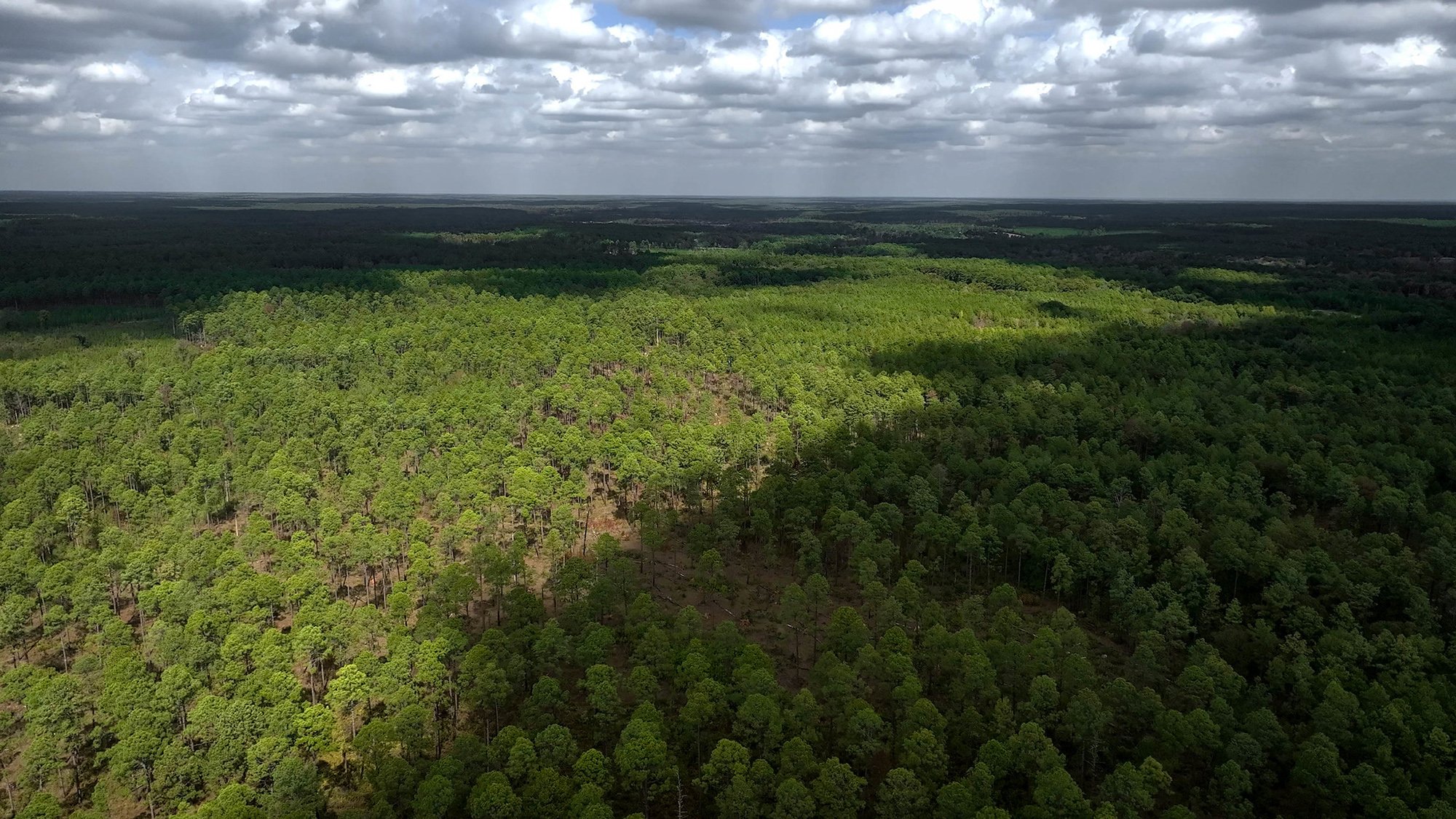
Forest Management Overhaul: USFS Shuts Regional Hubs
Quick Facts
- Headquarters Move: The agency is relocating its central command from Washington, D.C., to Salt Lake City, Utah.
- Hub Elimination: All nine existing regional offices are being abolished in favor of a decentralized model.
- Research Cuts: The Forest Service is closing 57 of its 77 research facilities across 31 states.
- New Leadership Model: Leadership will transition to 15 state directors supported by six administrative Service Centers.
- Workforce Impact: The restructuring is expected to require approximately 500 employees to relocate to the new Utah headquarters.
- Public Sentiment: An overwhelming 82% of 47,000 public comments submitted regarding the plan express formal opposition.
- Core Objective: Chief Tom Schultz describes the shift as a back-to-basics move focused on resource extraction and wildfire mitigation.
The U.S. Forest Service is undergoing a major restructuring that eliminates nine regional hubs and 57 research labs, shifting to a state-based model for forest management to prioritize resource extraction and administrative efficiency. This decentralization marks the most significant organizational change in the agency's 121-year history, moving the center of power from the East Coast to the intermountain West.
The Great Decentralization: From D.C. to Salt Lake City
The decision to move the Forest Service headquarters to Salt Lake City is a strategic relocation aimed at placing leadership closer to the 193 million acres of land the agency manages. With nearly 90% of National Forest System lands located in the Western United States, proponents argue that the previous Washington, D.C. focus created a disconnect between policymakers and the landscapes they oversee. By eliminating all nine of its regional offices, the agency effectively dismantles a century-old administrative hierarchy.
Under the new forest management models, the traditional regional boundaries—such as the Pacific Northwest Region or the Southern Region—will cease to exist. In their place, the agency will establish 15 state directorates. These directors will report directly to the Salt Lake City headquarters, a move intended to streamline communication but one that critics fear will lead to inconsistent policies across state lines. To handle the logistical heavy lifting, six administrative Service Centers will be established in cities like Missoula, Montana, and Albuquerque, New Mexico, focusing on human resources, contracting, and IT.
This shift toward agency decentralization is viewed by some as a necessary modernization of federal land governance. However, the transition involves significant logistical hurdles. The requirement for 500 specialized staff members to move to Utah by the end of FY26 has already led to concerns regarding a "brain drain," as seasoned experts in land use and policy may choose retirement or private sector employment over relocation.
| Feature | Old Regional Model | New State-Based Model |
|---|---|---|
| Headquarters | Washington, D.C. | Salt Lake City, Utah |
| Administrative Units | 9 Multi-state Regions | 15 State Directorates |
| Research Hubs | 77 Distributed Stations | 1 Central Hub (Fort Collins, CO) |
| Primary Oversight | Regional Foresters | State Directors & Service Centers |
| Staffing Concentration | Urban East Coast / Regional Hubs | Distributed Western Hubs |
Scientific Decimation: The Closure of 57 Research Hubs
Perhaps the most controversial aspect of the overhaul is the massive reduction in the agency’s research capacity. By closing 57 of its 77 ecological research stations, the Forest Service is centralizing its scientific division into a single national hub in Fort Collins, Colorado. This move represents a pivot away from site-specific ecological monitoring and toward a consolidated, data-driven approach.
The loss of localized research facilities is particularly concerning for those who rely on longitudinal data. Iconic locations like the Bartlett Experimental Forest in New Hampshire, which has provided 90 years of continuous data on northern hardwood forests, and the Bozeman lab in Montana, known for its 63 years of mountain ecosystem research, face an uncertain future. Scientists argue that sustainable forest management requires hyper-local data that cannot be replicated from a central facility hundreds of miles away.

This consolidation fundamentally alters the types of forest management the agency can support. Without local labs to study invasive species, soil health, and specific wildlife habitats, the agency may struggle to maintain the delicate balance of forest ecology and management. Conservationists argue that this reduction in scientific oversight is a precursor to a more aggressive resource extraction agenda, where institutional knowledge retention is sacrificed for administrative speed.
'Back-to-Basics': Prioritizing Timber and Minerals
The reorganization is being led by Chief Tom Schultz, who has championed a "back-to-basics" philosophy for the agency. This directive shifts the focus of forest management toward active resource use, including timber production and mineral security. According to agency briefings, the restructuring is a response to a $3 billion maintenance backlog and the urgent need for forest management for wildfire prevention.
Under this new mandate, the agency aims to increase timber harvest volumes to levels not seen in decades. By streamlining the environmental review process and moving leadership to state capitals, the administration hopes to accelerate fuel load management projects. These projects involve thinning dense forests and conducting prescribed burns to reduce the risk of catastrophic wildfires that have plagued the West.
However, legal experts have raised questions regarding the National Forest Management Act. This act requires the agency to use an interdisciplinary approach that considers both economic and ecological factors. Critics suggest that by removing regional scientists from the decision-making process, the agency may be prioritizing short-term resource extraction policy over long-term conservation stewardship. The focus on wildfire suppression and timber sales is seen by some as a necessary pragmatic shift, while others view it as a retreat from the multi-use mandate that has defined the Forest Service for a century.
Stewardship at Risk: Critics and Local Impact
The public response to the overhaul has been largely critical. Public land advocates and conservationists express deep-seated concerns that the state-based model is a step toward land privatization concerns or the transfer of federal lands to state control. The 82% negative sentiment in public comments reflects a fear that the "localizing" of leadership will make state directors more susceptible to local political pressure and industry lobbying.
The importance of forest management extends beyond timber and fire; it is a critical component of rural community impact. Many small towns in the Pacific Northwest and the Appalachians depend on the Forest Service for tourism infrastructure, watershed protection, and grazing permits. The shuttering of regional offices in cities like Portland or Atlanta could lead to a loss of economic stability in those urban centers, while the new state directorates may lack the staff depth to manage complex multi-stakeholder disputes.
Furthermore, the transition threatens the long-term viability of the Roadless Rule and other protections for wilderness areas. Without regional hubs to provide a buffer between national policy and local extraction interests, there is a risk that biodiversity preservation will take a backseat to industrial needs. Former agency leaders have noted that the "institutional memory" of the regional system allowed for a nuanced understanding of local landscapes—a nuance that a centralized hub in Salt Lake City may struggle to maintain.
FAQ
What is happening to the US Forest Service?
The agency is undergoing a massive restructuring that involves moving its headquarters from Washington, D.C., to Salt Lake City, Utah, and eliminating its nine regional offices. Additionally, it is closing 57 of its 77 research facilities across the country to consolidate operations and shift toward a state-based leadership model.
What do you mean by forest management?
Forest management is the process of planning and implementing practices for the stewardship and use of forests to meet specific environmental, economic, social, and cultural objectives. It involves balancing timber production, wildlife habitat protection, water quality, and wildfire prevention.
What are the three types of management for forests?
The three primary approaches generally include even-aged management (where trees are roughly the same age, often through clear-cutting), uneven-aged management (maintaining a mix of tree sizes and ages), and restoration management, which focuses on returning a forest to its natural ecological state through thinning and controlled burns.
What are two methods of forest management?
Two common methods are selective cutting, where only specific trees are harvested to maintain the forest canopy, and prescribed burning, which is the controlled use of fire to clear out underbrush and reduce the risk of larger, uncontrolled wildfires.
What state is #1 in forestry?
Georgia is consistently ranked as the top state for forestry in terms of commercial timber production and private forest acreage. However, Oregon leads the nation in the total volume of softwood timber harvest, making it a critical hub for the lumber industry.