Quick Facts
- Primary Utility: A heavy-duty folding knife designed for wood processing and fire preparation, bridging the gap between an EDC pocket knife and a survival fixed blade.
- The "Broadside" Edge: Features a Scandi-grind D2 tool steel blade, a rarity for folding knives, specifically optimized for carving and batoning.
- Weight vs. Power: Weighs in at 5.1 ounces, offering significantly more leverage and durability than 3-ounce ultralight folders without the bulk of a hatchet.
- Secure Locking: Utilizes Kershaw’s DuraLock (crossbar lock) mechanism for rock-solid security and smooth, ambidextrous deployment via KVT ball bearings.
- Weight-Saving Hack: Can reduce a hiker’s tool kit weight by over 70% by replacing the need for a separate hatchet or fixed blade.
The Ultralight Infection: Why 3 Ounces Isn't Always Enough
Look, I get it. I’ve spent the better part of a decade counting grams, trimming backpack straps, and obsessing over sub-3oz folding knives that feel like they might disappear if I sneeze too hard. The hiking community has been hit by what I call the "Ultralight Infection"—the idea that if a piece of gear weighs more than a handful of feathers, it’s a liability. But after a particularly brutal solo expedition in the North Cascades where a "lightweight" folder failed me during a wet-fire emergency, I’ve had to rethink my philosophy.
There is a dangerous trend of being underpowered in the wild. When the temperature drops and the wood is soaked, a 2.5-ounce office-friendly folder isn't going to help you process kindling or strike a spark with any real authority. You need leverage. You need mass. You need a tool that can actually bite into a piece of cedar without the pivot pin screaming for mercy.
Enter the Kershaw Broadside. This isn't just another pocket knife; it’s a workhorse designed to break the rules of the ultralight cult. It’s heavy, it’s beefy, and quite frankly, it might be the only tool you actually need to survive a night in the bush.
The Kershaw Broadside is better than ultralight knives for outdoor use because its 5.1-ounce weight and 3.5-inch Scandi-ground blade provide the leverage needed for demanding tasks like fire preparation and light batoning that 3-ounce EDC knives simply cannot handle. While the ultralight crowd might scoff at the extra two ounces, I’m here to tell you that those two ounces are the difference between shivering in the dark and sitting by a roaring blaze.
Design and Build: A 'Ballerina and a Brute'
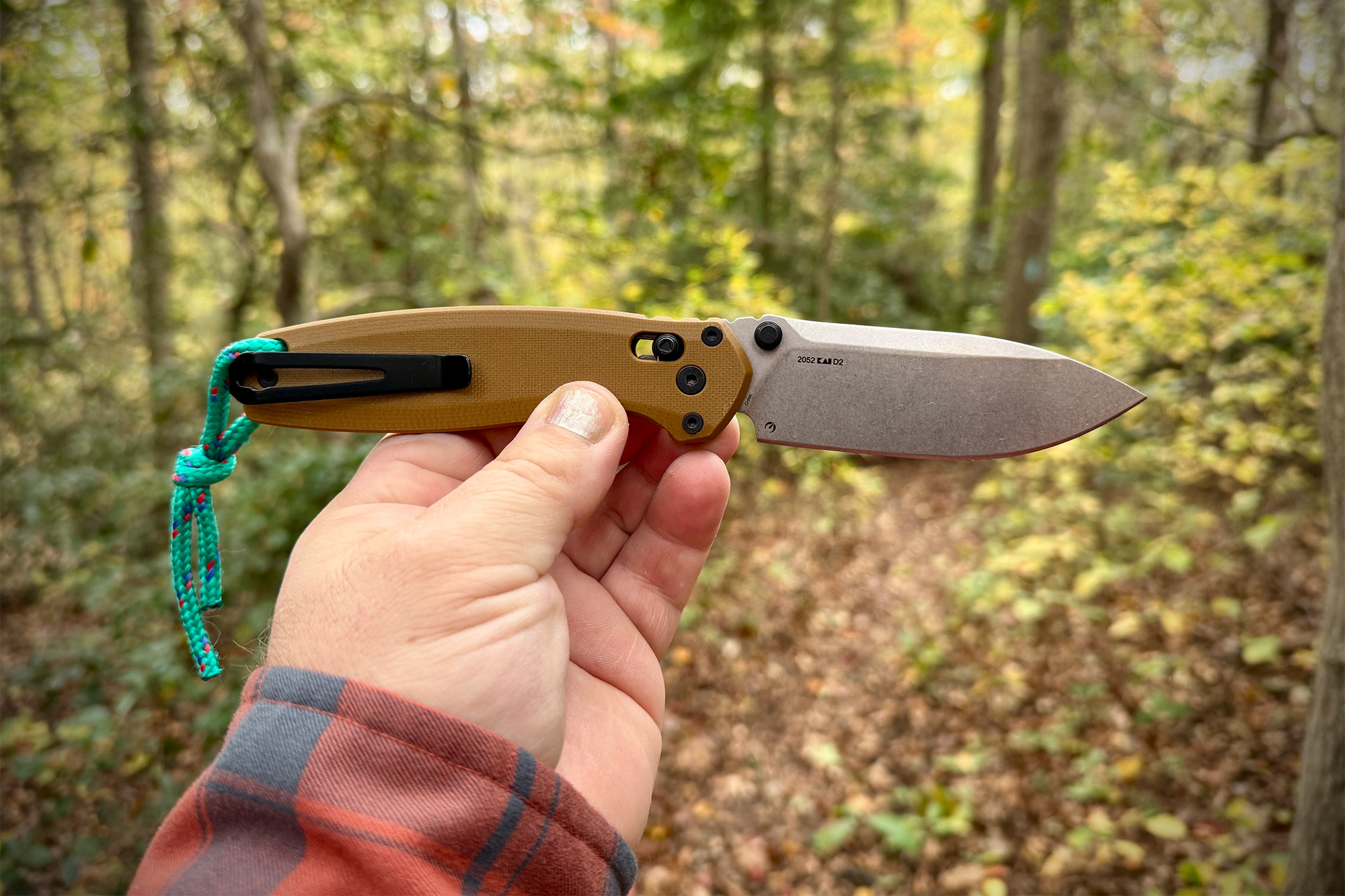
When I first held the Broadside, the term "overbuilt" came to mind—but in the best way possible. Kershaw has managed to create something that is the perfect genesis of a ballerina and a brute. It has the finesse for fine slicing, but the bone-structure to handle heavy impact.
The heart of the Broadside is its 3.5-inch blade made of D2 tool steel. For the uninitiated, D2 is a high-carbon, high-chromium tool steel that is legendary for its edge retention. It’s tough, it’s wear-resistant, and it holds a "working edge" far longer than the softer stainless steels found in many budget folders. But the real star here is the Scandi-grind. Most folding knives feature a flat or hollow grind, which is great for slicing apples or opening boxes. A Scandi-grind, however, is a single-bevel edge that excels at woodcraft. It’s like having a folding chisel in your pocket.
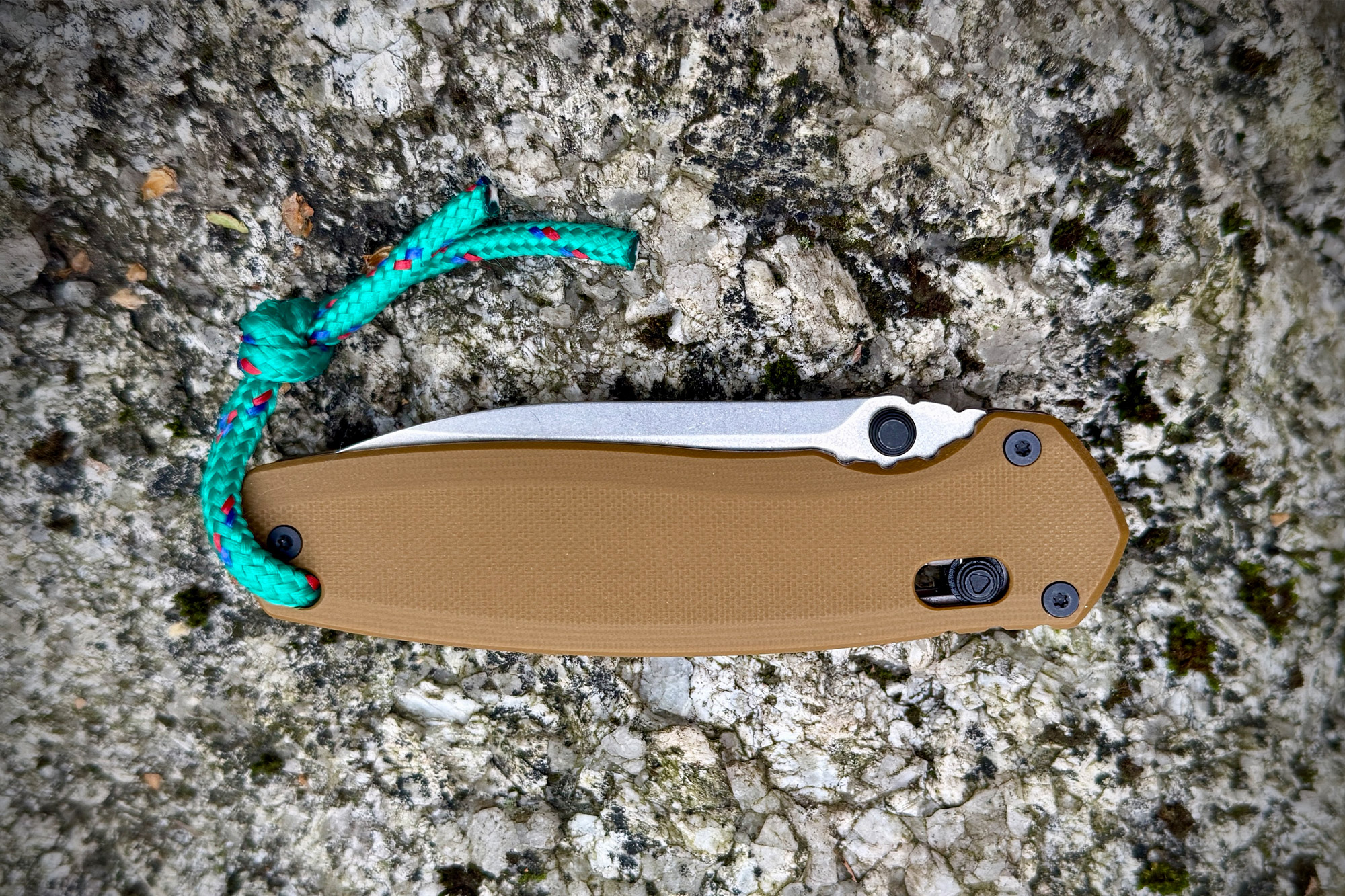
The Kershaw Broadside features a D2 tool steel blade, G10 handle scales, a steel frame, and Kershaw’s DuraLock crossbar locking mechanism for secure and smooth deployment.
The ergonomics are equally impressive. The G10 handle scales provide a grippy, non-slip texture even when your hands are sweaty or covered in trail grime. Underneath those scales lies a steel frame that gives the knife its rigid, indestructible feel.
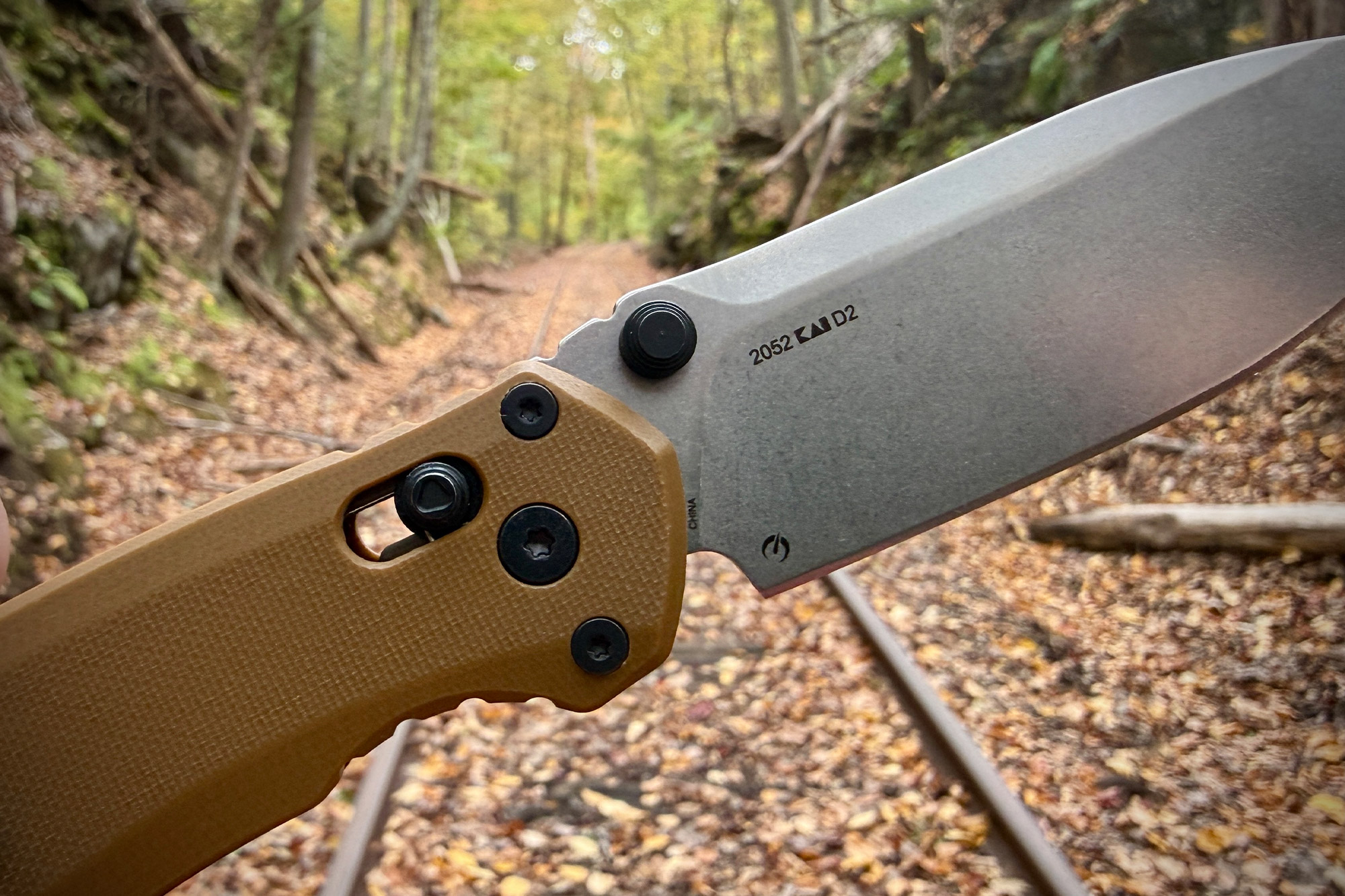
As for the action? It’s buttery. Despite its heavy-duty nature, the Broadside deploys with a satisfying "thwack" thanks to the KVT ball-bearing system. Whether you use the manual thumb studs or simply pull back the DuraLock, the blade flies open. Speaking of the DuraLock, this crossbar locking mechanism is essential for a knife intended for heavy use. It keeps your fingers away from the blade's path when closing and provides a rock-solid lockup that gives you the confidence to put some real weight behind your cuts.
The Math of Utility: Size-to-Weight Ratio
Let’s talk numbers, because that’s where the "heavy-duty" argument usually loses people. The Broadside has a total length of 8.35 inches and a 3.5-inch blade, weighing in at 5.1 ounces. On paper, that sounds heavy for a folder. But when you look at the utility-to-weight ratio, the story changes completely.
The Kershaw Broadside achieves a high utility-to-weight ratio of approximately 0.61 ounces per inch of total length, offering heavy-duty performance at nearly half the weight of traditional survival fixed blades.
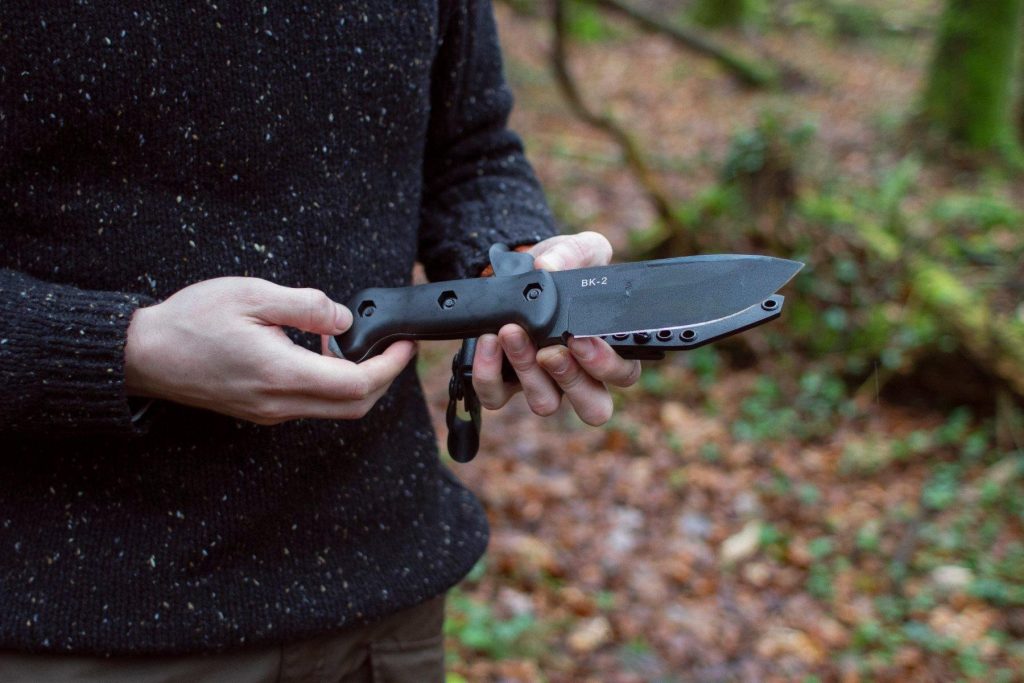
When you carry a 5-ounce knife that can actually process wood, you aren't just carrying a knife; you're carrying a survival system. Most traditional survival fixed blades, like the ESEE-4 or the Becker BK2, weigh anywhere from 8 to 16 ounces (and that's before you add the weight of the sheath). The Broadside gives you about 80% of the capability of those fixed blades at a fraction of the weight and bulk. It’s the ultimate "Goldilocks" tool for the adventurer who wants to go fast but stay prepared.
Field Performance: Beyond Slicing
I took the Broadside out for a three-day trek through the Olympic Peninsula to see if the Scandi-grind hype was real. In a rainforest environment, fire preparation is everything. If you can't get past the wet bark to the dry heartwood, you’re in trouble.
Standard EDC folders with thin, flat grinds tend to "bind" when you try to carve deep into wood. The Broadside’s Scandi-grind acted like a wedge, popping wood chips away with minimal effort. Creating feather sticks—those thin curls of wood used to catch a spark—was almost effortless. The broad spine of the D2 blade also allowed for light batoning (using a piece of wood to strike the spine of the knife to split smaller logs).
Expert Tip: While I don't usually recommend batoning with a folding knife, the DuraLock mechanism on the Broadside is exceptionally strong. If you stay within reason—splitting pieces no thicker than your wrist—the Broadside handles it without developing any blade play.
Choosing a large folding knife like the Broadside can actually reduce pack weight by serving as a single-tool solution for slicing, carving, and wood processing, potentially eliminating the need to carry a heavier hatchet or fixed-blade knife. I found myself reaching for it for everything from cutting paracord to prepping dinner to clearing small branches from my campsite. It’s a confidence-booster that a 3oz knife simply can't provide.
The Survival Kit Weight-Saving Hack
This is where we trigger the ultralight purists. They’ll say, "But Marcus, my knife only weighs 2.8 ounces!" Sure, but when that 2.8-ounce knife can’t split a piece of wood, what do you do? You carry a 16-ounce camping hatchet. Suddenly, your "ultralight" cutting kit weighs nearly 19 ounces.
By switching to a single, robust tool like the Broadside, you simplify your kit and save massive amounts of weight. Utilizing the Kershaw Broadside as a primary wood-processing tool can reduce a hiker's tool kit weight by over 70% compared to carrying a standard 3oz ultralight folder combined with a 16oz camping hatchet.
| Gear Setup | Total Weight | Capability |
|---|---|---|
| "Ultralight" Combo (3oz Folder + 16oz Hatchet) | 19.0 oz | High (Great for heavy wood) |
| Traditional Fixed Blade (Knife + Kydex Sheath) | 12.0 oz | High (Indestructible) |
| Kershaw Broadside Only | 5.1 oz | High-Medium (All-in-one) |
The Broadside lives in that sweet spot. It’s heavy enough to be effective but light enough that you won't feel it on your belt or clipped to your pocket during a 15-mile day. It's the ultimate weight-saving hack for the minimalist who refuses to compromise on safety.
Conclusion: Who Should Carry the Broadside?
After a week of field testing, my verdict is clear: The Kershaw Broadside is a masterclass in functional design. It’s not a knife for the person who only opens Amazon boxes in their air-conditioned living room. It’s a knife for the person who spends their weekends where the cell service is non-existent.
If you’re a thru-hiker who only cares about the fastest time on the PCT, keep your 2-ounce razor blade. But if you’re an adventurer—someone who explores off-trail, builds fires, and relies on their gear to work when things go wrong—the Broadside is a mandatory upgrade. It’s durable, perfectly balanced, and offers a level of value that is hard to find in today’s inflated gear market.
In the wild, mass equals capability. Don’t let the ultralight trend leave you underpowered. Carry a tool that can actually do the work.
Shop the Kershaw Broadside Now →
FAQ
Q: Is the Broadside's D2 steel hard to sharpen in the field? A: D2 is a harder steel, so it takes a bit more patience than basic stainless steel. However, because it’s a Scandi-grind, you have a massive built-in guide for your sharpening stone. I recommend a small diamond plate for touch-ups on the trail.
Q: Can the Broadside really replace a fixed blade for survival? A: For 90% of survival situations, yes. It can process wood, prepare food, and handle heavy tasks. However, if you are planning on heavy-duty prying or splitting large logs (above 4-5 inches in diameter), a full-tang fixed blade is still the safer bet. The Broadside is the best "middle ground" option available.
Q: Does the DuraLock hold up over time? A: Yes. Crossbar locks like the DuraLock are inherently strong because the steel bar passes through the steel liners. It’s one of the most reliable locking mechanisms for folders intended for hard use.
Are you ready to ditch the flimsy folders and carry a real tool? Let me know in the comments how you balance weight vs. utility in your pack!