Quick Facts
- State Record Weight: 73.6 lbs
- Angler: Justin Hodge
- Location: Suwannee River, Northwest Florida
- Length: 48.5 inches
- Girth: 36.75 inches
- Bait Used: Live hand-sized bream
- Official Certification: Florida Fish and Wildlife Conservation Commission (FWC), May 2026
- Previous Record: 69.5 lbs (Choctawhatchee River, 2015)
The current Florida state record for blue catfish weighs 73.6 pounds. Caught by angler Justin Hodge in the Suwannee River, the massive fish measured 48.5 inches in length and had a 36.75-inch girth. This record-breaking catch surpassed the previous state benchmark of 69.5 pounds, which was established in the Choctawhatchee River.
The Record-Breaking Catch: A Suwannee River Giant
I have spent years trekking through the cypress-lined banks of Northwest Florida, and let me tell you, there is a specific kind of energy in the air when the Suwannee River is running deep. On May 15, 2026, that energy translated into a monster battle that will be talked about in every bait shop in the Panhandle for decades. Local angler Justin Hodge was out on the water, likely looking for a solid catch, but he ended up hauling in a dinosaur. The 73.6-pound blue catfish he landed did more than just fill a cooler; it officially hammered the previous state record into the history books.
The sheer scale of this fish, officially known as Ictalurus furcatus, is hard to visualize until you are standing next to one. At 48.5 inches in length, it was nearly four feet of pure muscle and slate gray skin. When the Florida Fish and Wildlife Conservation Commission (FWC) biologists arrived to certify the weight on a certified scale, the numbers confirmed what everyone on the boat already knew: the old 69.5-pound record from 2015 had been bested by over four pounds.
Catching a blue catfish florida record like this requires more than just luck. Hodge was utilizing a bait clicker reel, a crucial piece of gear that allows the fish to take the bait and run without feeling the resistance of the drag immediately. In the slow-moving, tea-colored waters of the Suwannee, a big blue needs to feel confident before it swallows a large bait. When that clicker started screaming, Hodge knew he wasn't dealing with a standard channel catfish. The fight was a grueling test of patience and stamina, ultimately resulting in the 36.75-inch girth beast being hauled over the gunwale.
Identification Guide: Blue Catfish vs. Channel Catfish
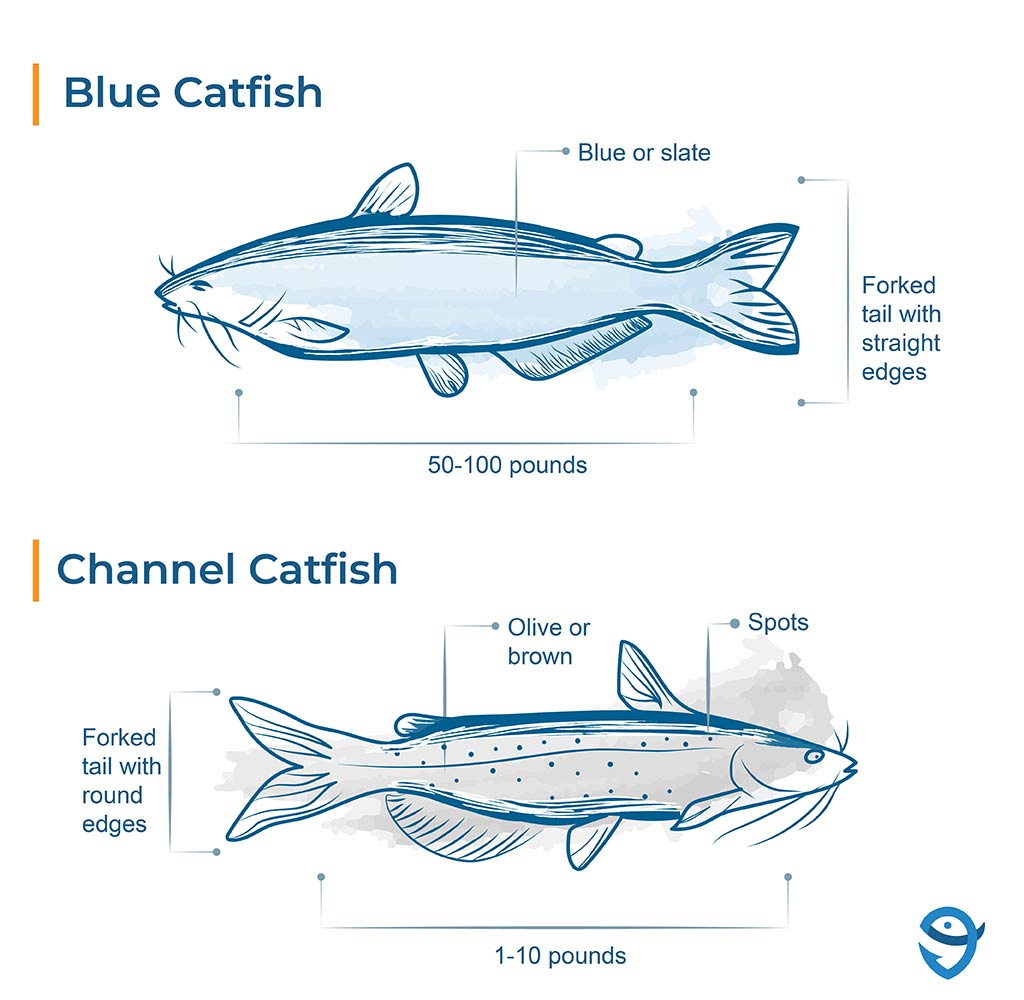
One of the most common mistakes I see out in the field is the misidentification of catfish species. Many folks see a large, silvery-gray fish and immediately call it a blue. However, as any FWC officer will tell you, the devil is in the details—specifically the anal fin count. If you want to know how to identify blue catfish vs channel catfish, you have to look past the color and start counting rays.
The blue catfish florida anglers chase has a very distinct, straight-edged anal fin. If you were to trace it, the shape is almost rectangular. More importantly, it features 30 to 35 rays. On the flip side, the channel catfish florida residents often find in smaller ponds and rivers has a much more rounded anal fin with a lower count of 24 to 29 rays. While the blue is typically a uniform slate gray coloration, juvenile channel cats often sport small black spots that disappear as they age.
Why Identification Matters
Identifying your catch correctly isn't just about bragging rights; it is about respecting the ecosystem and following state regulations. Here is a quick breakdown to keep in your tackle box:
- The 40lb Rule: In Florida, if a catfish clears the 40-pound mark, it is almost certainly a blue or a flathead catfish florida predator. Channel catfish rarely exceed 30 pounds in these waters.
- The Tail: Both species have a forked tail, but the blue catfish tail is often more deeply notched.
- The Body Shape: Blue catfish are built like tanks. They have a distinct hump behind the head that becomes more pronounced as they reach trophy sizes.
How to Catch Trophy Blue Catfish in Florida
If you are looking to get your name in the record books, you need to head north. Blue catfish in Florida are primarily concentrated in the large river systems of the Panhandle and Northwest Florida. Rivers like the Suwannee, Choctawhatchee, and the Apalachicola are the primary hunting grounds for these giants.
To land a fish that weighs as much as a medium-sized dog, you cannot go out with light spinning gear. You need heavy tackle for blue catfish florida conditions. I recommend an 8-foot extra-heavy breakdown rod paired with a high-capacity conventional reel. Spool up with at least 80lb mono or braid. Your terminal tackle should consist of a 10/0 circle hook and enough lead to keep your bait pinned to the bottom of deep holes where the current is slow and the water is cloudy.
The best bait for blue catfish in florida is, without a doubt, fresh forage. Justin Hodge used live hand-sized bream to land his record, and that is a classic choice for a reason. These apex predators are looking for a high-calorie meal. While smaller cats might scavenge for "stink bait," the real monsters want fresh, bloody cut bait or live sunfish. Target the outside bends of the river where the current has carved out deep pockets. Drop your bait right on the edge of the drop-off and wait for that bait clicker to sing.
Comparing the 'Big Three' Florida Catfish Species
Florida is home to three main heavyweights in the catfish world: the Blue, the Channel, and the Flathead. While they might look similar at a glance, their behavior and growth potential are vastly different.
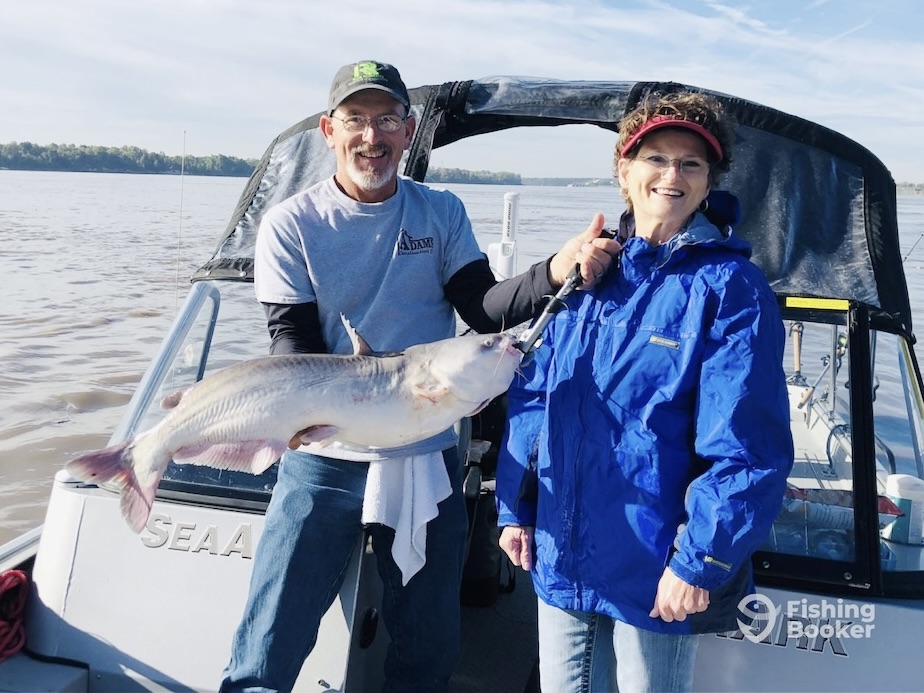
The blue catfish florida record of 73.6 lbs proves that this species is the undisputed king of weight. They are opportunistic predators that will eat almost anything but prefer live or fresh-killed fish as they grow larger. In contrast, the channel catfish florida population is more widespread but smaller. You can find them in almost every lake and river in the state, but they are more often scavengers, making them easier to catch on a variety of baits.
Then there is the flathead catfish florida anglers find in the same Panhandle rivers. These are strictly predators. If it isn't moving and breathing, a flathead usually isn't interested. They have a squared-off tail and a much wider, flatter head, making them easy to distinguish from the blue and channel varieties.
| Feature | Blue Catfish | Channel Catfish | Flathead Catfish |
|---|---|---|---|
| Record Potential | 70+ lbs (Florida) | Rarely over 30 lbs | 60+ lbs (Florida) |
| Diet | Predator/Scavenger | Primarily Scavenger | Strict Predator |
| Native Range | Northwest/Panhandle | Statewide | Northwest/Panhandle |
| Anal Fin | 30-35 rays (Straight) | 24-29 rays (Rounded) | 14-17 rays (Short) |
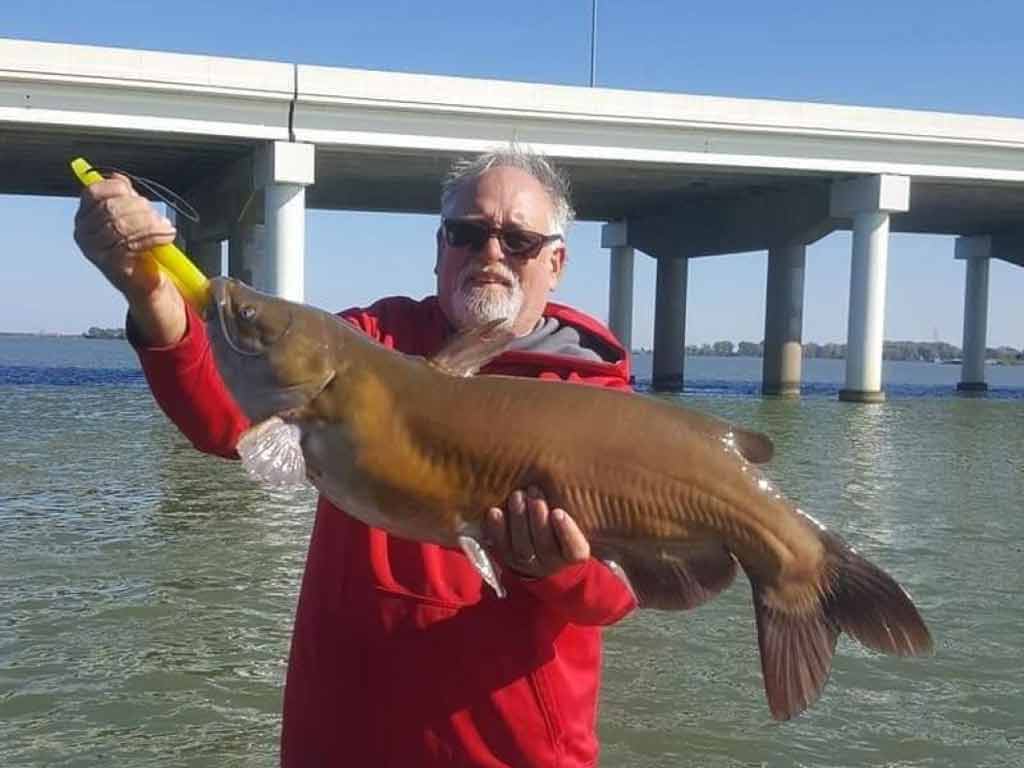
The historical context of the Suwannee River is vital here. This river system has a unique limestone-bottom chemistry and an abundance of forage that allows catfish to grow at incredible rates. While the Choctawhatchee held the title for a decade, the Suwannee has always been a "sleeper" river for trophy hunters. With Hodge’s catch, the secret is officially out.
FAQ
Where are blue catfish in Florida?
You will primarily find them in the river systems of the Florida Panhandle and Northwest Florida. The Suwannee River, Choctawhatchee River, Apalachicola River, and the Escambia River are the most productive spots. They prefer the deep, moving water of these large rivers rather than the still lakes and ponds found further south.
Is blue catfish good for eating?
Yes, they are excellent table fare, especially when they are in the 2-to-10-pound range. The meat is white, firm, and has a mild flavor. However, for trophy-sized fish like the 73.6-pound record, most conservation-minded anglers choose to release them. Large fish can accumulate more mercury and environmental toxins, and they are critical for the breeding population.
How old is a 50 lb blue catfish?
Growth rates vary based on food availability and water temperature, but a 50 lb blue catfish is typically between 15 and 25 years old. In nutrient-rich systems like the Suwannee, they may reach this size faster, but any catfish of that magnitude is a true survivor that has navigated decades of river life.
What is irresistible to catfish?
For the big blues, nothing beats fresh, bloody cut bait or live forage. Hand-sized bream (where legal), mullet, and shad are top-tier choices. While commercial "stink baits" work for smaller channel cats, the giants are looking for a natural, oily meal that mimics the fish living in their specific river section.
If you have been out on the water and landed a monster of your own, I want to see it! Share your catch photos with us or head over to the FWC website to keep an eye on the latest record updates. The Suwannee River clearly has more giants hiding in its depths—maybe the next record-breaker is yours.