Quick Facts
- Top Pick for 2025: The Outdoor Research Rocky Mountain High is our best overall gaiter, offering an unbeatable balance of 420D nylon durability and full-length protection for mud and snow.
- The Weight Factor: Ultra-lightweight trail gaiters, like the Altra Trail, weigh just 0.5 ounces per foot—a staggering 90% weight reduction compared to heavy-duty mountaineering models.
- Expert Testing: Our team conducted field evaluations over a 10-year period, using a weighted scoring system where Comfort (25%) and Debris Protection (25%) are the primary benchmarks for success.
- Terrain Rule: Always match your height to the hazard. Choose knee-high gaiters for deep snow and post-holing, but stick to ankle-high or mid-length options for sand, dust, and gravel.
Introduction: Why Your Feet Need an Insurance Policy
I’ve spent the better part of a decade trekking through everything from the thigh-deep powder of the Cascades to the abrasive, soul-crushing sands of the High Desert. If there is one thing I’ve learned, it’s that the smallest pebble can end a 20-mile day faster than a blown-out knee. We’ve all been there: stopping every half-mile to shake out a rogue piece of scree or feeling that slow, cold creep of snow melting into your wool socks.
Gaiters are essentially an insurance policy for your feet. They bridge the gap between your boots and your pants, sealing out the elements that want to ruin your hike. After 10 years of rigorous field testing across every conceivable terrain, our team has narrowed down the field. Whether you’re a thru-hiker counting every gram or a winter peak-bagger needing bombproof armor, we’ve found the gear that actually works.
Based on our weighted scoring of durability, breathability, and ease of use, the Outdoor Research Rocky Mountain High stands as the best overall full-length hiking gaiter for 2025. If you're moving fast on hot trails, the Dirty Girl Gaiter is the undisputed champion for sand and debris protection.
| Model | Weight (Pair) | Best Use | Material | Protection Level |
|---|---|---|---|---|
| OR Rocky Mountain High | 7.9 oz | Mud, Snow, Brush | 420D Nylon | High |
| Dirty Girl Gaiters | 1.5 oz | Trail Running, Sand | Spandex/Polyester | Light (Debris only) |
| OR Crocodile GORE-TEX | 10.2 oz | Alpine, Deep Snow | 1000D Cordura | Maximum |
| REI Co-op Sahara | 6.1 oz | 3-Season Hiking | 1000D Nylon/Ripstop | Moderate |
| Altra Trail Gaiter | 1.0 oz | Ultralight, Sand | Nylon/Spandex | Light (Debris only) |
Best Overall Full-Length Gaiter: Outdoor Research Rocky Mountain High
When I’m heading into the "unknown"—that messy transition between spring snowmelt and deep autumn mud—the Outdoor Research Rocky Mountain High is the first thing I throw in my pack. It isn’t the flashiest piece of gear, but it is remarkably effective. Built from a rugged 420D nylon, these gaiters provide a formidable shield against everything from thorny undergrowth to the saturated muck of a Pacific Northwest trail.
The reason this model takes our top spot is the value-to-performance ratio. While GORE-TEX models offer more breathability, the Rocky Mountain High provides essential water resistance at a fraction of the cost. During our testing in the Olympics, the top-entry drawcord stayed secure even after miles of bushwhacking, and the reinforced boot lace hooks never budged.
Pros:
- Incredible durability for the price point.
- Breathable enough for high-output hiking in cool temperatures.
- Secure fit that doesn't slide down during extended use.
Cons:
- Not fully waterproof for standing water or heavy rain (DWR treated).
- Can feel hot in temperatures above 70°F.
Best for Trail Running & Sand Protection: Dirty Girl Gaiters
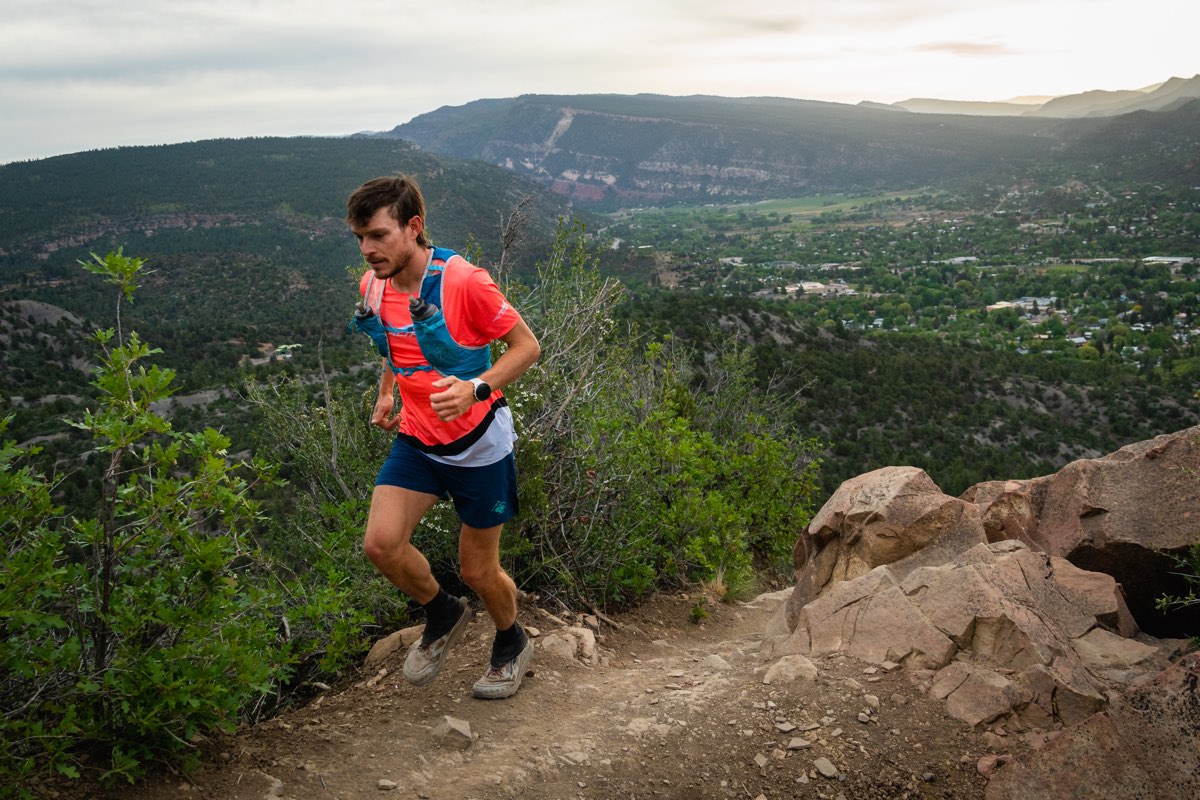
If the name doesn't make you smile, the performance will. Dirty Girl Gaiters have a cult following in the ultralight backpacking and trail running communities for a reason. Weighing in at a measly 1.5 ounces for the pair, they are so light you’ll genuinely forget you’re wearing them. I’ve worn these through the soft sands of the Mojave, and they are the only thing that kept my shoes from filling up like hourglasses.
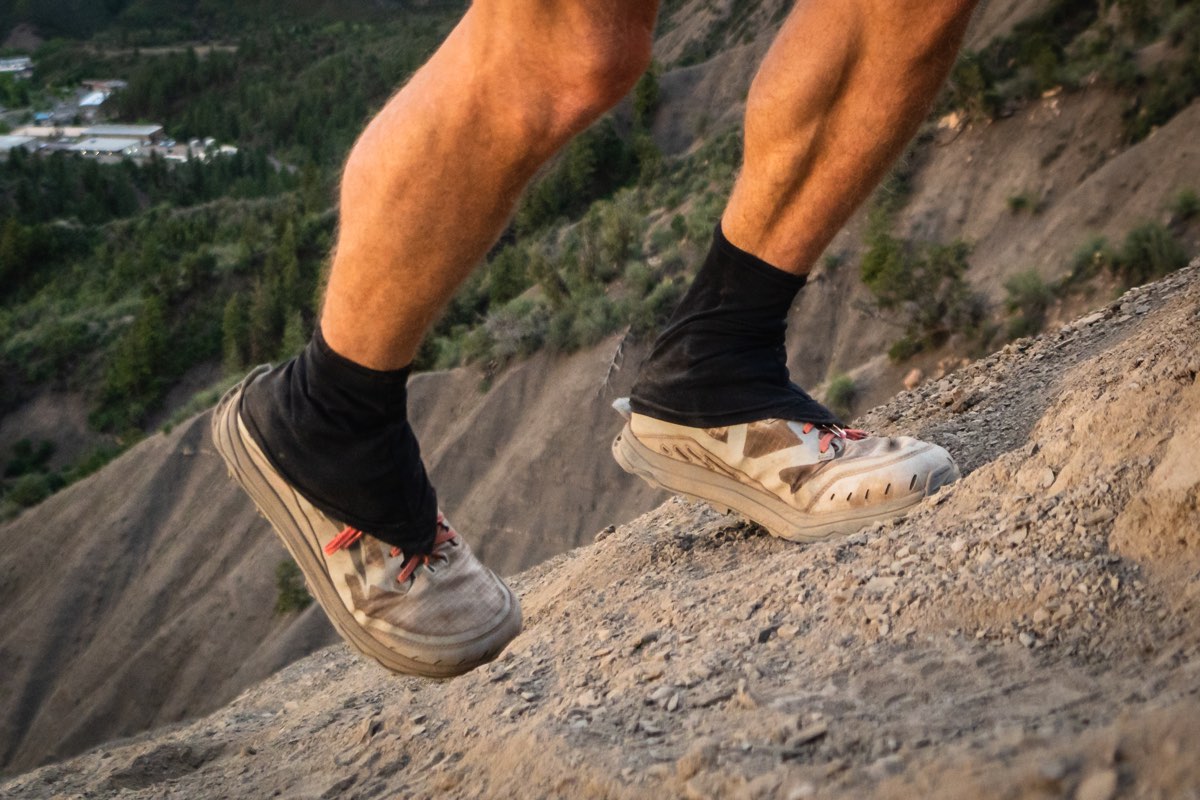
The secret is the four-way stretch Spandex/Polyester blend. It doesn’t use a heavy under-the-heel strap; instead, it utilizes a hook that attaches to your front laces and a "Gaiter Trap" Velcro strip that adheres to the back of your shoe. It creates a perfect seal against dust, pine needles, and sand. Just note: if your shoes don't have a built-in Velcro tab, you'll need to use the adhesive strip provided with the gaiters.
Pros:
- Ultimate breathability for desert and summer hiking.
- Available in dozens of wild, high-visibility patterns.
- Unmatched weight-to-protection ratio for debris.
Cons:
- Zero water resistance.
- Velcro adhesive on shoes can fail in extreme heat or wetness.
Best for Deep Snow & Winter Sports: Outdoor Research Crocodile GORE-TEX
When the mission involves crampons, ice axes, and waist-deep powder, "lightweight" takes a backseat to "bombproof." The Outdoor Research Crocodiles are the industry standard for mountaineering. I’ve used these while navigating glaciers in the Himalayas, and they are built to take a beating.
The lower leg is reinforced with 1000D Cordura, which is essential for resisting the inevitable snags from crampon points or sharp rocks. The upper is 3-layer GORE-TEX, providing the best possible waterproofing while allowing some moisture vapor to escape. The massive 2-inch wide front closure is easy to operate even with heavy winter gloves on.
Pros:
- The most durable gaiter on the market; built to last a lifetime.
- GORE-TEX provides top-tier waterproofing for snow.
- Replaceable BioThane® instep strap is nearly indestructible.
Cons:
- Heavy and bulky for standard summer hiking.
- Expensive, but worth the investment for winter specialists.
Check Crocodile GORE-TEX Price →
Best Mid-Length Option: REI Co-op Sahara
Sometimes a full-length gaiter is overkill, but an ankle-high runner’s gaiter isn't enough. Enter the REI Co-op Sahara. This mid-calf option is the "Goldilocks" of the group. It’s tall enough to keep mud from splashing over the top of your boot but short enough to keep your calves from overheating.
During our scoring process, the Sahara earned a 6.1 on the weight scale, making it a favorite for 3-season backpackers. It uses a 1000D nylon bottom for durability where you need it and a lighter ripstop upper. It’s a simple, effective hybrid that fits a wide variety of footwear, from mid-height boots to beefy trail runners.
Pros:
- Great versatility for diverse trail conditions.
- Easier to put on and take off than full-length models.
- Solid value for REI members.
Cons:
- The instep strap can feel a bit thin compared to the OR models.
- Sizing can be tricky for those with very large calves.
Best Minimalist & Hot Weather Choice: Altra Trail Gaiter
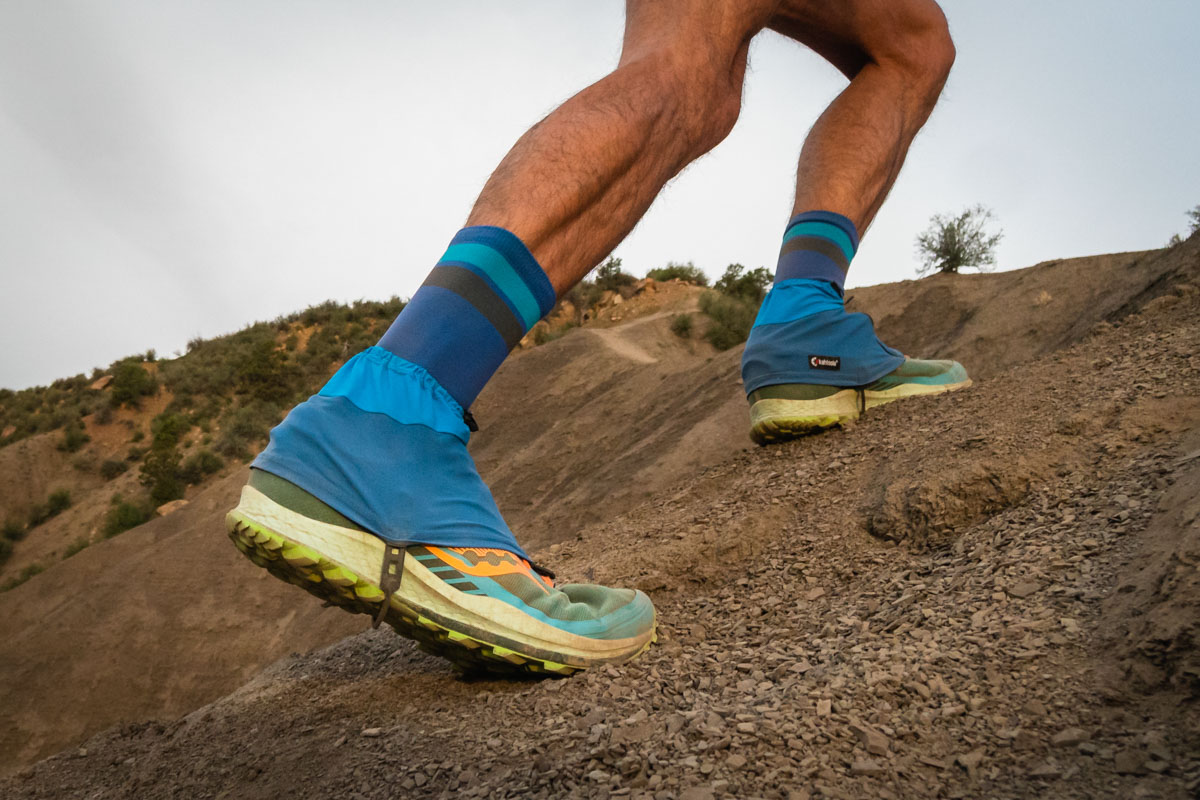
For the minimalist who wants the absolute bare minimum, the Altra Trail Gaiter is a masterpiece of efficiency. It offers a 90% weight reduction compared to heavy-duty mountaineering models, weighing in at just 0.5 ounces per foot. This is specifically designed for trail runners and "fastpackers" who are moving quickly and want to prevent the "stop-and-shake" pebble dance.
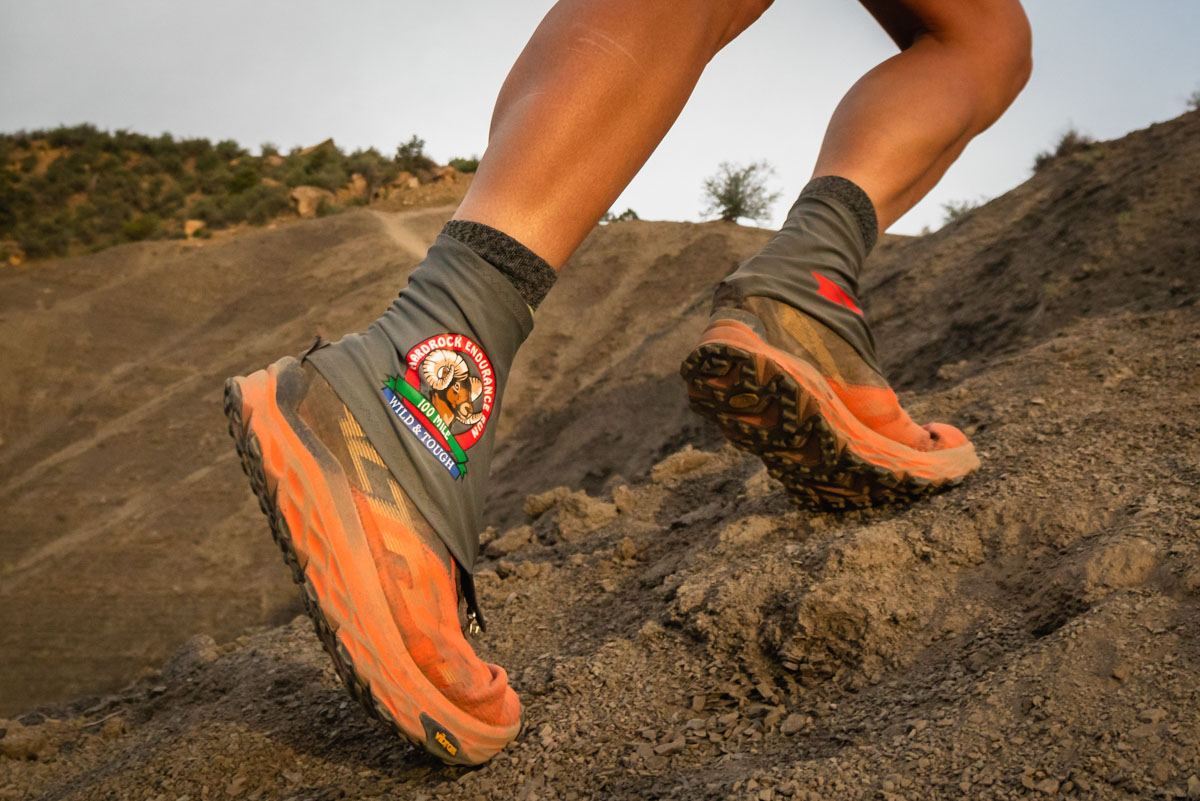
What makes this stand out is the strapless design. If you wear Altra shoes (or any brand with a built-in gaiter trap), this gaiter clicks in and stays put without a strap running under your sole. This prevents the strap from wearing out on abrasive rocks or catching on roots. It’s all about breathability—keeping the dust out without turning your feet into a sauna.
Pros:
- Lightest option available.
- No under-shoe strap to break or wear down.
- Extremely breathable and quick-drying.
Cons:
- Best performance is limited to shoes with specific "Gaiter Traps."
- Minimal protection against sharp rocks or heavy brush.
How to Choose: A Buyer’s Guide for 2025
Choosing a gaiter shouldn't be complicated, but in a world of technical fabrics and "Denier" counts, it's easy to get lost. Here is the framework we used during our 10-year testing phase to categorize the winners.
Height Selection: Knee-High vs. Ankle-High
The height of your gaiter is dictated by the depth of the "enemy."
- Knee-High (15-18 inches): Essential for deep snow, heavy mud, and off-trail bushwhacking. They offer maximum protection but the least breathability.
- Mid-Calf (8-12 inches): The sweet spot for rainy days or muddy trails where you aren't sinking past your ankles.
- Ankle-High (Low): Designed for trail running and dry-weather hiking. Their primary job is keeping scree, sand, and dust out of your shoes.
Material Science: Waterproofing vs. Breathability
- GORE-TEX & Waterproof Membranes: Best for winter and wet climates. They keep water out but can cause "swamp foot" in hot weather.
- Coated Nylon (420D-1000D): The "D" stands for Denier (thickness). High denier means high durability. These are water-resistant and much tougher against abrasion than stretch fabrics.
- Lycra/Spandex Blends: These offer zero water protection but maximum breathability. They are purely for debris shielding.
Attachment Systems
The most common point of failure on a gaiter is the instep strap. Look for Hypalon or BioThane straps—these are reinforced rubbers that can withstand miles of scraping against granite. If you are a trail runner, look for "strapless" systems that use Velcro to reduce friction and weight.
Pro Tips: How to Wear Gaiters Correctly
Even the best gear fails if used incorrectly. Here are two tips from the field that will save your feet:
- The "Shingle Effect": In a heavy downpour, most hikers put their gaiters over their rain pants. This is a mistake. Water will run down your pants, go behind the gaiter, and straight into your boot. Instead, wear your gaiters under your rain pants. This way, the water sheds off the pants and over the outside of the gaiter.
- Buckle Placement: Always ensure the buckle of your instep strap is on the outside of your foot. If you place them on the inside, you are likely to kick the buckle with your other foot while hiking, leading to trips or broken hardware.
FAQ
Q: Do I really need gaiters for summer hiking? A: If you are on well-groomed, dry trails, probably not. However, if you're hiking in sandy environments (like the Southwest) or on loose volcanic scree, a low-profile gaiter like the Dirty Girl will save you from having to stop every 20 minutes to empty your shoes.
Q: Can I use trail running gaiters with hiking boots? A: Usually, yes, but with a caveat. Most trail running gaiters rely on a Velcro "trap" on the heel. If your hiking boot doesn't have this, you'll need to glue a piece of industrial Velcro to the heel of your boot for it to work.
Q: How do I clean my gaiters? A: Don't just throw them in the wash, especially if they have a waterproof membrane. Hose them off to remove mud and grit. If they are GORE-TEX, use a technical wash like Nikwax to maintain the DWR (Durable Water Repellent) coating.
Ready to Hit the Trail?
Protecting your feet is the first step toward a successful expedition. Whether you're gearing up for a snowy winter summit or a fast-and-light desert trek, there is a gaiter on this list designed for your specific terrain. Don't wait until you're five miles in with a blister forming to realize you should have sealed your boots.
My Final Recommendation: If you can only own one pair, go with the Outdoor Research Rocky Mountain High. It's the "do-it-all" workhorse that has never let me down in a decade of exploring.