Quick Facts
- The Knee-Saver Reality: Trekking poles significantly reduce joint impact by up to 25% on descents and provide essential leverage on steep climbs, helping to prevent long-term knee strain.
- Top Performance: The MSR DynaLock Ascent Carbon is our 2026 "Best Overall" pick due to its superior blend of ergonomic comfort, compact foldable design, and four-season versatility.
- Unbeatable Value: For hikers looking to save money without sacrificing stability, the Trekology Trek-Z 2.0 provides a durable, adjustable, and foldable 7075 aluminum design at a fraction of the cost of premium carbon models.
- Ultralight Revolution: The Black Diamond Distance Carbon Z weighs a mere 10.2 ounces per pair, making it nearly 45% lighter than traditional aluminum workhorse models like the Black Diamond Pursuit.
Why Trekking Poles are Your Knees' Best Friend
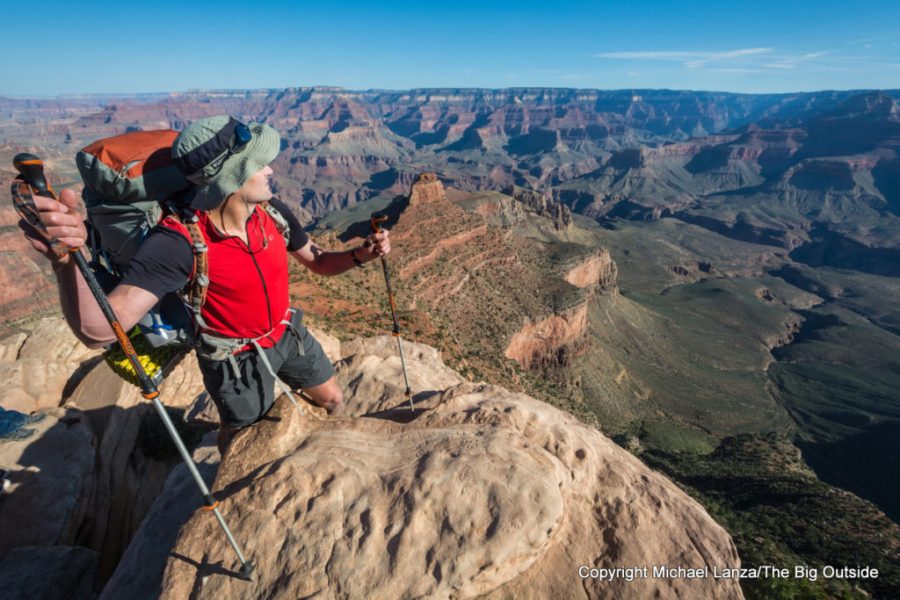
If you’ve ever felt that sharp, "ice-pick-to-the-kneecap" sensation while descending a steep mountain trail, you know that hiking isn't always kind to our joints. For years, I was a "purist"—meaning I was stubborn enough to think my legs were all I needed. Then I spent a week traversing the rugged, knee-crunching terrain of the Grand Canyon with a 50-pound pack. By day three, my patellas were screaming. I borrowed a pair of poles for the climb out, and the difference wasn't just noticeable—it was transformative.
The science is simple: trekking poles act as two extra limbs, distributing your weight and the force of gravity across four points instead of two. On steep descents, they absorb the shock that would otherwise be hammered directly into your knee joints. On the way up, they provide the leverage needed to engage your core and arms, taking the "burn" out of your quads.
Since 2012, our expert team has purchased and head-to-head tested nearly 70 unique pairs of trekking poles. We’ve logged thousands of miles across every conceivable terrain—from the soggy, root-choked forests of the Olympic Peninsula to the high-altitude scree fields of the Andes. We’ve pushed these poles to the breaking point so you don't have to.
Our Top Picks at a Glance
| Model | Weight (Pair) | Material | Best For | Price Range |
|---|---|---|---|---|
| MSR DynaLock Ascent Carbon | 17 oz | Carbon Fiber | All-Season / Best Overall | $$$ |
| Trekology Trek-Z 2.0 | 20 oz | 7075 Aluminum | Budget Hikers | $ |
| BD Distance Carbon Z | 10.2 oz | 100% Carbon | Trail Running / Ultralight | $$$ |
| Leki Cressida FX Carbon | 15.7 oz | Carbon Fiber | Women's Specific Design | $$$ |
| Black Diamond Pursuit | 18.2 oz | 7001 Aluminum | Heavy Packs / Durability | $$ |
Best Overall Trekking Pole: MSR DynaLock Ascent Carbon
When I’m prepping for a mission where the terrain is unpredictable—think slushy snow in the morning and sharp granite by noon—the MSR DynaLock Ascent Carbon is the first gear I grab. This pole is a masterclass in engineering. It combines the weight savings of carbon fiber with the rock-solid reliability of MSR’s DynaLock adjustment system.
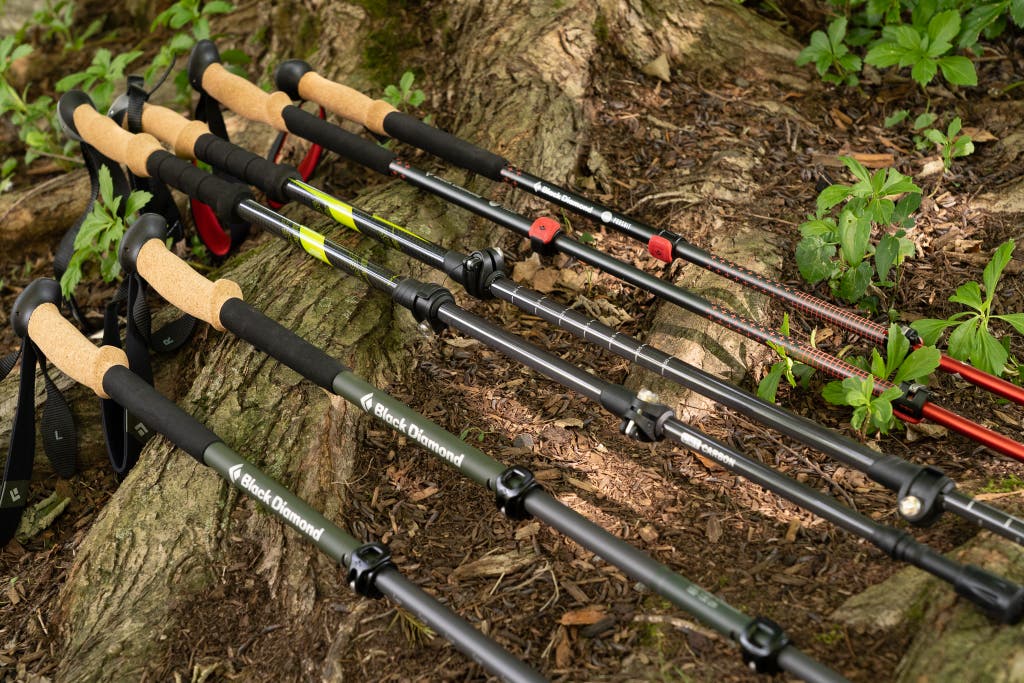
What sets the Ascent apart is its "swing weight." Because the weight is concentrated near the handle, moving the poles forward feels effortless, even after a 15-mile day. The ergonomic Kevlar-reinforced grip is designed for extended use, providing multiple hand positions for when you’re "palming" the top of the pole on a steep downhill.
Field Notes: During a technical traverse in the North Cascades, I found the tool-free tension adjustment to be a lifesaver. Unlike other flick-lock systems that loosen over time, the DynaLock stays shut. It’s also a true all-season tool, coming equipped with both summer and winter baskets.
Pros:
- Exceptionally comfortable ergonomic foam grips.
- Foldable design fits inside most daypacks.
- Tool-free tension adjustment is the best in the industry.
Cons:
- Premium price point.
- Carbon fiber requires more care than aluminum in rocky talus.
Best Value for Hikers: Trekology Trek-Z 2.0
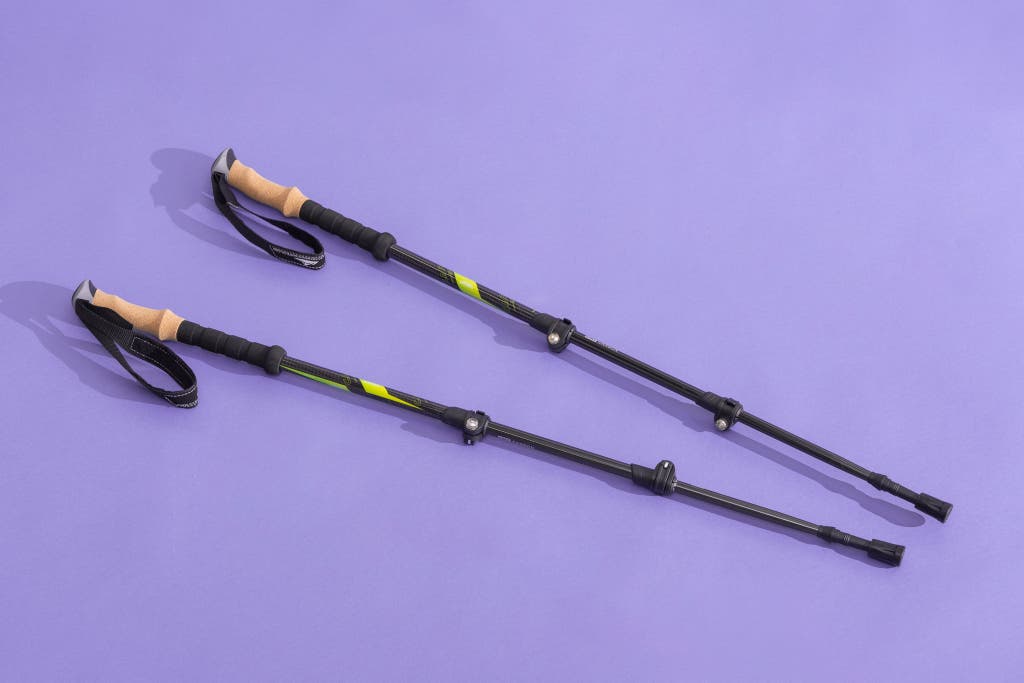
You don’t need to drop $200 to save your knees. The Trekology Trek-Z 2.0 has become a cult favorite in the hiking community for a reason. Built from 7075 aluminum—the same stuff used in aircraft wings—these poles are designed to take a beating and keep on clicking.
While they are slightly heavier than the high-end carbon models, they offer a "collapsible" Z-pole design that is incredibly rare at this price point. This allows them to fold down to just 15 inches, making them perfect for travelers or those who only want to use poles on specific sections of the trail.
Expert Tip: If you’re a beginner hiker, start with these. The aluminum construction is more "forgiving" than carbon; if you catch the tip between two rocks and trip, an aluminum pole will likely bend, whereas a carbon pole might snap under the same torsion.
Pros:
- Highly durable 7075 aluminum construction.
- Compact folding design is great for storage.
- Includes a full suite of accessories (mud baskets, rubber tips).
Cons:
- Slightly heavier than premium competitors.
- The locking pins can sometimes be stiff in freezing temperatures.
The Ultralight King: Black Diamond Distance Carbon Z
If you are a gram-counter or a trail runner, stop looking. The Black Diamond Distance Carbon Z is the gold standard for ultralight performance. At just 10.2 ounces per pair, they feel like holding nothing at all. This incredible weight savings is achieved through 100% carbon fiber shafts and a streamlined "Speed Cone" deployment system.
The "Z-pole" technology means they don't slide to adjust—they snap into place like a tent pole. This removes the weight of heavy adjustment clips. However, keep in mind that these are fixed-length poles. You need to measure your height correctly before buying (aim for that 90-degree elbow angle).
Stats that Matter: These are nearly 45% lighter than the Black Diamond Pursuit. When you’re lifting your arms thousands of times a day, those saved ounces translate to significantly less shoulder and upper-back fatigue.
Pros:
- Lightest poles in our 2026 lineup.
- Fastest deployment of any Z-pole tested.
- Breathable, moisture-wicking wrist straps.
Cons:
- Fixed length (no fine-tuning for ups vs. downs).
- Minimal vibration damping compared to thicker models.
Best Women's Specific Design: Leki Cressida FX Carbon
For a long time, "women’s specific" just meant "pink and shorter." Leki has changed that narrative with the Cressida FX Carbon. The real innovation here is the Aergon Air grip. It features a smaller circumference designed for smaller hands, which dramatically reduces hand fatigue and prevents the "death grip" often needed on oversized handles.
The Cressida also features a shorter overall height range, meaning the adjustment mechanisms are positioned perfectly to maintain the pole’s structural integrity without carrying unnecessary shaft length. The cork-infused grip is a standout, molding to your hand over time and managing sweat better than pure foam or rubber.
Pros:
- Perfectly sized grips for smaller hands.
- Extremely smooth external locking system (Speed Lock 2+).
- Elegant, durable carbon construction.
Cons:
- Not suitable for hikers over 5'8" due to height limitations.
Best for Heavy Loads & Durability: Black Diamond Pursuit
When I’m guiding a multi-day expedition with a 60-pound "kitchen sink" pack, I leave the ultralight gear at home and grab the Black Diamond Pursuit. These are the workhorses. Built with 7001 series aluminum, they offer incredible torsion strength. If you’re navigating high-alpine talus where a pole might get wedged and twisted, these are the ones you want.
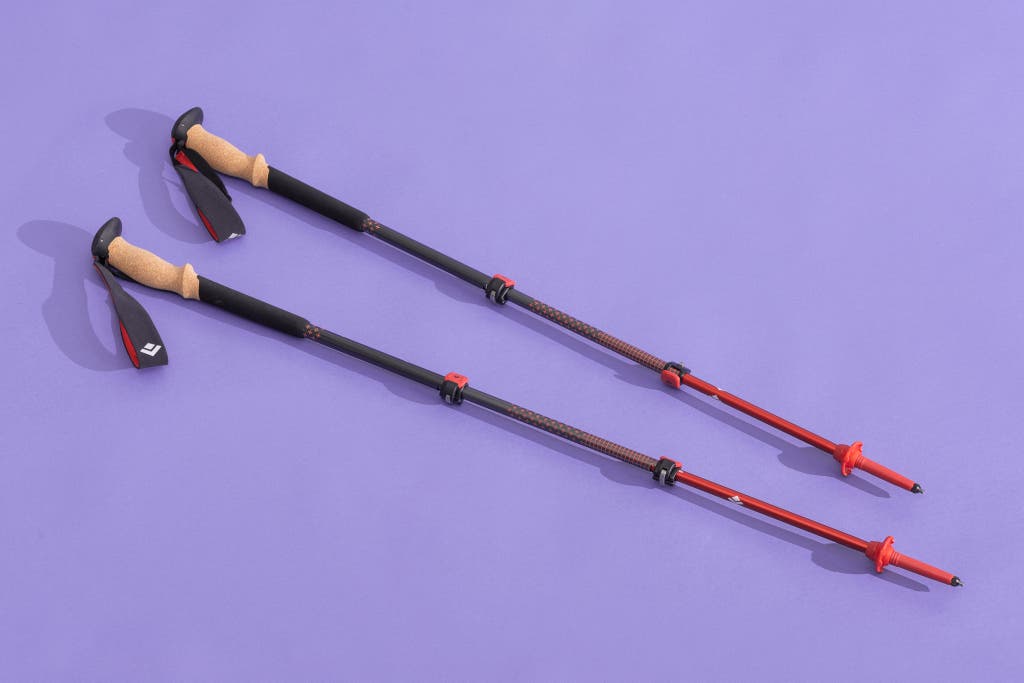
The Pursuit also features a clever integrated hex tool in the lever, allowing you to tighten the locking mechanism on the fly—a feature I’ve used more times than I’d like to admit. The grips are oversized and made of natural cork, providing the best vibration damping for long, jarring descents.
Pros:
- Built like a tank; virtually indestructible under normal use.
- Natural cork grips are the best for long-term comfort.
- Excellent for snowshoeing and four-season use.
Cons:
- The heaviest poles in our top five.
- Bulkier packed size than the Z-pole models.
How We Tested: Our Rigorous Protocol
We don’t just walk around the block. Our testing protocol is designed to simulate the worst conditions a hiker might face. We evaluate every pair based on six core metrics:
- Comfort (20%): We look at grip ergonomics, material (cork vs. foam), and strap "chafing."
- Weight (20%): Measured on our own scales to verify manufacturer claims.
- Versatility (20%): Can these poles handle mud, snow, and pavement?
- Locking/Adjustability (15%): How easy is it to change height with gloves on? Does the lock slip?
- Packed Size (15%): Crucial for travelers and climbers.
- Construction (10%): Long-term durability and "trail feel" (vibration damping).
Buying Advice: How to Choose Poles for Knee Protection
Carbon vs. Aluminum: Which is better?
Carbon fiber is lighter and has a natural ability to dampen high-frequency vibrations—the "buzz" you feel when a pole hits hard rock. This makes it the premium choice for saving your joints. Aluminum, however, is more durable. If an aluminum pole takes a hard hit, it bends; a carbon pole may "bone-snappingly" crack. For most hikers, carbon is worth the investment for the weight savings alone.
Grip Materials: The Interface
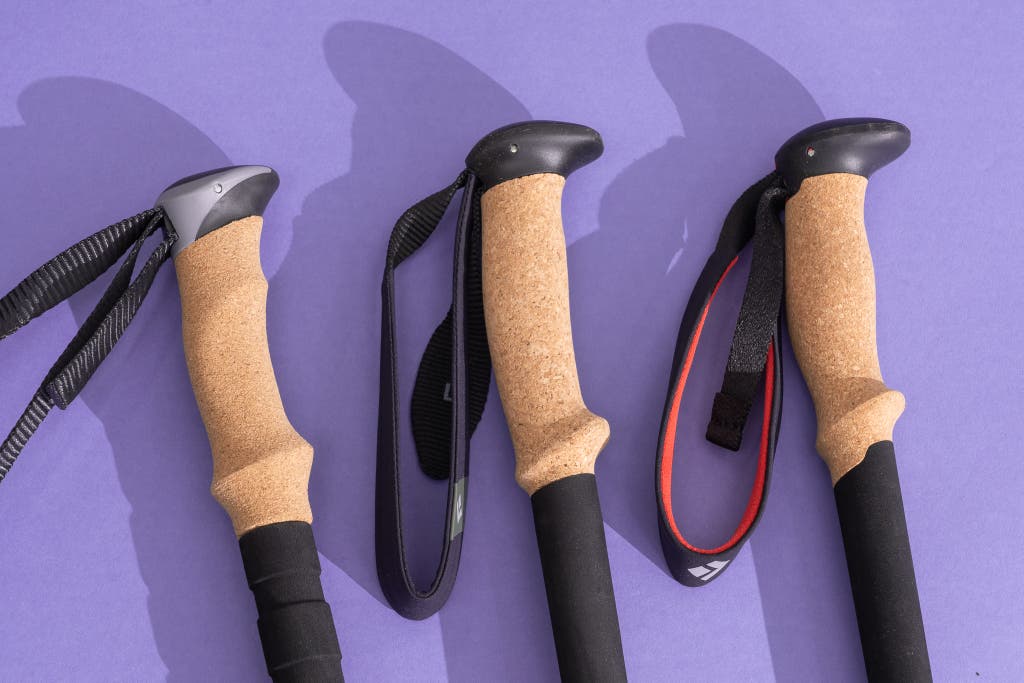
- Cork: The gold standard. It wicks sweat, stays cool in summer, and molds to your hand.
- Foam (EVA): The lightest option. It’s soft and comfortable but can get "squishy" when soaked with rain or sweat.
- Rubber: Found on budget or winter poles. It’s durable but can cause blisters on bare hands during summer hikes.
Proper Height: The 90-Degree Rule
To maximize knee protection, your elbows should be at a 90-degree angle when the pole tips are on the ground.
- On the Uphill: Shorten the poles by 5-10cm to get better "push" leverage.
- On the Downhill: Lengthen them by 5-10cm so you can plant them further ahead, allowing your arms to take the weight off your knees.
FAQ
Q: Will trekking poles actually make my knees feel better immediately? A: Yes and no. You will feel the weight distribution immediately, but the "technique" takes a few miles to master. Once you learn to plant the poles in rhythm with your stride, the reduction in impact is undeniable.
Q: Do I need to use the wrist straps? A: Absolutely. Most people use them wrong. You should bring your hand up through the loop and then grip the handle. This allows you to rest your weight on the strap itself, which transfers the load to your core rather than forcing you to grip the pole tightly with your fingers.
Q: Can I use trekking poles for trail running? A: Yes, but look for ultralight, fixed-length carbon models like the Black Diamond Distance Carbon Z. You want something that won't bounce or "chatter" as you move at higher speeds.
Final Verdict
If you’re serious about staying on the trail for decades to come, trekking poles are not an "optional" accessory—they are essential health insurance for your knees. For the best all-around performance that balances weight and durability, the MSR DynaLock Ascent Carbon is our top recommendation for 2026. If you’re just starting out or on a budget, the Trekology Trek-Z 2.0 will get the job done without breaking the bank.
Whatever you choose, get out there, protect those joints, and tackle the trail with confidence.