Quick Facts
- Peak Season: July and August offer the most consistent dry fly action, but late-season "Hoot Owl" restrictions can limit fishing hours due to water temperatures.
- The Smith River Lottery: To access the legendary 61-mile Smith River float, you must either win a private permit lottery or book with one of the few authorized commercial outfitters.
- Safety Thresholds: Montana’s rivers vary wildly; the Missouri River is generally fishable up to 12,000 cfs, while smaller gems like the Ruby River are strictly wade-only at around 350 cfs.
- Booking Window: For 2026 expeditions, the prime booking window opens in November 2025. Prime dates for July slots often disappear within weeks of the permit draws.
Introduction: The Scale of the Treasure State
I’ve spent the better part of a decade chasing trout across the American West, but Montana is the only place that still makes me feel small. It’s a landscape of staggering scale—where a single watershed can hold more wild trout than entire states. As we look ahead to the 2026 season, the "Big Sky" state is seeing a shift. The legendary waters like the Madison and Yellowstone remain bucket-list staples, but the real magic is happening in the remote corners: the limestone canyons of the Smith, the frozen vastness of Fort Peck, and the quiet cattle-country reaches of the Ruby Valley.
The secret to a successful Montana trip isn't just about showing up; it's about timing the flows and understanding the technical nuances of the water. Whether you’re planning a five-day backcountry float or bracing against a minus-ten-degree wind on the ice, 2026 is about going deeper into the wilderness. My advice? Start your planning now. The demand for high-quality Montana fishing guides 2026 is already surging as anglers seek to escape the crowded "blue ribbon" stretches for something a bit more raw.
Essential Safety: Understanding Montana River Flow Rates
Before you ever string up a rod, you need to understand the heartbeat of these rivers: the flow rate, measured in Cubic Feet per Second (cfs). In my experience, nothing ruins a trip faster than arriving during spring runoff when the water looks like chocolate milk and flows at lethal speeds.
What are the safe flow rates for Montana fly fishing? It depends entirely on the river's character. On a massive tailwater like the Missouri below Holter Dam, guides will comfortably row clients until the water hits roughly 12,000 cfs. However, on a technical, freestone river like the Blackfoot, 5,000 cfs is usually the upper limit for safe boat handling. If you’re heading to the lower Clark Fork, the threshold is higher—around 14,000 cfs—before it becomes a "no-go" zone for most drift boats.
Montana River Flow Safety Thresholds
| River System | Maximum Safe Flow (cfs) | Typical Wading Flow (cfs) | Character |
|---|---|---|---|
| Missouri River | 12,000 | 3,500 - 5,000 | Massive tailwater, consistent temps |
| Blackfoot River | 5,000 | 800 - 1,200 | Technical, rocky, boulder-strewn |
| Lower Clark Fork | 14,000 | 3,000 - 5,000 | Large volume, powerful currents |
| Ruby River | 600 (Wade only) | 150 - 350 | Tight, brushy, intimate |
| Yellowstone River | 15,000 (Boat) | 2,000 - 4,000 | Longest undammed river in lower 48 |
Pro Tip: Keep an eye on the "Hoot Owl" regulations. As summer temperatures rise in 2026, Montana Fish, Wildlife & Parks often restricts fishing to before 2:00 PM on certain stretches to protect trout from heat-related stress. A seasoned guide will know how to pivot your itinerary to high-altitude lakes or cold-water tailwaters like the Beaverhead when these restrictions kick in.
The Smith River Expedition: Montana's 5-Day Masterpiece
If there is one trip that defines the Montana backcountry experience, it’s the Smith River float trip. This isn't your average day on the water; it’s a total immersion into a roadless wilderness. How long is the Smith River fishing expedition? It is a premier 61-mile journey that typically lasts 5 days and 4 nights. There is only one public put-in (Camp Baker) and one take-out (Eden Bridge), meaning once you push off, you are committed to the canyon.
The logistics are a feat of engineering. On a guided trip, professional gear rafts (often called "baggage boats") move ahead of the fishing boats to set up elaborate camps. By the time you pull into your designated site for the evening, the tents are up, the "cocktail ice" is ready, and the smell of Dutch-oven cooking is wafting through the limestone canyons.
The fishing is as spectacular as the scenery. You’ll be casting into deep pools tucked against 1,000-foot cliffs, targeting wild brown and rainbow trout that rarely see a fly. In 2026, I recommend focusing on the late June and early July windows when the stonefly hatches are in full swing.
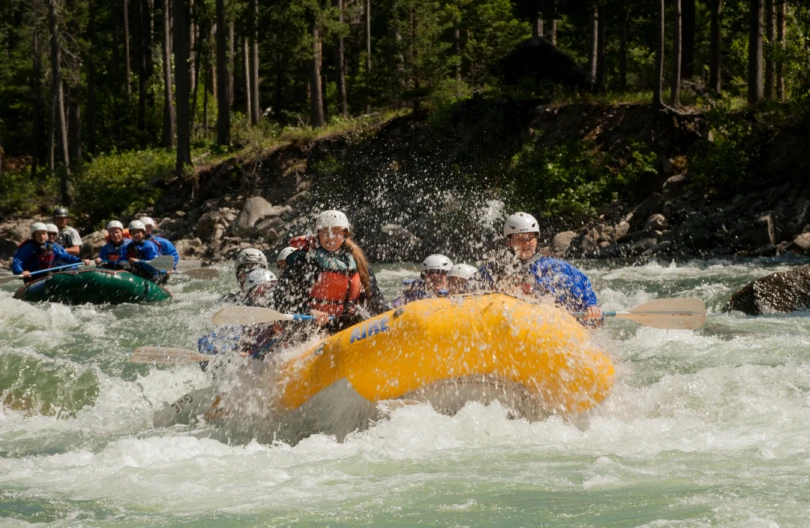
For those looking to secure a spot on this legendary water, remember that commercial permits are extremely limited. It’s one of the few places in the world where the solitude is guaranteed by law.
Book Your Smith River Expedition →
Expert Ice Angling: Winter Mastery at Fort Peck
When the rivers lock up in ice, the hardwater season begins. While many fly fishers hang up their rods, the most adventurous head northeast to the Fort Peck Reservoir. This is not the "bucket-sitting" ice fishing of your grandfather’s era. This is high-tech, mobile hunting for some of the largest predators in the state.
Where is the best guided ice fishing in Montana? Without question, it’s Fort Peck, and Trevor’s Guide Service is the gold standard for this region. Specializing in what locals call the "Big Three"—Northern pike, smallmouth bass, and trophy lake trout—Trevor and his team use LiveScope sonar and heated mobile shacks to keep you on the fish even when the mercury drops well below zero.
- Targeting Giants: Fort Peck is famous for "flags flying"—the moment a tip-up indicates a massive Northern pike has taken the bait.
- The Tech Factor: Guides here use snow-machines and tracked vehicles to cover miles of ice, looking for submerged points and structure where lake trout congregate.
- Off the Ice: When you aren't fishing, the Fort Peck Interpretive Center & Museum offers a fascinating look at the prehistoric "monsters" that once roamed this region, including an incredible T-Rex discovery.
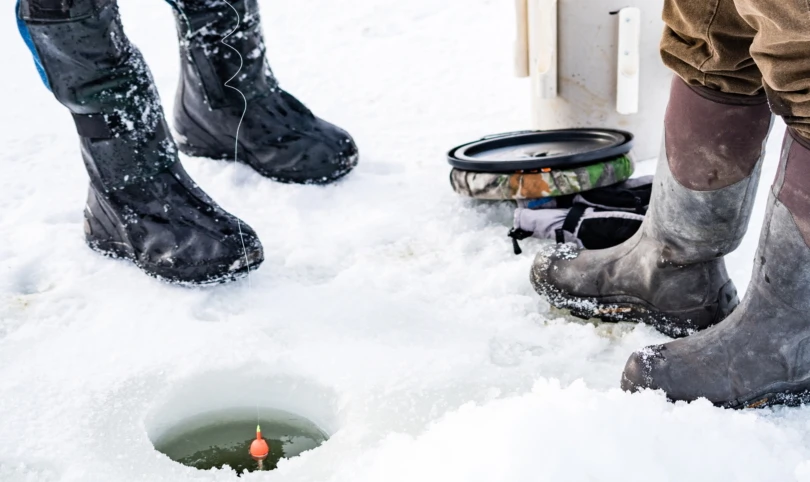
Ice fishing here is a logistical challenge that requires specialized gear—power augers, thermal suits, and localized knowledge of ice safety. Going with a pro isn't just about catching more fish; it's a safety necessity on a body of water this size.
Explore Fort Peck Ice Fishing →
Choosing Your 2026 Outfitter: 7 Critical Questions
With so many Montana fishing guides 2026 options, how do you separate the weekend warriors from the career professionals? I’ve found that the best guides aren't just great sticks—they are great teachers. When you are interviewing a potential outfitter, don't just ask "if the fish are biting." Ask these seven questions:
- What is your backup plan for spring runoff? A top-tier outfitter should have permits for tailwaters (like the Beaverhead or Missouri) where flows are controlled by dams.
- How do you handle "Hoot Owl" restrictions? Do they offer early-morning departures or pivot to high-country lakes?
- Are you a "dry fly only" shop? While everyone loves a dry fly, a guide who refuses to fish nymphs or streamers when the fish are deep is doing you a disservice.
- What is your guide-to-client ratio for wading? For the Ruby Valley fly fishing outfitters, a 1:2 ratio is standard for safety and instruction.
- Do you provide all terminal tackle? High-end guides should include leaders, tippet, and flies in the daily rate.
- How do you approach fish handling? Look for guides who emphasize "Keepemwet" principles and barbless hooks.
- What is your cancellation policy for environmental factors? 2026 may bring unpredictable weather; know your rights regarding smoke or flood cancellations.
Regional Highlights: Where to Cast in 2026
Montana is divided into distinct fishing ecosystems, each requiring a different set of skills and gear. Here is where I’ll be focusing my energy in the coming year.
Ruby Valley: The Hidden Gem
The Ruby Valley fly fishing outfitters offer something increasingly rare in Montana: solitude. This is wade-fishing territory at its finest. The river meanders through working cattle ranches, offering tight bends and deep undercut banks where big browns hide. It’s technical, brushy, and incredibly rewarding for those who can execute a precise roll cast.
Bozeman Hub: The Triple Threat
Bozeman remains the nerve center of the industry for a reason. From here, you have a 90-minute radius that covers the Madison, the Yellowstone, and the Gallatin. In 2026, expect the Madison to be the go-to for consistent hopper fishing in August. If you want to escape the drift boat crowds, head up into the Gallatin Canyon for some of the best walk-and-wade pocket water in the country.
The Bitterroot: The Early Bird’s Choice
If you are looking for early-season action, the Bitterroot Valley near Missoula is your destination. The Skwala stonefly hatch in March and April is legendary, providing some of the first dry fly opportunities in the West. It’s a rugged, beautiful valley that feels a world away from the busier eastern slopes.
FAQ
When should I book a Montana fishing guide for the 2026 season? Ideally, you should book by November 2025 for July/August dates. For the Smith River lottery, the application deadline is usually in mid-February, but commercial seats often sell out a year in advance.
Do I need my own gear for a guided trip? Most professional outfitters provide high-quality rods and reels (often Sage, Orvis, or Winston) as part of the package. However, if you have a lucky 5-weight, bring it! Always check if waders and boots are included, as many shops rent these separately for hygiene reasons.
Is Montana fishing suitable for beginners? Absolutely. In fact, learning on a big river like the Missouri with a professional guide is the fastest way to flatten the learning curve. Guides are used to teaching everything from the basic overhead cast to advanced mending techniques.
Ready to Experience the Last Best Place?
The beauty of Montana isn't just in the fish—it's in the grit of the journey. Whether you’re watching the sun set over the Smith River’s limestone walls or waiting for a massive pike to hit a tip-up on a frozen reservoir, these are the experiences that stick with you. 2026 is shaping up to be a landmark year for the state's watersheds. Don't wait for the runoff to subside to start your planning.
Action Plan:
- Secure your dates for the Smith River lottery.
- Reach out to a Ruby Valley outfitter for a private ranch experience.
- Gear up for the cold with a trip to Fort Peck.
The rivers are calling. I'll see you on the water.