Quick Facts
- Price and Value: At $349, the COROS NOMAD provides dual-frequency GPS and full-color topographic mapping—features usually reserved for watches in the $700+ range.
- Fishing Specialty: It features 8 dedicated fishing modes including specialized tracking for Shore, Offshore, Kayak, and Fly Fishing, allowing for precise catch logging and environmental monitoring.
- Battery Powerhouse: Delivers industry-leading endurance with up to 22 days of regular use and 50 hours of continuous "All Systems" GPS tracking, dwarfing the Apple Watch’s daily charging requirement.
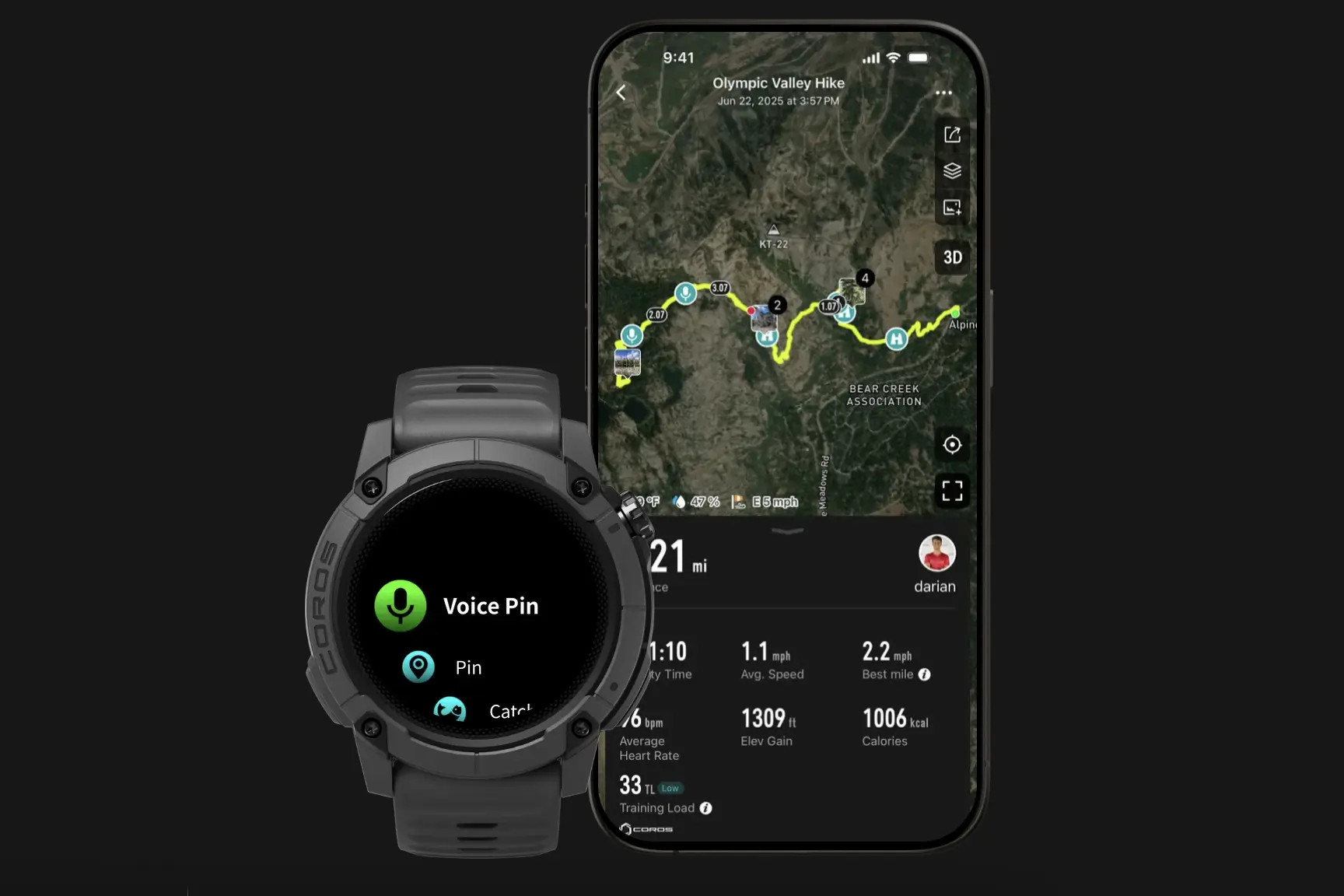
- Adventure Journaling: The unique dual-microphone system captures voice notes and links them with geotagged photos and videos in the COROS app to create a 3D narrative of your expedition.
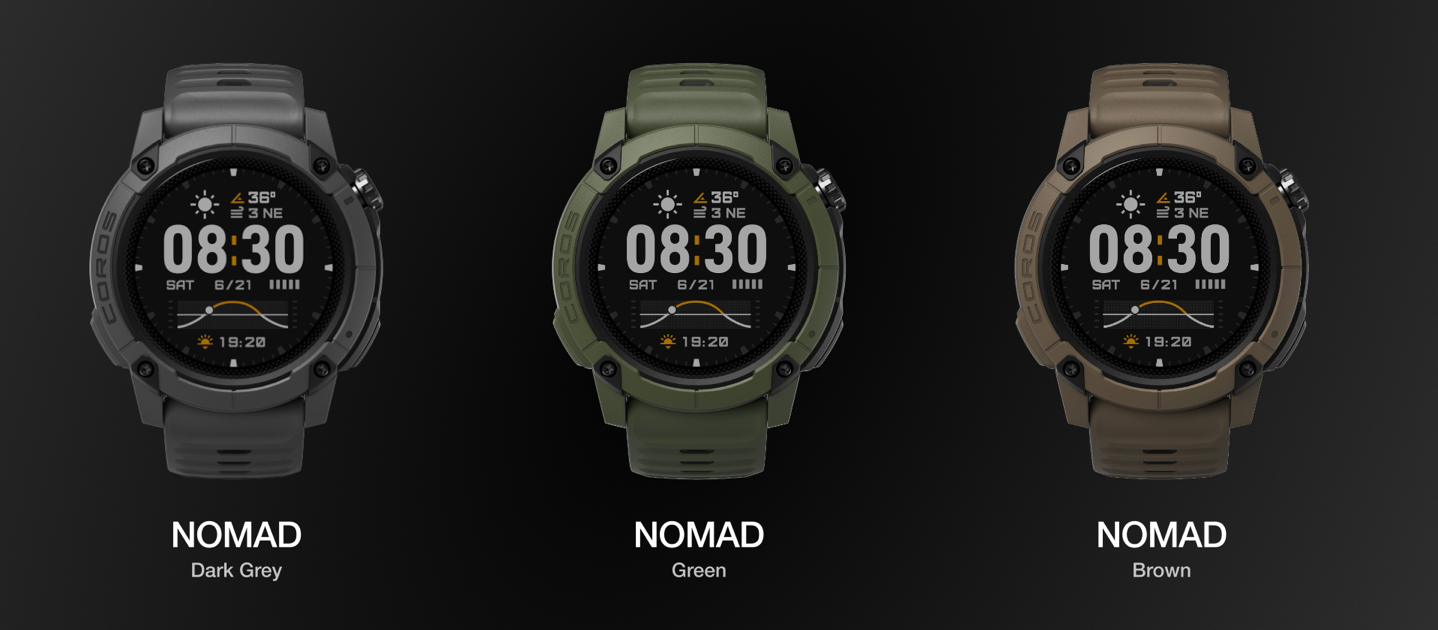
- Rugged Build: Weighing only 49g to 61g (depending on the strap), the watch features an aluminum-polymer bezel and 50m water resistance, designed to survive the rigors of salt and freshwater environments.
Introduction: The Rugged GPS Watch Anglers Have Been Waiting For
I’ve spent the better part of a decade testing gear in the world’s most unforgiving environments, from the high-altitude trails of the Swiss Alps to the humid, mosquito-infested mangroves of the Florida Keys. In all that time, I’ve noticed a frustrating "Camp Paradox" when it comes to wristwear. You’re usually forced to choose between a "brick"—a massive, heavy-duty navigation tool that feels like a lead weight—or a fragile, battery-drained smartwatch that panics at the first sign of a rainstorm.
For anglers, this trade-off is even more acute. We need a device that can track a 12-hour day on the water, withstand a dunking during a botched net job, and accurately mark a secret honey hole without requiring us to fumble with a smartphone.
Enter the COROS NOMAD. Historically, COROS built its reputation on the wrists of elite ultra-marathoners like Eliud Kipchoge. But with the NOMAD, they’ve pivoted toward the "Off-the-Beaten-Path" crowd. Starting at $349, this watch isn't just a running tool with a "fishing" label slapped on it; it’s a ruggedized data hub. Whether you’re fly fishing a remote mountain stream or kayak fishing three miles offshore, the NOMAD aims to be the middle ground we’ve been looking for.
What is the COROS Adventure Journaling Feature?
One of the most innovative aspects of the NOMAD is its Adventure Journaling capability. If you’ve ever tried to type a note on a touchscreen with wet, fish-slimed hands, you know it’s a recipe for disaster. COROS solved this by integrating a dual-microphone system directly into the watch.
While you're mid-activity, you can record voice notes on the fly. These aren't just random audio files; they are "Voice Pins." When you record a note—say, "Large mouth bass caught on a white spinnerbait near the fallen cedar"—the NOMAD automatically geotags that audio to your exact GPS coordinates.
Back at the truck or the campfire, the COROS app syncs these notes and allows you to attach photos and videos taken on your phone to those specific locations. The result is a complete 3D story of your trip. Instead of just a squiggle on a map, you have a living record of the day’s successes and failures. In my experience, this is the most seamless way to build a personal fishing log without breaking the "flow" of the hunt.
The Deep Dive: Does the COROS NOMAD Have Fishing-Specific Features?
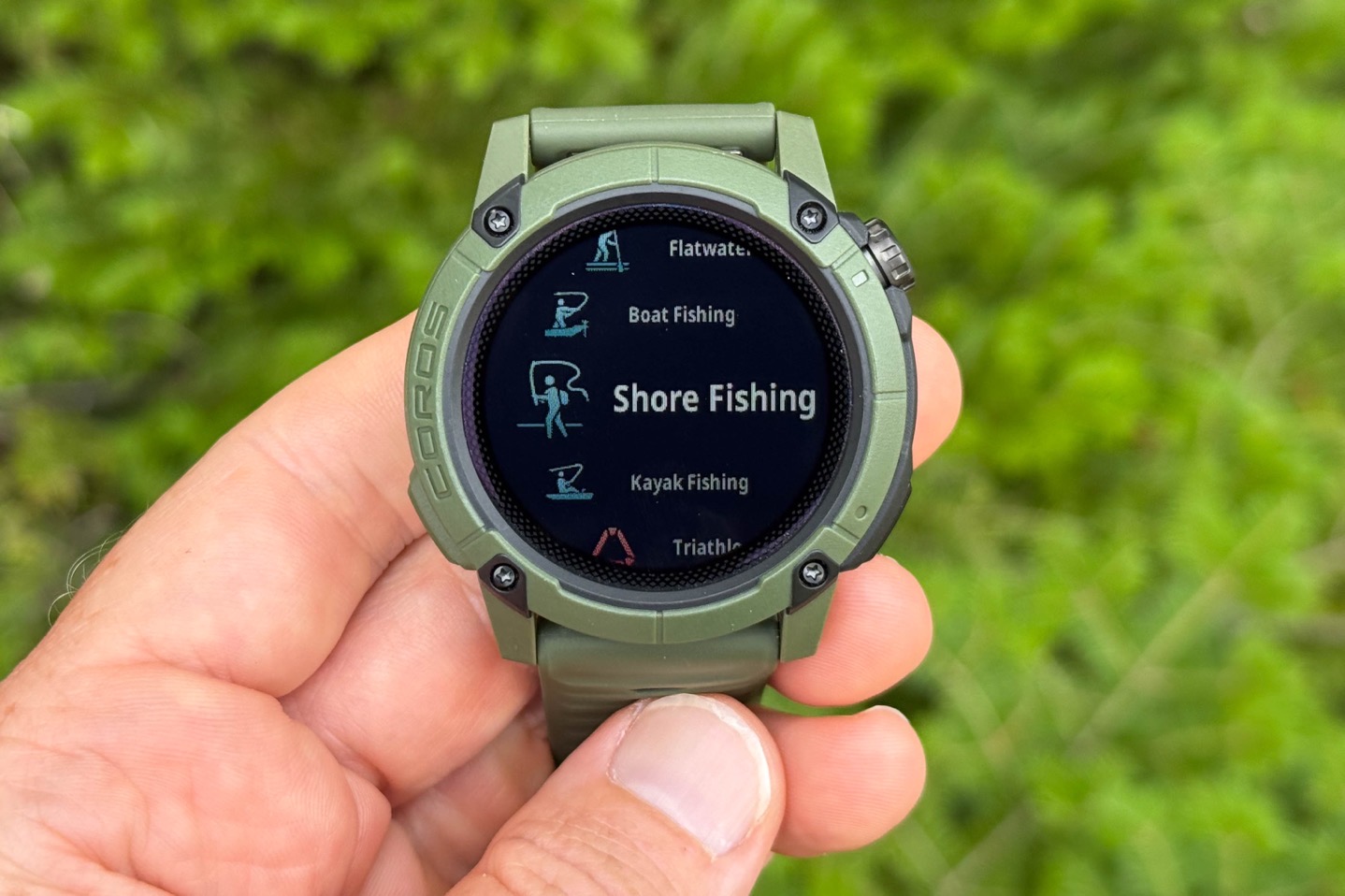
The short answer is: Absolutely. Unlike many competitors that offer a generic "Outdoor" mode, the COROS NOMAD has been updated with 8 distinct fishing-specific modes designed to provide data relevant to how you're actually fishing.
These modes include:
- Shore Fishing
- Shore Fly Fishing
- Inshore Fishing
- Kayak Fishing
- Boat Fishing
- Offshore Fishing
- Ice Fishing
- Spearfishing
Why does this matter? Because the data you need while sitting in a kayak is vastly different from what you need while wading a river. For example, the Kayak and Boat modes prioritize speed over ground and drift patterns, while the Shore modes focus on casting distance and environmental shifts.
The NOMAD monitors real-time environmental data that dictates fish behavior. You get instant access to barometric pressure trends (crucial for predicting a "bite" before a storm front), moon phases, and tide data. During my testing, having the tide graph available with a quick flick of the wrist was a game-changer for timing the "push" of fish into the shallows. You can log your catches directly on the watch, marking the exact spot of the strike, which builds a high-resolution map of where the fish are holding throughout the day.
Battery Life and Durability: Built for the Longest Days on the Water
When you're out on a multi-day expedition, battery anxiety is real. I’ve seen Apple Watches die before the afternoon bite even begins, leaving the angler without a map or a way to call for help. The COROS NOMAD is built on a different philosophy.
The battery life is, frankly, industry-leading. You get up to 22 days of regular daily use. Even if you’re running full GPS tracking for 10 hours a day, you’ll easily make it through a week-long trip on a single charge. If you’re pushing the limits with "All Systems" GPS (tracking every satellite constellation), it lasts 50 hours.
To put that into perspective, let's look at how it stacks up against the competition:
| Feature | COROS NOMAD | Apple Watch Ultra 2 | Garmin Instinct 2/3 (Standard) |
|---|---|---|---|
| Daily Use Battery | Up to 22 Days | Up to 36 Hours | Up to 28 Days |
| GPS Tracking (Max) | 50 Hours | 12-17 Hours | 30 Hours |
| Weight | 49g - 61g | 61g (Case Only) | 52g |
| Mapping | Full-Color TOPO | Third-Party Apps Only | Breadcrumb (No Maps) |
| Price | $349 | $799 | $349 - $449 |
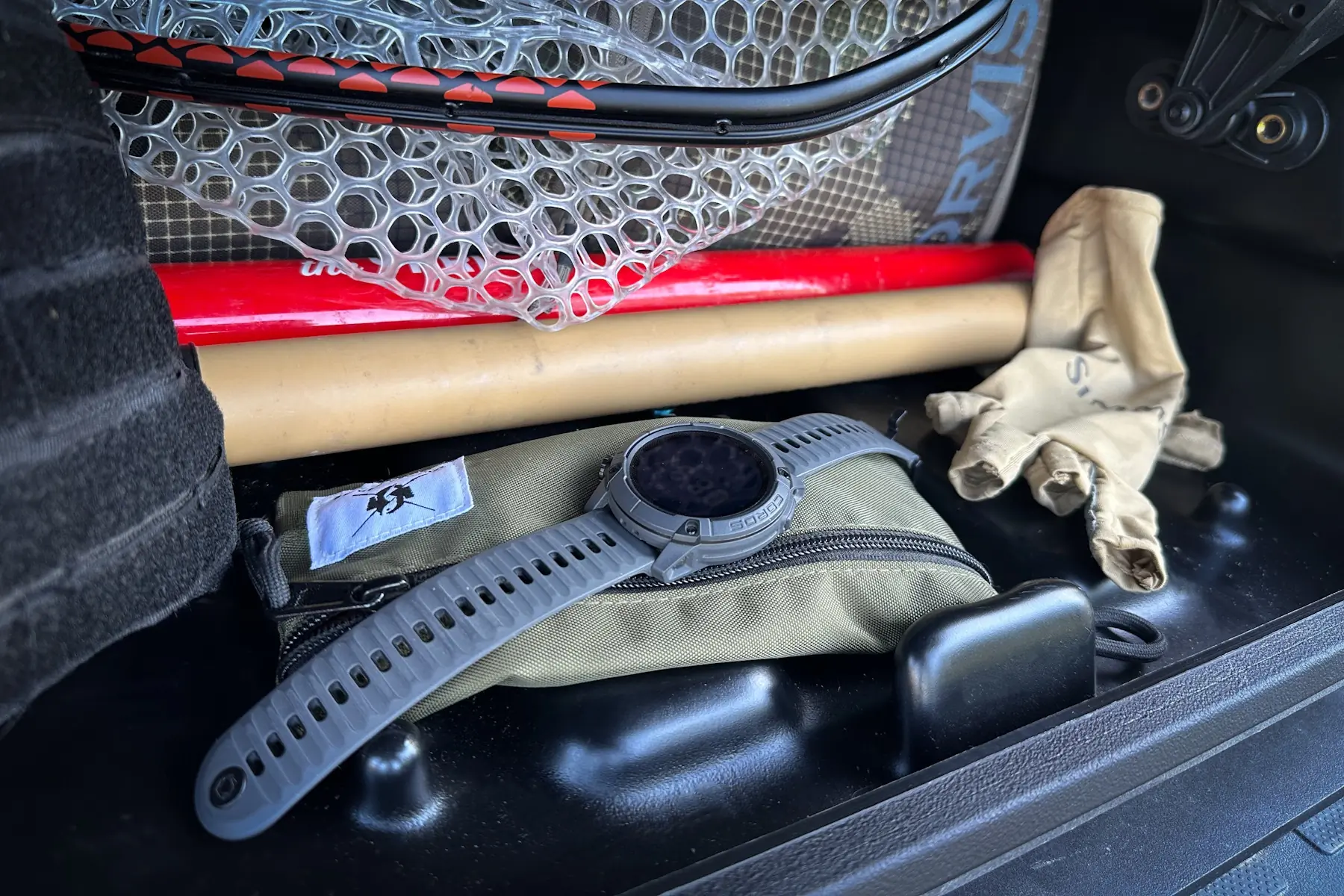
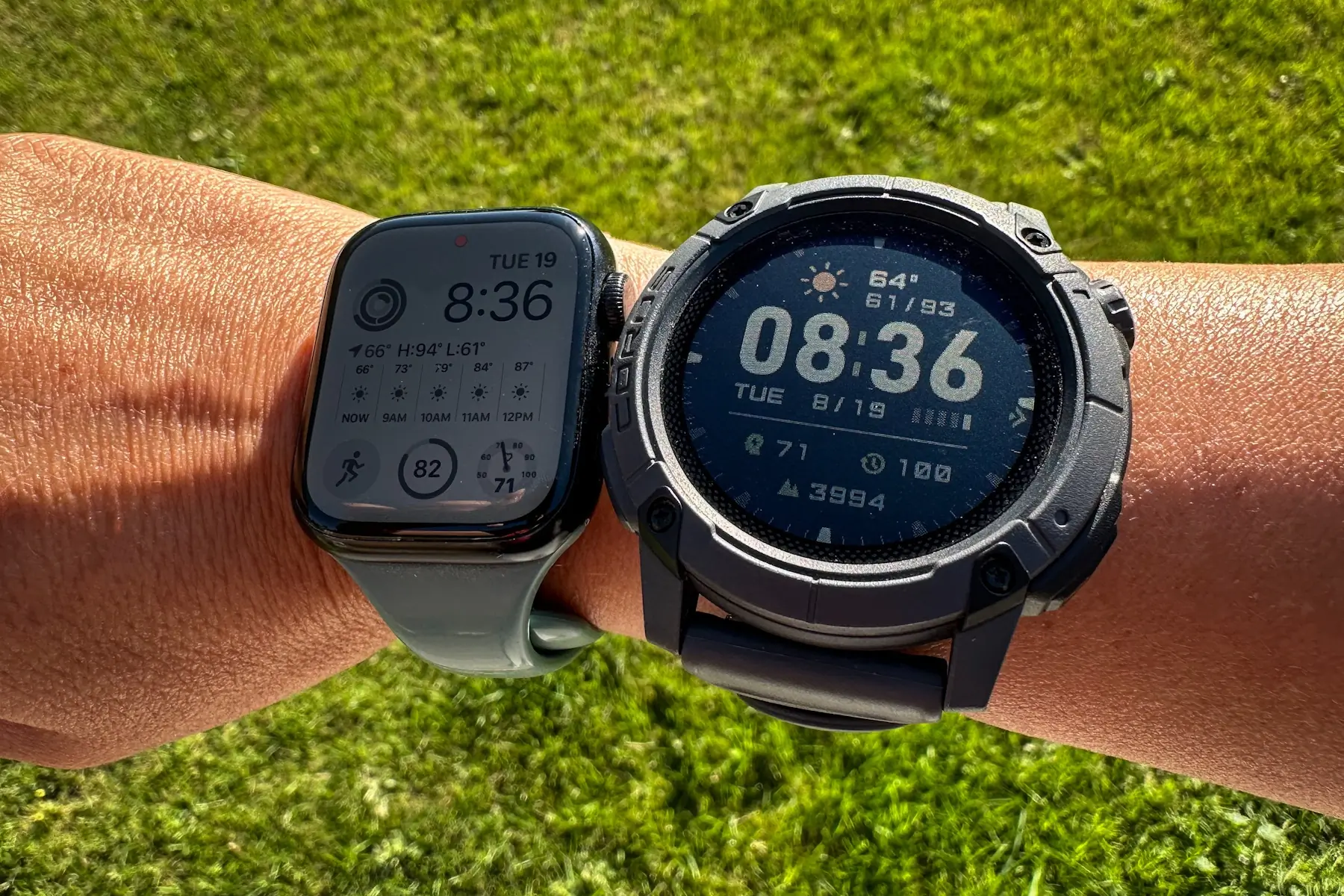
The build quality matches the endurance. The NOMAD uses an aluminum-polymer bezel that feels premium but stays incredibly light. The 1.3-inch Memory-in-Pixel (MIP) display is a specific choice for outdoor use; while it’s not as vibrant as an AMOLED screen indoors, it becomes clearer the brighter the sun gets. On a high-glare day on the water, you won't be squinting to see your depth or barometric pressure.
Navigation and Mapping: Finding the Secret Spots
The "brain" of the NOMAD is its Gen 3 processor and dual-frequency GPS. I tested the accuracy in the dense urban canyons of NYC and the deep valleys of the Alps—environments that usually cause GPS "drift." The NOMAD held the line perfectly.
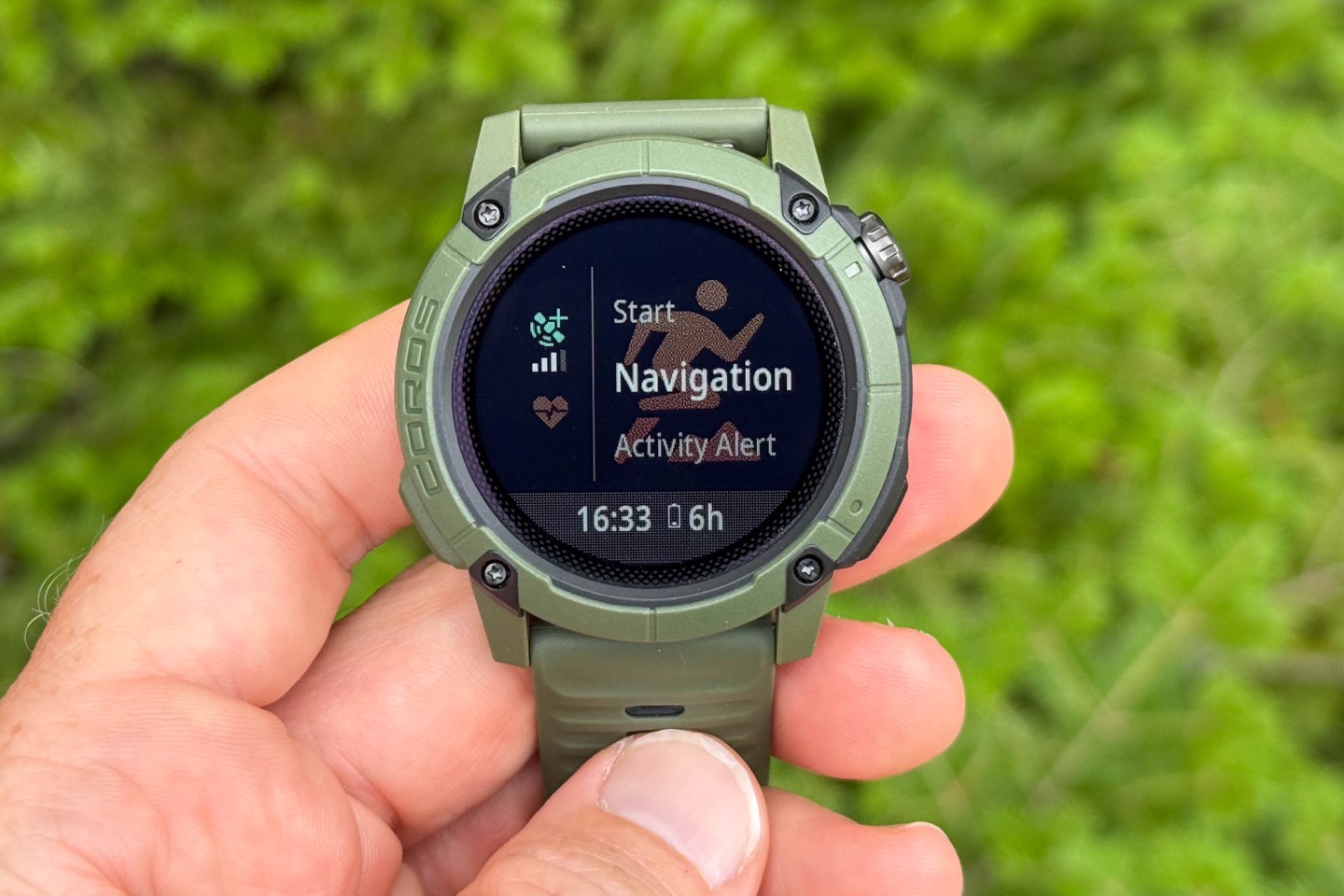
For the angler, this precision is vital when you're trying to return to a "spot on a spot"—that one specific submerged rock or drop-off. The NOMAD comes pre-loaded with global offline topographic maps. You can see street names, terrain contours, and Points of Interest (POIs) directly on your wrist.
If you wander too far up a creek or get turned around in a marsh, the "Back to Start" feature provides a clear visual path back to your launch point. You can also use "Location Lock" to save the coordinates of your vehicle or campsite before you head out, ensuring you never have that moment of panic when the sun starts to dip below the horizon.
The Reality Check: COROS NOMAD vs. Apple Watch & Garmin Instinct
Is the COROS NOMAD the perfect watch for everyone? Not necessarily. It’s important to understand who this is for.
If you want a "mini-iPhone" on your wrist—something to respond to texts, take phone calls, and play Spotify—the NOMAD will feel limited. While it shows notifications, it’s designed to be a tool, not a distraction. There is a slight lag in notification delivery compared to the Apple Watch, and the interaction with an iPhone is minimalistic.
However, compared to the Garmin Instinct series, the NOMAD offers a massive advantage: Mapping. The standard Instinct 2 and 3 models only offer "breadcrumb" navigation (a line on a blank screen). To get full-color maps on a Garmin, you usually have to jump up to the Fenix series, which costs significantly more.
The NOMAD is for the "Connected but not too connected" angler. It’s for the person who wants to be unreachable for a few hours but wants the data to prove that those hours were well spent.
Pro Tips: Setting Up Your Environments and Data Pages
To get the most out of the NOMAD, you need to spend ten minutes in the COROS app before you hit the water. Here’s how I suggest setting it up:
- Customize the Action Button: Set the side "Action" button to long-press for "Save Location." This allows you to mark a catch or a waypoint with a single press, even with gloves on.
- Optimize your Data Pages: For fishing, I always set one page to show "Barometric Trend" and "Sun/Moon Phase" and another to show "Current Coordinates" and "Tide Height."
- Sync Offline Routes: If you’re heading to a new lake, use an app like Strava or Komoot to draw your route, then sync it to the NOMAD’s 32GB internal storage. You’ll have the trail or water route ready to go even without a cell signal.
Expert Tip: If you're wading in cold water, your body temperature will affect the watch's thermometer. For the most accurate barometric and temperature readings, clip the watch to the outside of your jacket or your wading belt.
Final Verdict: Is the COROS NOMAD Worth It?
The COROS NOMAD is a "Living Field Journal." It won't make you a better angler—only time on the water can do that—but it will keep a flawless record of why you are (or aren't) catching fish.
At $349, the value proposition is hard to beat. You’re getting top-tier GPS accuracy, map capabilities that usually cost double, and a battery that refuses to quit. It’s rugged, lightweight, and focused. If you're tired of charging your watch every night and want a device that respects the "Outdoors" part of outdoor adventures, the NOMAD is currently the best GPS watch for fishing in 2025.
Explore the COROS NOMAD Collection →
FAQ
Q: Is the COROS NOMAD waterproof for saltwater fishing?
A: Yes, the NOMAD features an aluminum-polymer construction and is water-resistant up to 50 meters (5 ATM). However, after any saltwater exposure, it is highly recommended to rinse the watch with fresh water to prevent salt buildup in the charging port and sensors.
Q: Can I see depth charts on the NOMAD's maps?
A: The pre-loaded maps are topographic, meaning they show land elevation and street names. While they show the outlines of bodies of water, they do not currently include active sonar or bathymetric (underwater depth) charts. You should use the watch in conjunction with a dedicated fish finder for depth specifics.
Q: Does it work with third-party fishing apps?
A: COROS has a robust ecosystem that syncs with Strava, TrainingPeaks, and Komoot. While it doesn't have a direct "app store" like Apple, the data from your fishing trips can be exported as .FIT or .GPX files to be used in any major fishing log or mapping software.
Are you ready to master your waters? Whether you're chasing trout in the backcountry or redfish in the flats, the right data can be the difference between a "fish story" and a trophy photo.