Quick Facts
- The Pioneer: Introduced in 1964, the Buck 110 Folding Hunter popularized the lockback folding knife, successfully combining the strength of a fixed blade with the convenience of a folder.
- The "Secret Sauce": Buck utilizes a proprietary Paul Bos heat treatment for their 420HC steel, transforming a "budget" metal into a high-performance blade with exceptional edge retention.
- American Made: Most 110 models are manufactured in Post Falls, Idaho, where the company hosts free 45-minute factory tours for the public from Monday through Thursday.
- Weight Shift: While the classic 110 is a heavy-hitter at 7.2 ounces, the modern 110 LT variant cuts that weight by 55% to just 3.2 ounces for easier daily carry.
- Natural Resources: To maintain their premium aesthetic, Buck Knives processes approximately 5,000 pounds of elk sheds every year to create unique handles for their high-end 110 and 112 models.
Introduction: The Knife That Needs No Introduction
If you’ve ever spent time in a deer camp, a carpentry shop, or a grandfather’s garage, you’ve seen it. That unmistakable silhouette of polished brass bolsters and dark wood scales. It’s a design so ubiquitous that "Buck Knife" became the genericized trademark for almost any folding blade, much like "Leatherman" is to multi-tools or "Weber" is to grills.
The Buck 110 Folding Hunter didn't just enter the market in 1964; it redefined it. Before its debut, if you wanted a knife that wouldn't fold on your fingers while field-dressing an elk, you carried a fixed blade. Al Buck changed the game by offering fixed-blade strength in a portable design, effectively inventing the modern folding hunter category. It wasn't just a tool; it was an engineering feat that brought the lockback mechanism to the masses. Today, six decades later, the 110 remains the benchmark by which all other traditional folders are measured.
Whether you’re a gear nut or just someone who appreciates a tool that doesn’t quit, the story of the 110 is a masterclass in American manufacturing. It’s a story of sticking to your guns—and your steel—while knowing exactly when to innovate.
The Engineering of an Icon: Why It Lasts
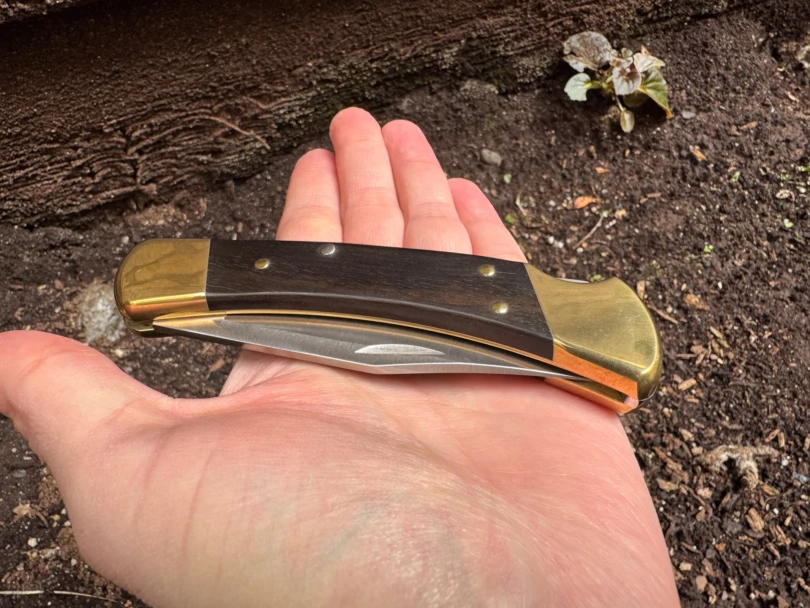
When you first pick up a classic Buck 110, the first thing you notice is the "heft." At 7.2 ounces, it feels less like a pocket knife and more like a piece of heavy machinery. That weight isn't accidental; it’s a byproduct of a build quality designed to outlast its owner.
The heart of the 110 is its lockback mechanism. This isn't your standard liner lock that might slip under pressure. It’s a high-tension steel bar that snaps into place with a definitive "clack" that sounds like a vault door closing. This mechanism provides a level of safety and rigidity that allowed hunters in the 60s to finally ditch their belt sheaths for something that could fit in a pocket—though, let’s be honest, most 110s still live in those iconic black leather belt pouches.
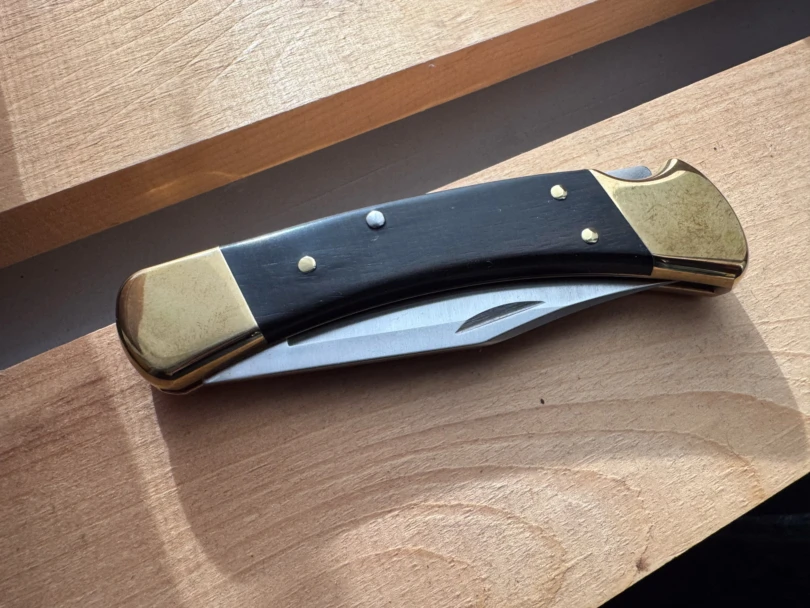
The materials are just as intentional. The classic 110 features Crelicam™ genuine ebony wood scales. This isn't just a sustainability win (though Buck’s partnership with Taylor Guitars to source legal, ethical ebony is impressive); it’s a functional choice. Ebony is incredibly dense and resistant to the blood, sweat, and grime of outdoor work.
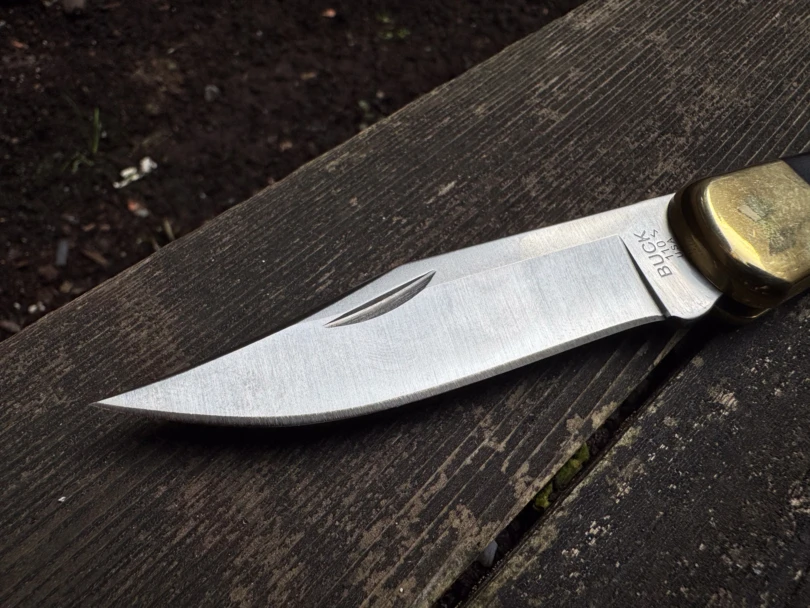
The blade itself is a 3.75-inch clip-point profile. For the uninitiated, that "clipped" look isn't just for style. It provides a thinner, sharper point for detail work—like caping out a trophy—while keeping the belly of the blade wide enough for heavy slicing. It’s the ultimate "do-it-all" geometry.
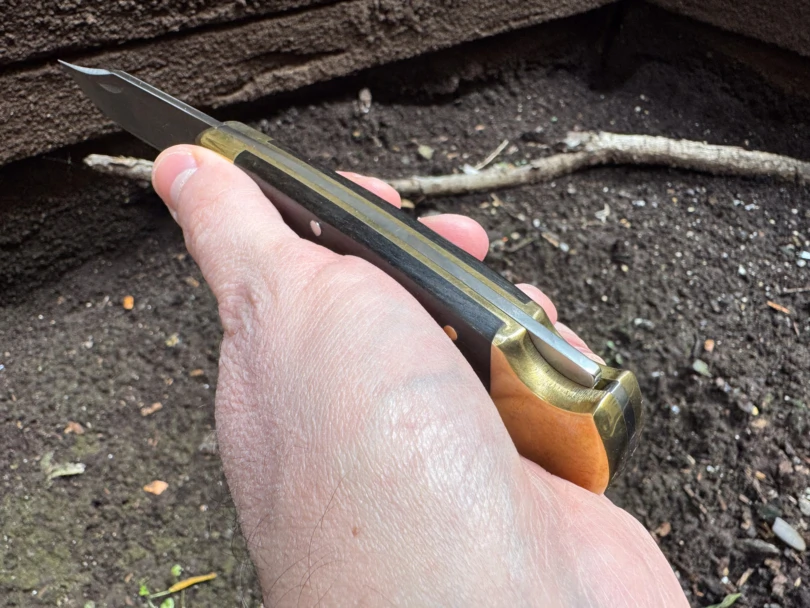
Marcus’s Pro-Tip: Because these knives are hand-finished in Idaho, you might occasionally find a tiny bit of "grit" in the pivot of a brand-new 110. Don't sweat it. A single drop of mineral oil and a few dozen openings will wear those mating surfaces together until they’re as smooth as a well-worn pair of boots.
The Legend of the Steel: 420HC and the Paul Bos Magic
If you talk to "cork sniffers" in the knife world—the guys who only buy $500 boutique blades—they might scoff at Buck’s use of 420HC stainless steel. In the world of metallurgy, 420HC is often seen as a "pedestrian" steel. But here’s the catch: a steel is only as good as its heat treatment, and Buck has a secret weapon.
Enter the legendary Paul Bos. Buck Knives uses a proprietary heat treatment process developed by Bos that fundamentally changes the metal's grain structure. Think of standard steel like a pile of loose boulders; under a microscope, the molecules are disorganized. Buck’s process, which includes a cryogenic freezing stage, aligns those molecules into a tight "lattice" structure.
The result? A 420HC blade that punches way above its weight class. It offers:
- Remarkable Edge Retention: It stays sharp significantly longer than other 420HC knives.
- Corrosion Resistance: You can use it in the rain or near salt water without it turning into a rust-fest by morning.
- Ease of Sharpening: Unlike some modern "super steels" that require diamond hones and an afternoon of frustration, the 110 can be brought back to a shaving edge with a simple whetstone in the field.
From Classic to Contemporary: The 110 Evolution
While the brass-and-ebony classic is the "Silverado" of the knife world—sturdy, reliable, and timeless—Buck hasn't been afraid to iterate. They realized that while some of us love the 7.2-ounce heft, the modern hiker or EDC (Everyday Carry) enthusiast might want something that doesn't drag their pants down.
The 110 LT was the breakthrough. By swapping the brass and wood for lightweight molded nylon, they dropped the weight to a staggering 3.2 ounces while keeping the same Bos-treated blade. It’s the perfect "truck knife" or backpacking companion.
For the "knife snobs" I mentioned earlier, Buck offers the Slim Pro TRX series. These feature S30V or even MagnaCut steel, G-10 handles, and—finally—a deep-carry pocket clip.
| Model | Weight | Blade Steel | Handle Material | Best For |
|---|---|---|---|---|
| Original 110 Hunter | 7.2 oz | 420HC | Ebony Wood / Brass | Tradition & Heavy Duty |
| 110 LT | 3.2 oz | 420HC | Lightweight Nylon | Backpacking & Value |
| 110 Slim Pro TRX | 3.3 oz | S30V / MagnaCut | G-10 / Micarta | Modern Everyday Carry |
| 110 Auto | 7.1 oz | 420HC | Ebony Wood / Brass | One-handed Deployment |
If you're looking for something truly unique, keep an eye out for their limited runs. Buck processes roughly 5,000 pounds of elk sheds every year. These naturally dropped antlers are hand-fitted to 110 frames, meaning no two knives are exactly alike. It’s a piece of the American wilderness in your pocket.
Visiting the Source: The Post Falls Factory & Store
If you find yourself in the Idaho Panhandle, a stop at the Buck Knives headquarters in Post Falls is a rite of passage for any gear enthusiast. This isn't just a corporate office; it’s a humming hive of American manufacturing where the 110s are still punched, ground, and polished.
Buck offers free 45-minute factory tours to the public. You’ll see the heat-treat tunnels where the Paul Bos magic happens and watch master sharpeners put that final "Buck edge" on blades by hand.
Tour Logistics:
- When: Monday through Thursday.
- Slots: Usually 10:00 AM and 2:00 PM (reservations are highly recommended).
- Safety: You must wear closed-toe shoes.
- The Store: In 2024, Buck expanded their flagship store to 1,600 square feet. It includes a sharpening center where you can bring your old, beat-up 110 and have it restored to factory specs for a nominal fee.
Standing in the shadow of the rugged Idaho mountains, you start to realize why the 110 looks the way it does. It was built for this environment.

Conclusion: More Than Just a Tool
The Buck 110 Folding Hunter has survived the transition from the analog age to the digital age without losing its soul. It’s a "Silverado" in a world of "Lamborghinis"—it might not be the fastest or the flashiest, but when you’re miles from the nearest paved road and need to get a job done, it’s the one you want in your hand.
It’s one of the few things you can buy today for under $100 that you can realistically expect to hand down to your grandkids. That’s not just marketing; that’s the legacy of 1964.
FAQ
Is the Buck 110 still made in the USA? Yes, the vast majority of Buck 110 models, including the classic Hunter, the LT, and the Slim Pro series, are manufactured at the Buck factory in Post Falls, Idaho. A few entry-level accessory items may be sourced elsewhere, but the 110 is a quintessentially American-made icon.
Why is the Buck 110 so heavy? The 7.2-ounce weight comes from the solid brass bolsters and full steel liners. This construction provides immense durability and a balanced "swing" when cutting. For those who find it too heavy, the 110 LT (3.2 oz) offers the same blade in a lightweight package.
Can I send my old Buck 110 in for repair? Absolutely. Buck’s "Forever Warranty" is one of the best in the business. They offer a "Spa Treatment" service where they will sharpen, polish, and tune up your knife for a small fee, often making a decades-old knife look brand new.
Ready to own a piece of history?
Whether you're looking for the classic brass and ebony or a modern lightweight EDC, there's a 110 built for your journey.