Quick Facts
- Ancient Heritage: Paddlefish belong to a lineage that is approximately 125 million years old, predating the Tyrannosaurus Rex.
- The Method: Traditional bait won't work. Anglers must use "snagging"—a physical, high-energy technique involving heavy-duty gear and large treble hooks.
- Size and Scope: Expect a fight with a beast averaging 60 pounds and 5 feet in length, though some tip the scales at over 100 pounds.
- Strict Regulations: Success in the 2026 season requires specific color-coded tags (White, Yellow, Green, or Blue) and adherence to a strict 1,000-fish harvest limit for the Yellowstone and Lower Missouri sections.
- License Requirement: A valid Montana fishing license 2026 and a conservation license are mandatory before purchasing your specific paddlefish tag.
Montana is often called the "Land of the Giants" for its fossils, but for those of us who prefer our prehistoric encounters to be wet, wild, and heavy on the line, the real prize is still swimming. I’ve spent years trekking through the backcountry, but nothing quite prepares your nervous system for the moment you hook into a living dinosaur.
To catch a paddlefish in Montana, you have to forget everything you know about delicate fly presentation or lazy bait fishing. These fish are filter feeders; they don't hunt lures. Instead, anglers use a method called "snagging." This involves casting a heavy line equipped with a large treble hook and repeatedly jerking the pole in a sweeping motion to hook the fish's body as it moves through the current. It is utilitarian, it is brutal, and it is one of the most physically demanding freshwater experiences you will ever have.
The 125-Million-Year-Old Trophy: What is a Paddlefish?
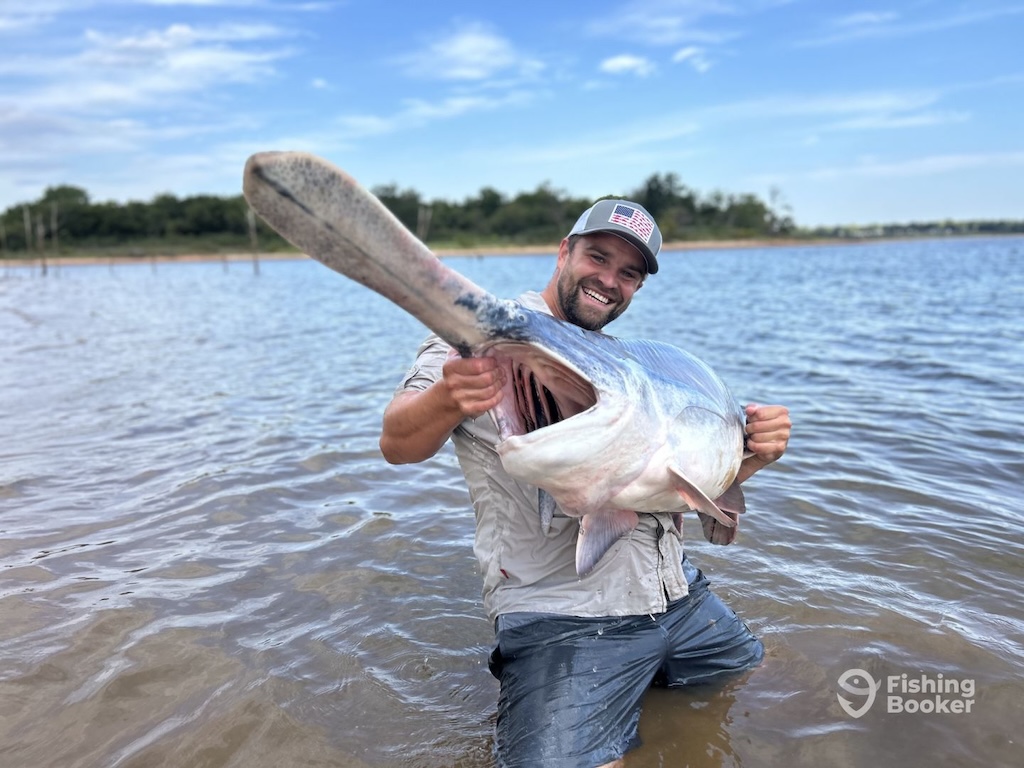
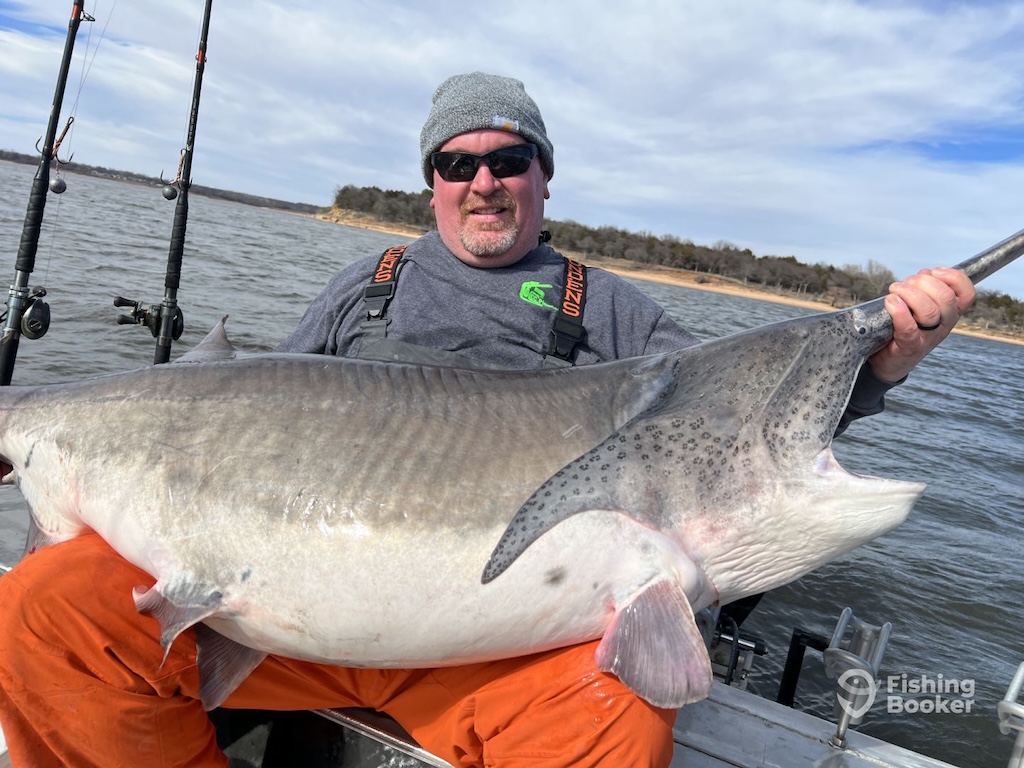
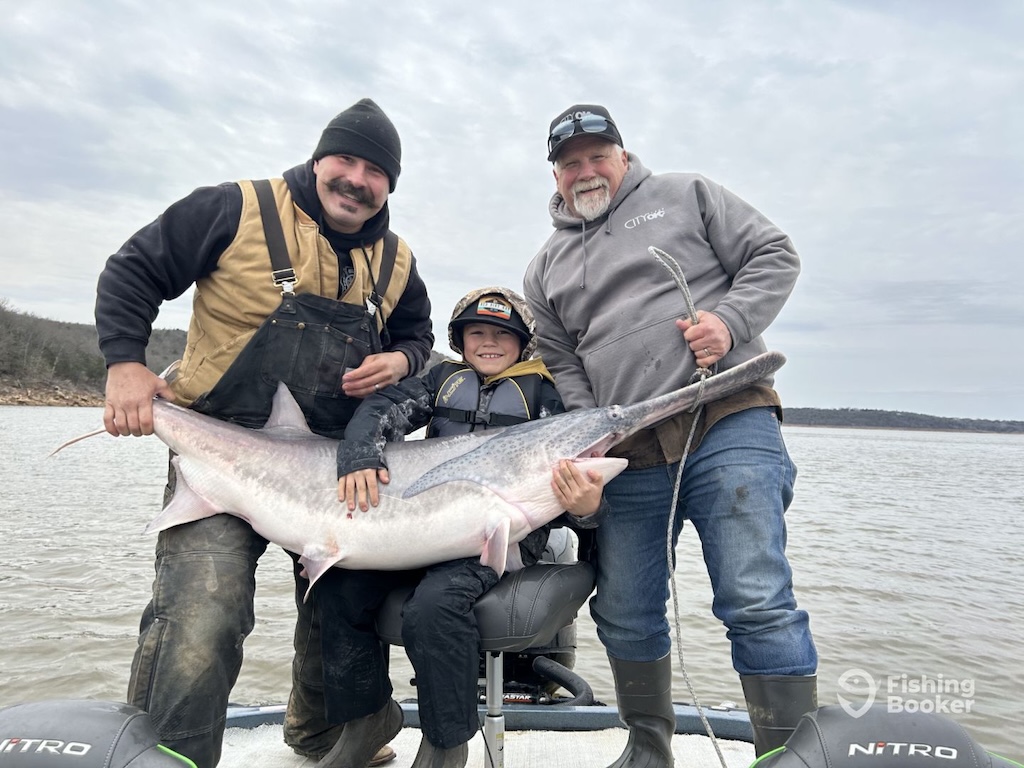
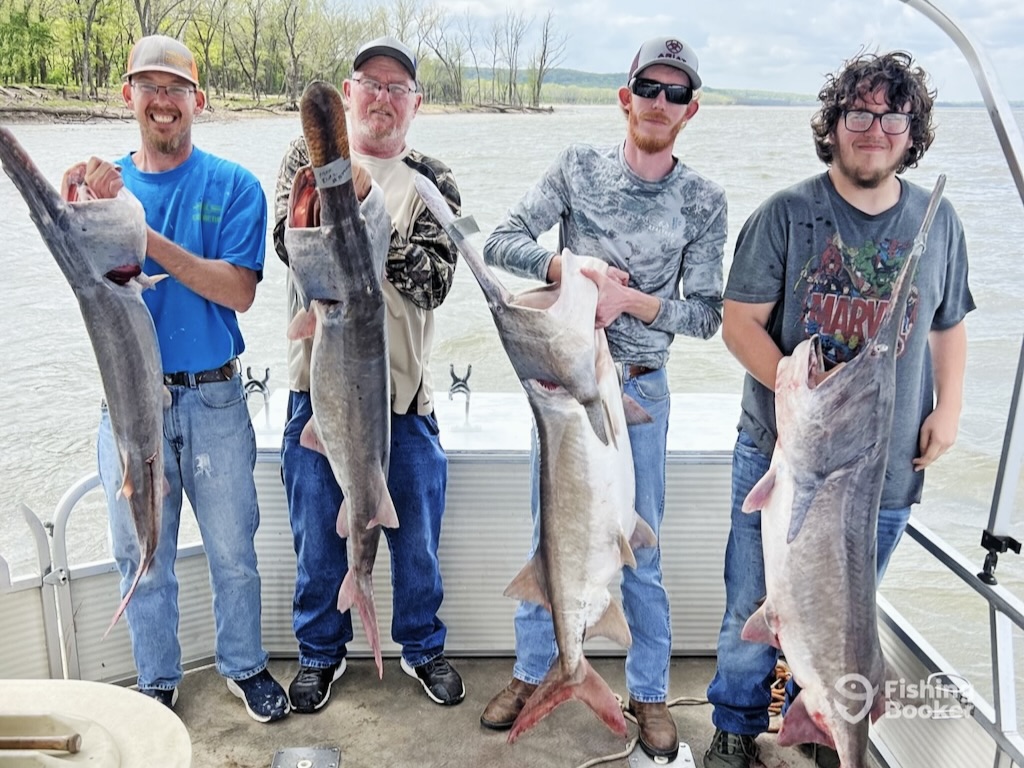
The first time you see a paddlefish (Polyodon spathula) up close, it feels like you’ve stepped through a temporal rift. These creatures are true relics. While the rest of the world evolved, the paddlefish decided it was already perfect about 125 million years ago. On average, a Montana paddlefish weighs in at 60 pounds and stretches 5 feet from the tip of its rostrum to its heterocercal tail.
That rostrum—the "paddle" that gives the fish its name—isn't just for show. It’s a sophisticated sensory organ covered in electroreceptors, allowing the fish to detect the minute electrical signals of zooplankton in the murky, high-brown water of the Missouri and Yellowstone rivers. Unlike their cousins, the sturgeon, which are bottom feeders, paddlefish cruise the water column with their cavernous mouths wide open. Because they don't "bite," you can't trick them with a worm or a crankbait. You have to go get them.
How to Catch a Paddlefish in Montana: The Art of Snagging
If fly fishing is a scalpel, snagging is a sledgehammer. I’ve seen seasoned anglers come off the riverbanks at the Intake Diversion Dam looking like they’ve just finished a double shift in a coal mine. It is high-intensity, "cast-and-jerk" fishing.
The technique is straightforward but requires relentless stamina:
- The Cast: Use a heavy-duty surf-casting rod to hurl your weighted treble hook as far out into the channel as possible.
- The Sweep: Once the weight hits the bottom, you rip the rod back in a massive, horizontal arc. You aren't feeling for a nibble; you’re trying to physically collide your hook with the side of a 70-pound fish.
- The Retrieval: Reel in the slack quickly as you move the rod forward, then repeat.
When you finally connect, it doesn't feel like a fish—it feels like you've hooked a moving car. There is no "setting the hook" in the traditional sense; the hook is already buried in the thick, sandpaper-like skin or the muscle of the fish. From that point on, it’s a pure test of equipment and muscle. You’ll want to keep your rod tip up and maintain constant tension. Any slack in the line, and that prehistoric powerhouse will throw the hook in the heavy current.
Navigating the 2026 Tag System & Seasons
If you’re planning a trip for the Montana paddlefish fishing guide 2026 season, your first hurdle isn't the river—it's the paperwork. Montana Fish, Wildlife & Parks (FWP) manages this fishery with surgical precision to ensure these ancient populations don't collapse.
The harvest is controlled through a color-coded tag system. You cannot simply show up and fish wherever you please. You must choose your "district" and secure the corresponding tag.
| Tag Color | Location | Season Dates | Method | Availability |
|---|---|---|---|---|
| White | Upper Missouri River (above Fort Peck) | May 1 – June 15 | Snagging | Lottery Only |
| Yellow | Yellowstone River | May 15 – June 15 | Snagging | Over-the-counter |
| Green | Lower Missouri River (below Fort Peck) | May 15 – June 15 | Snagging | Over-the-counter |
| Blue | Fort Peck Dredge Cuts | July 1 – August 31 | Archery | Over-the-counter |
Pro Tip: The Yellow and Green tags share a communal harvest limit. FWP strictly caps the total take at 1,000 fish per year across these two regions. Once that 1,000th fish is tagged, the harvest season closes immediately, usually transitioning to "catch-and-release only" for the remainder of the dates. Check the FWP hotline daily.
For the White Tag (Upper Missouri), the application deadline is typically in late March. If you miss the lottery, you’re out of luck for the harvest, but you can still purchase a catch-and-release permit for certain days.
Top Locations and River Flow Strategies
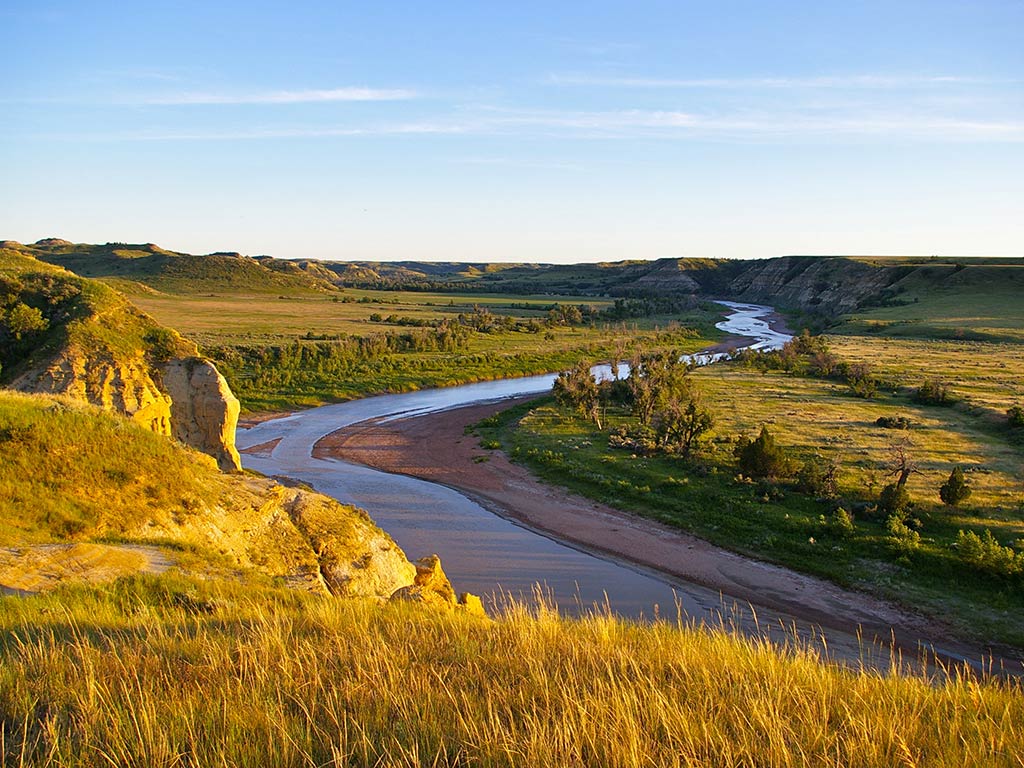
Where you fish is just as important as how you fish. The 2026 season will likely see high traffic at the "usual suspects," but knowing the water dynamics can give you a massive advantage.
Intake Diversion Dam (Yellowstone River)
This is the Mecca of paddlefish snagging. Located about 17 miles north of Glendive, the dam acts as a natural bottleneck for fish migrating upstream to spawn. When the water levels are right, thousands of paddlefish stack up below the diversion.
Fred Robinson Bridge (Missouri River)
For those who want the "Marcus Rivera experience"—remote, rugged, and quiet—head to the Fred Robinson Bridge area. This is the gateway to the Upper Missouri River Breaks. It requires more hiking and better navigation, but the pressure is lower, and the scenery is unbeatable.
Technical Insight: Watching the CFS
I never head to the river without checking the USGS stream gages at Miles City (for the Yellowstone) or Wolf Point (for the Missouri).
- Low Flow: If the cubic feet per second (CFS) is too low, the fish won't move up past the dams.
- High/Turbid Flow: This is actually what you want. High, muddy water triggers the spawning run. For the Yellowstone at Intake, I look for flows between 30,000 and 50,000 CFS for peak snagging conditions.
Essential Gear for the 2026 Season
You cannot bring a trout rod to a dinosaur fight. I’ve seen $500 fly rods snapped like toothpicks by anglers who thought they could "finesse" a paddlefish.
- The Rod: You need a 10- to 14-foot heavy-action surf-casting rod. It needs enough backbone to cast 5–8 ounces of lead and enough leverage to pull against 60 pounds of dead weight in a 5-knot current.
- The Reel: A high-capacity spinning reel (saltwater grade) with a high retrieval rate. You’ll be doing a lot of "reeling into the slack," so speed matters.
- The Line: Don't settle for mono. Use 80–100 lb braided line. It has zero stretch, which is crucial for feeling the "thump" of a fish during the snagging stroke.
- The Tackle: Large treble hooks are the standard. For 2026, be aware that some specific sections of the Missouri may require single-pointed hooks to reduce accidental injury to fish intended for release. Always check the latest FWP "Bluebook" regulations.
If you’re traveling from out of state, I highly recommend stopping by local outfitters in Glendive or Lewistown. They live and breathe this season and can provide the exact weight-and-hook rigs tuned for the current river velocity.
Conservation & Ethical Snagging
We are the stewards of a 70-million-year legacy. While the harvest is a tradition, conservation is the priority. In 2026, FWP will continue its rigorous data collection. If you harvest a fish, you are often required to provide a jaw sample or allow biologists to scan for tracking chips.
10 Tips for Safe Release & Ethical Fishing:
- Use the Right Tag: Never "high-grade" (releasing a smaller fish to keep a larger one later). Once you tag a fish, your harvest season is over.
- Minimize Air Time: If you are catching and releasing, keep the fish in the water. Their massive weight isn't supported out of the river, which can cause internal organ damage.
- No "Gaffing" for Release: Use a soft mesh net or a tail-rope if you plan to release the fish.
- Avoid "Hoot Owl" Hours: If water temperatures exceed 70°F, FWP may implement "Hoot Owl" regulations, banning fishing between 2 PM and midnight to protect heat-stressed fish.
- Clean Your Gear: Prevent the spread of invasive zebra mussels by cleaning, draining, and drying your boat and gear.
FAQ
Q: Do I need a special boat to catch paddlefish? A: No. While boats allow you to reach mid-channel holes, some of the most successful "snaggers" in Montana work from the banks at places like Intake or the Fred Robinson Bridge. Just be prepared for "combat fishing" (standing shoulder-to-shoulder with other anglers).
Q: Is paddlefish meat good to eat? A: Surprisingly, yes. It is a firm, white meat similar to sturgeon or swordfish. It’s excellent grilled or smoked. However, you must remove the dark "red meat" (the lateral line) before cooking, as it has a very strong, oily taste.
Q: Can I keep the roe (eggs)? A: Yes, but only if you have a valid harvest tag. Paddlefish roe is highly valued as "American Caviar." Montana has specific programs where you can donate the roe to the state for research and conservation funding in exchange for fish cleaning services.
Ready to Gear Up?
Catching a Montana paddlefish is a bucket-list experience that demands respect for the animal and the environment. It's dirty, it's exhausting, and it's absolutely exhilarating. If you're ready to test your mettle against a living fossil, start your 2026 planning now.
Apply for your 2026 Paddlefish Tag Here →
Stay Wild, Marcus Rivera