Quick Facts
- Best Overall: The Cannondale Precise Floor Pump takes the top spot for its uncompromising stability, high-contrast gauge, and a dual-stage system that handles both high-pressure road tires and high-volume MTB setups with equal finesse.
- The Accuracy Standard: Our lab tests confirmed that the Bontrager TLR Flash Charger’s digital gauge is the gold standard, showing an average deviation of only 0.6 PSI compared to our laboratory control units.
- Tubeless Hero: For seating tubeless tires without a loud, bulky air compressor, the Bontrager TLR Flash Charger is essential. Its integrated "charge" chamber stores compressed air for a high-volume blast that snaps beads into place instantly.
- Electric Innovation: The CYCPLUS Electric Pump has redefined roadside repairs, inflating a 2.1" MTB tire from 0 to 35 PSI in just 1 minute and 23 seconds—nearly 30 seconds faster than its closest handheld rival.
- Budget Precision: You don't need to spend triple digits for accuracy. The Bontrager Charger analog gauge is accurate within 0.7 PSI, significantly outperforming entry-level competitors like the Topeak JoeBlow Max HP, which can deviate by over 5 PSI.
Best Bike Pumps of 2025: Expert Test of 50+ Models for Speed and Accuracy
Since 2013, our team has independently purchased and tested over 50 bike pumps, ranging from heavy-duty workshop floor models to pocket-sized electric inflators. While many cyclists obsess over carbon fiber frames or electronic shifting, we have consistently found that tire pressure remains the single most important metric for ride quality. It is the literal interface between you and the road; a few PSI too high and you lose traction and comfort; a few PSI too low and you risk pinch flats and sluggish rolling resistance.
In our 2025 testing cycle, we pushed the boundaries of our evaluation. We didn't just count the number of strokes it took to reach 90 PSI; we took these pumps into a controlled lab environment to test gauge calibration against a professional-grade Truflo benchmark. We evaluated the "Cadillac glide" of expensive internal pistons and the frustrating "friction scrape" of budget models. What follows is the definitive ranking of the tools that deserve a permanent spot in your garage or jersey pocket.
At a Glance: Top Recommendations
| Category | Model | Accuracy | Best For |
|---|---|---|---|
| Best Overall | Cannondale Precise Floor Pump | ± 1.1 PSI | All-around versatile use |
| Best for Tubeless | Bontrager TLR Flash Charger | ± 0.6 PSI | Home mechanics / Seating beads |
| Best Value | Bontrager Charger (Analog) | ± 0.7 PSI | Budget-conscious precision |
| Best Electric | CYCPLUS AS2 Pro | Digital | Portable roadside repair |
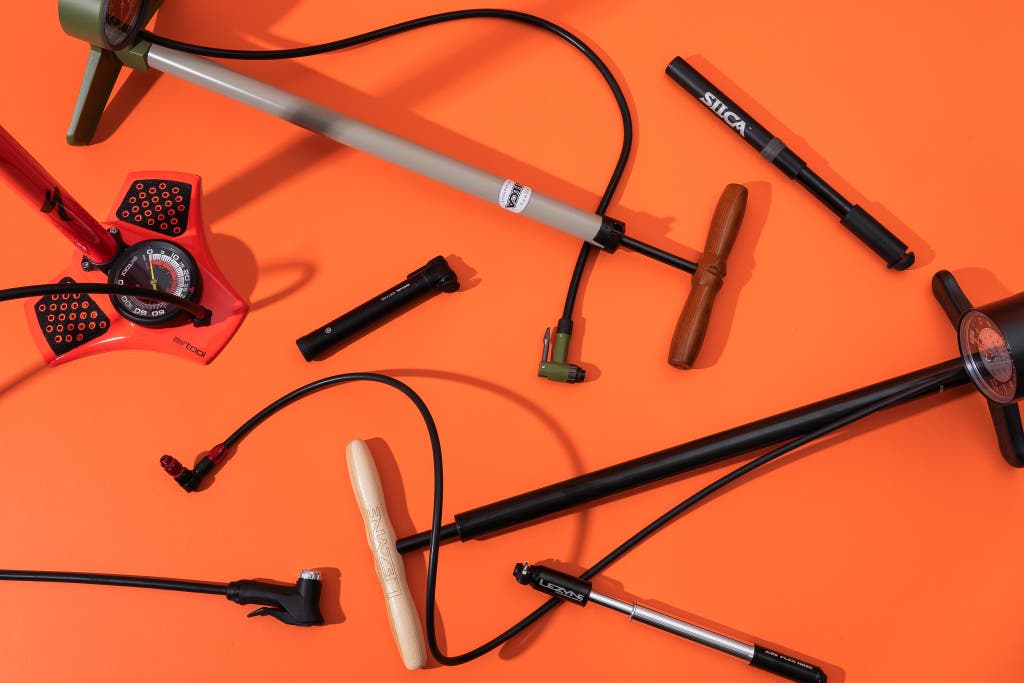
Best Overall Floor Pump: Cannondale Precise Floor Pump
The Cannondale Precise Floor Pump isn't just a tool; it’s a piece of workshop equipment that feels like it was designed for a professional racing team. During our testing, this model stood out for its sheer versatility. Most pumps excel at either high pressure (Road) or high volume (MTB), but Cannondale’s dual-stage inflation system bridges the gap.
With a 1.1 PSI accuracy deviation, it ranks among the elite in terms of mechanical gauges. The hose length is a generous 128cm, meaning you don't have to reposition your bike on the repair stand just to reach the valve. The massive, color-coded gauge is mounted at the base, and while some critics prefer top-mounted gauges, the high-contrast design makes it readable even from a standing position.
Pros:
- Exceptionally stable steel base that doesn't wobble during heavy pumping.
- Dual-stage switch allows for effortless high-pressure topping off.
- Extra-long hose adds significant convenience in a crowded workshop.
Cons:
- The needle view window is slightly narrow, which can make "split-PSI" adjustments difficult.
Best Bang for the Buck: Bontrager Charger
For many cyclists, the price of a high-end floor pump is hard to justify. However, our data suggests that going too cheap is a mistake. In our lab testing, the entry-level Topeak JoeBlow Max HP showed a worrying deviation of over 5 PSI—a margin of error that can completely change the handling of a gravel bike.
The Bontrager Charger, by contrast, is a revelation for the budget-conscious. Despite its lower price point, its analog gauge proved accurate within 0.7 PSI. It features a tripod base that provides surprising stability for a lightweight unit. If you are looking for a "set it and forget it" tool for the garage that won't break the bank, this is the gold standard for value.
Expert Tip: If you frequently switch between Presta and Schrader valves, the Bontrager head design is one of the most robust in the "budget" category, with internal grommets that don't perish after a single season of use.
Best for Home Mechanics & Tubeless Setup: Bontrager TLR Flash Charger
The shift toward tubeless tires has changed the requirements for a floor pump. To seat a tubeless tire, you need a sudden, high-volume "burp" of air to push the tire bead into the rim hook. Traditionally, this required a noisy air compressor. The Bontrager TLR Flash Charger solves this with its "charge" function.
You pump up a secondary chamber to 160 PSI, then flick a lever to release all that air at once. It’s a seamless process that seated every MTB and gravel tire we threw at it, including some notoriously stubborn "wide-rim" combinations. Beyond the charge feature, the digital display is the most accurate we’ve ever tested, with a microscopic 0.6 PSI average deviation. For the rider who maintains their own fleet of tubeless bikes, this is the only pump that makes sense.
Best Electric & Mini Inflators: The Future of Roadside Repair
The most significant shift in the 2025 market is the move away from frame pumps and CO2 canisters toward rechargeable electric inflators. While CO2 is fast, it’s a "one-shot" deal and can be finicky. Hand pumps, on the other hand, often require 200+ strokes to reach a rideable pressure.
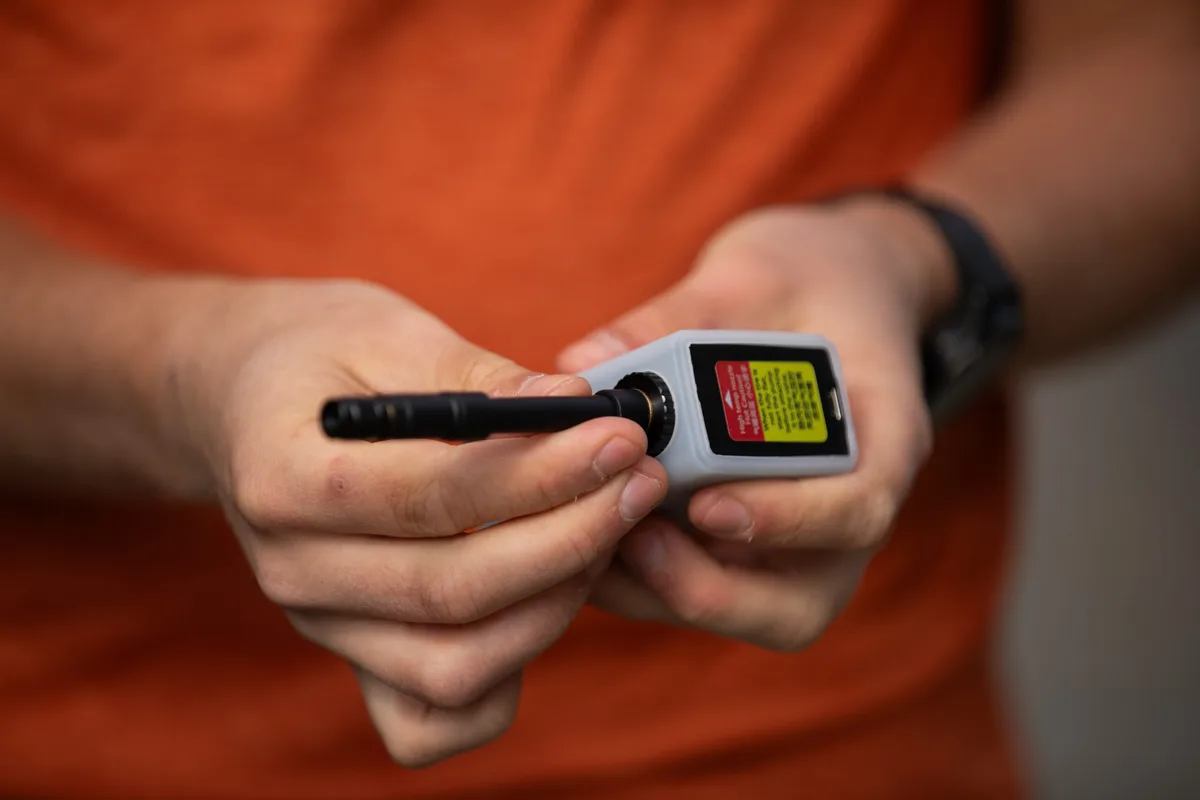
Enter the CYCPLUS Electric Pump. In our performance benchmarks, it achieved a 0 to 35 PSI inflation on a 2.1" MTB tire in just 1 minute and 23 seconds. This is nearly 30 seconds faster than its closest electronic competitor. For the weight-weenies, the Cycplus AS2 Pro is even more impressive; it weighs less than a smartphone and fits easily into a jersey pocket or a small saddlebag.
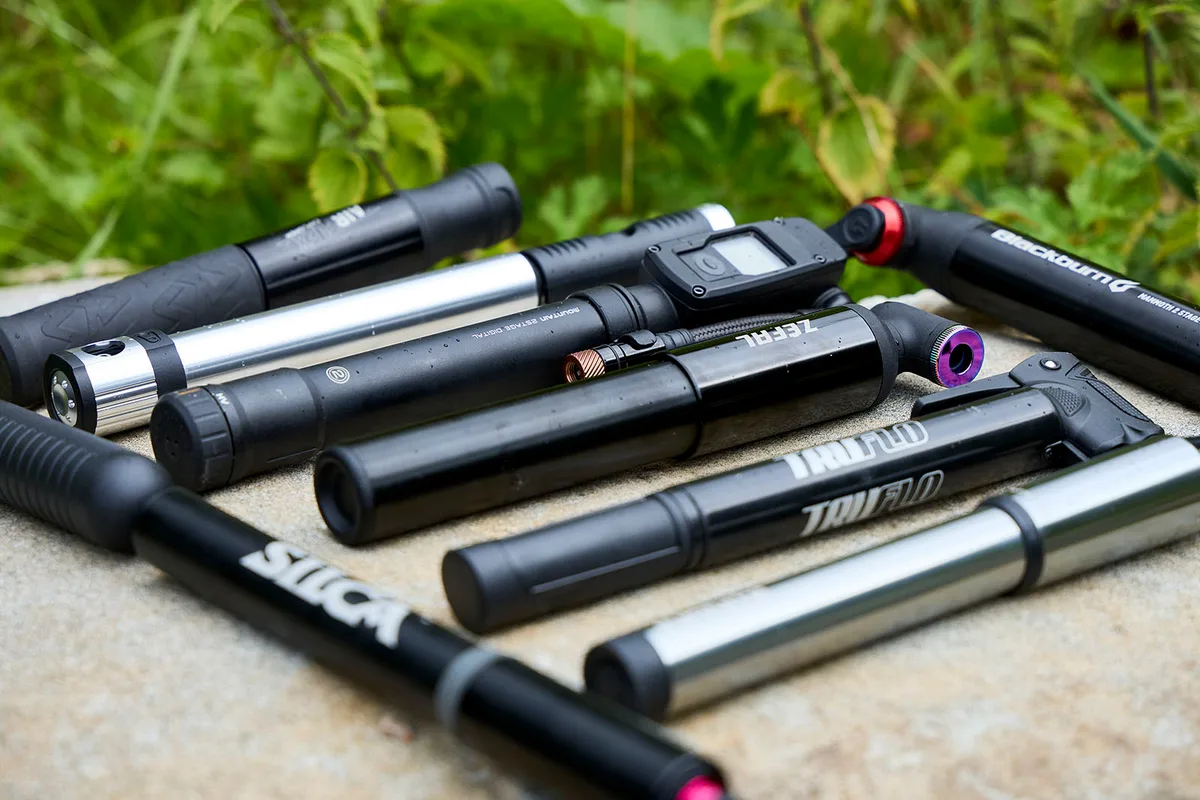
The convenience of setting a target PSI on a digital screen and letting the motor do the work cannot be overstated, especially when your hands are cold or you're exhausted 60 miles into a ride.
Best Mountain Bike Specific Pump: Specialized Air Tool MTB
Mountain bike tires operate at much lower pressures (usually 18–30 PSI) but require a massive volume of air. Using a road-centric pump on an MTB tire is an exercise in futility—you’ll be pumping for minutes. The Specialized Air Tool MTB is designed specifically for this use case. It features an oversized barrel that moves a huge amount of air per stroke. The gauge is also optimized for low pressure, topping out at 40 PSI with large, easy-to-read increments. This allows for the "fine-tuning" of pressure that MTB riders need for technical climbs.
How We Tested: The Science Behind the Strokes
Our testing methodology is designed to strip away marketing hype and focus on repeatable data. We evaluate three primary pillars: Accuracy, Efficiency, and Ergonomics.
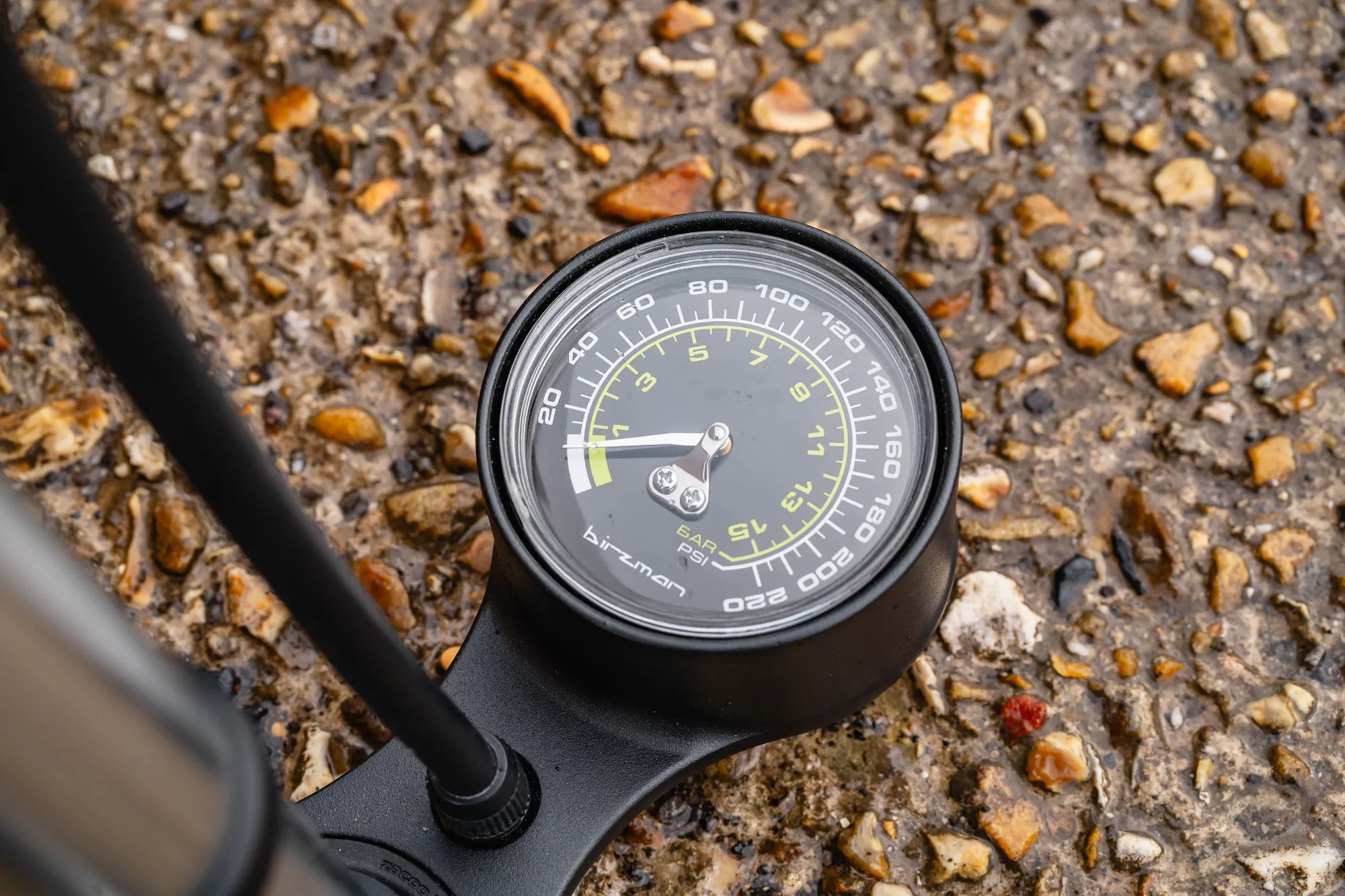
- The Gauge Test: We connected every pump in this test to a high-precision digital "master" gauge. We inflated tires to 20, 40, 60, and 100 PSI, recording the discrepancy between the pump’s reading and the master gauge.
- Stroke Count: We measured how many strokes it took to take a standard 700x28mm road tire to 90 PSI and a 29x2.1" MTB tire to 35 PSI.
- Ergonomics: We looked at "dead space" in the pump stroke, handle comfort (T-type vs. F-type), and the ease of the valve head's locking mechanism. A pump that requires 20 pounds of force just to lock the head onto a valve is a failure in our eyes.
Buyer's Guide: What to Look for in 2025
When shopping for a pump in 2025, don't just look at the maximum PSI rating. Most modern road tires are moving toward lower pressures (70-80 PSI), making a "200 PSI" pump largely unnecessary. Instead, focus on these four factors:
Stability
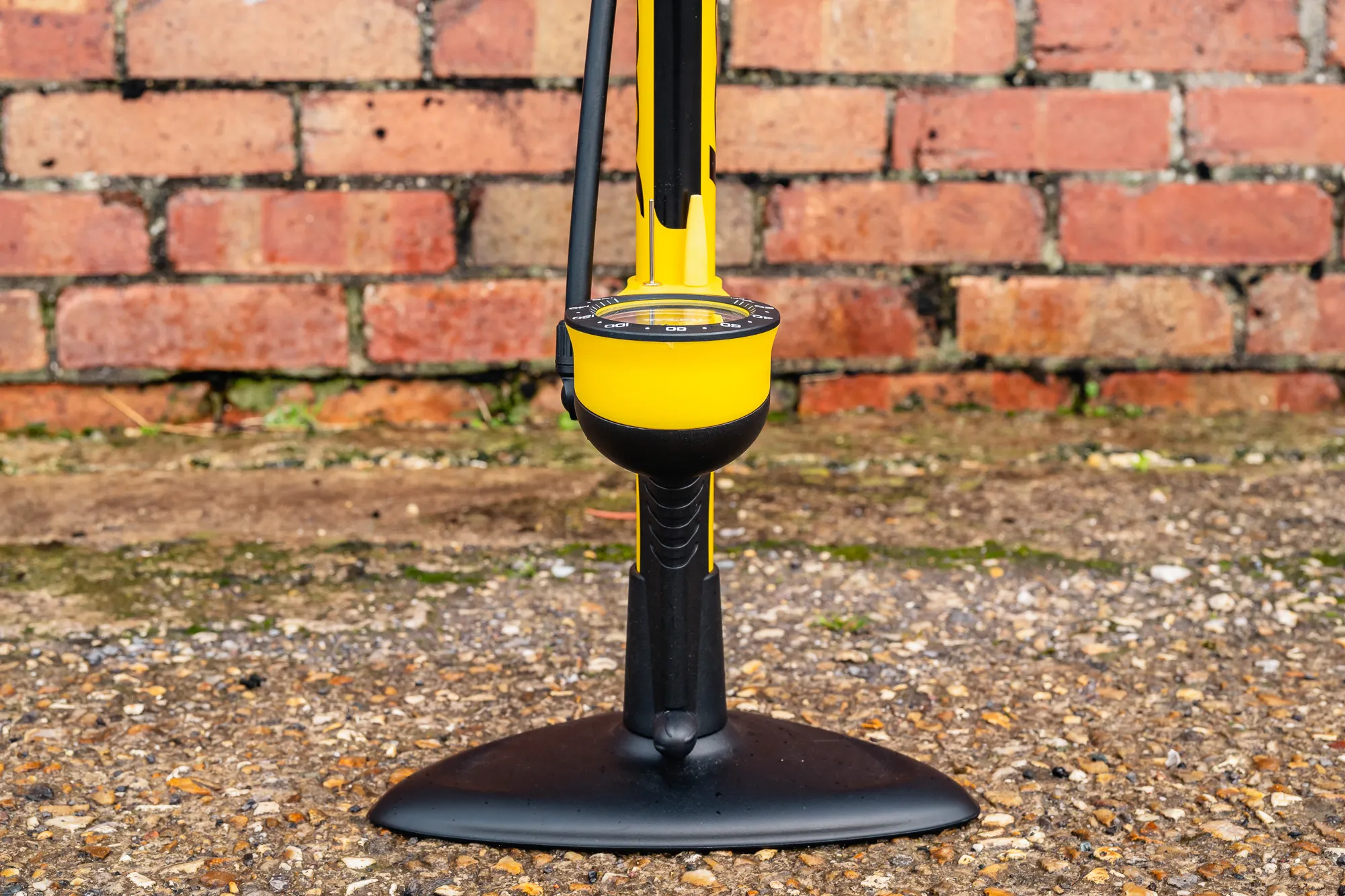
A pump with a flimsy plastic base will tip over the moment you apply real force. Look for heavy steel or cast aluminum bases. A tripod design is generally the most stable on uneven garage floors.
Gauge Placement and Type
Digital gauges are undeniably more accurate, but they require batteries. If you go analog, look for a large face. Base-mounted gauges are less likely to get damaged if the pump falls, but top-mounted gauges are easier to read if your eyesight isn't perfect.
Valve Compatibility
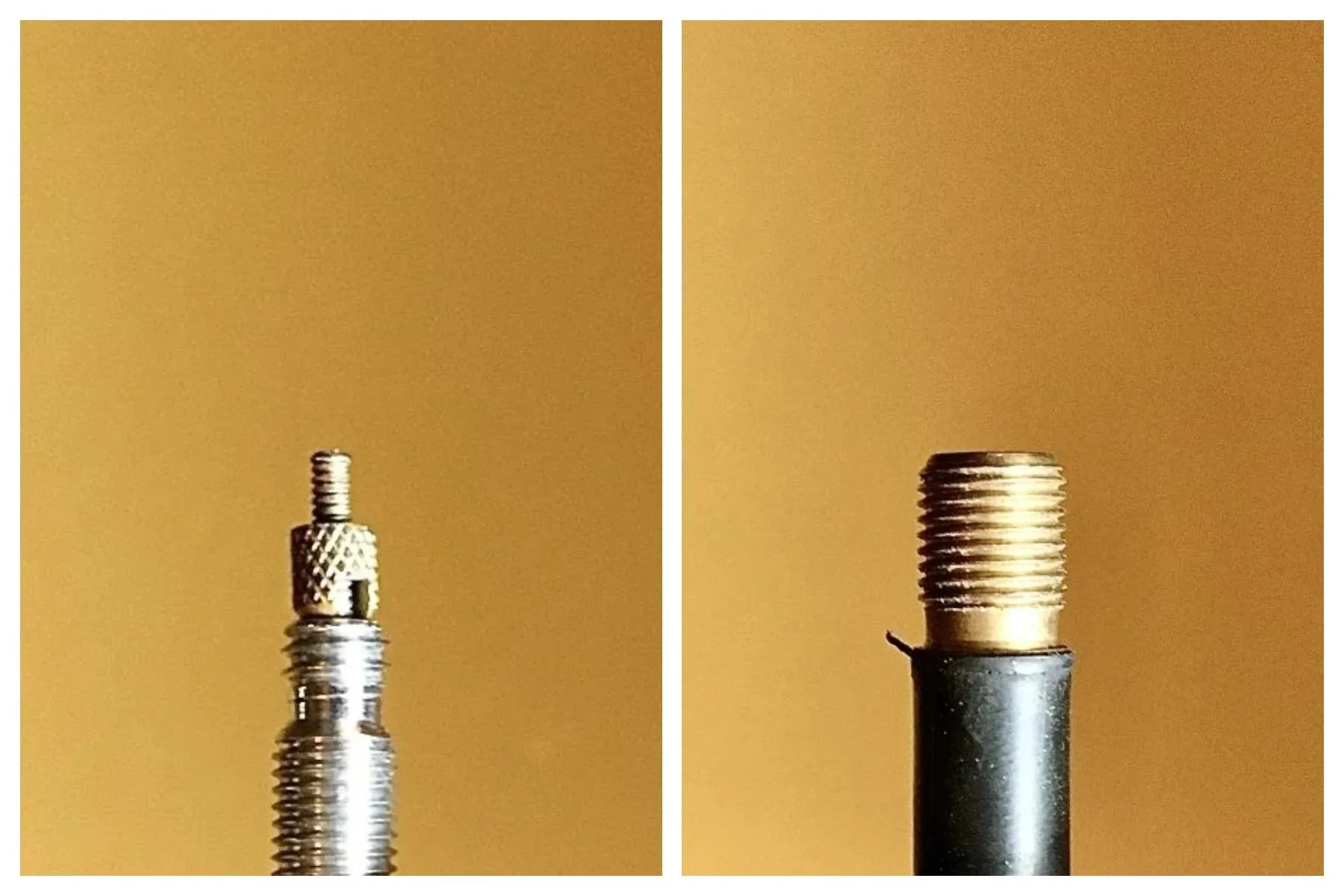
Most pumps now feature "universal" heads that fit both Presta (thin, high-pressure) and Schrader (car-style) valves without swapping internals. Ensure the locking lever feels secure and doesn't leak air as you reach higher pressures.
Serviceability
The best pumps from brands like Silca, Lezyne, or Bontrager are designed to last a decade. Check if the manufacturer sells replacement rubber grommets or internal plunger seals. A pump you can't fix is a disposable product, and we strongly advocate for repairability.
FAQ
Q: Do I really need a digital gauge? A: Not necessarily. While digital gauges offer 0.1 PSI resolution, a high-quality analog gauge is more than sufficient for 95% of riders. However, for gravel and MTB riders where a 2 PSI difference is massive, the precision of digital is a worthy investment.
Q: Can I use an electric pump for my tubeless setup? A: Most portable electric pumps do not have the "burst" volume required to seat a tubeless tire from scratch. They are excellent for maintaining pressure or road-side top-offs, but for the initial seating, you still need a high-volume floor pump with a "charge" chamber or a compressor.
Q: How often should I check my tire pressure? A: Ideally, before every ride. High-pressure road tires can lose several PSI overnight due to the permeability of the tubes (especially latex ones). Consistent pressure is the secret to consistent handling.
Conclusion
The market for bike pumps has matured significantly, moving from "simple air movers" to precision instruments. If you want the absolute best for your home workshop, the Cannondale Precise Floor Pump offers the best balance of build quality and versatility. For those pushing the limits of tubeless technology, the Bontrager TLR Flash Charger is a non-negotiable addition to your kit.
Whichever model you choose, remember that the most expensive pump in the world is useless if the gauge is lying to you. Prioritize accuracy and stability, and your rides will be faster, safer, and infinitely more comfortable.