Our Top Picks
- Best Overall: Ultimate Direction Utility Belt – The gold standard for no-bounce stability, offering six pockets and trekking pole loops for everything from road marathons to technical trails.
- Best for Long Distance: Raide Research LF 2L – A high-capacity beast that carries 2 liters of gear and hydration with zero vertical displacement.
- Best for Phone Security: Nathan Zipster Max – Features weather-resistant zippered pockets that keep even the largest flagship smartphones locked in place.
- Best Budget: Dimok Running Belt – An ultra-affordable, highly reflective option that provides a snug fit for essentials without breaking the bank.
There is nothing that kills a runner’s high faster than the rhythmic thump-thump-thump of a smartphone hitting your hip. I’ve spent the last decade chasing mountain peaks and urban personal bests, and if there’s one thing I’ve learned, it’s that the "bounce" is the enemy of performance. Whether you’re training for your first 5K or your fifth ultramarathon, your gear should feel like a second skin, not a pendulum.
After extensively testing 50+ of the best running belts on the market, I’ve narrowed the field down to the seven absolute winners for 2026. These no-bounce running waist packs were subjected to thousands of vertical feet and triple-digit temperatures to ensure they stay put when the pace picks up. If you're looking for the ultimate solution to gear storage, the Ultimate Direction Utility Belt is my top recommendation for its incredible balance of capacity and rock-solid stability.
Our Real-World Testing Protocol: How We Evaluated Stability
To find the best running belts, I didn't just run around the block. Our team logged hundreds of miles across four seasons, from the sub-zero winters of Illinois to the 100°F+ dry heat of the Arizona desert. We standardized our "loadout" for every test: a Google Pixel Pro (large phone), a set of car keys, three energy gels, and a 500ml soft flask.
We evaluated each belt based on three core pillars:
- Stability: Does it ride up or bounce during high-intensity intervals?
- Moisture Management: Does the breathable mesh actually wick sweat, or does it become a heavy, soggy sponge?
- Accessibility: Can you grab a gel or your phone mid-stride without breaking your form?

1. Best Overall: Ultimate Direction Utility Belt
The Ultimate Direction Utility Belt is a masterclass in minimalist design. It doesn't use buckles or straps; instead, it relies on a high-stretch spandex blend that creates uniform compression around your waist. During my testing on the technical trails of Boulder, this belt remained completely flush against my body, even when I had it loaded with a full hydration flask and a light windbreaker.
What sets this apart as one of the best running belts for trail enthusiasts is the inclusion of dedicated trekking pole loops. They feature silicone grips that prevent the poles from sliding out during steep descents. It’s a versatile powerhouse that transitions perfectly from a minimalist road marathon setup to a rugged mountain excursion.
| Key Spec | Detail |
|---|---|
| Weight | 2.25 oz (64g) |
| Pockets | 6 (360-degree access) |
| Hydration | Fits up to 500ml soft flask |
| Pole Loops | Yes (with silicone grip) |
| Material | Nylon/Spandex blend |

Pros:
- Absolute zero bounce under heavy loads.
- Highly breathable material prevents "waist sweat."
- Six-pocket layout allows for excellent gear organization.
Cons:
- No zippered pockets (everything is tension-secured).
- Sizing is critical; if you guess wrong, it will ride up.
2. Best for Long Distances: Raide Research LF 2L
If you are looking for a comfortable hydration belt for long distance running, the Raide Research LF 2L is a specialized tool for high-output days. Most belts start to sag when you put more than a pound of gear in them, but the LF 2L uses a rigid UHMWPE ripstop fabric and a unique suspension system that distributes weight across the iliac crest (the top of your hip bones).
I took this belt out for a 20-mile self-supported run and was blown away by the stability. It felt more like a low-profile harness than a traditional waist pack. It's essentially a running hydration belt for people who hate wearing vests but need to carry enough water and nutrition for three-plus hours of movement.

Pros:
- Incredible 2L storage capacity.
- Rigid structure prevents "waist-pinch" common with elastic belts.
- Quick-adjust tension system for on-the-go tightening.
Cons:
- Bulkier than minimalist sleeves.
- Premium price point.
3. Best for Phone & Key Security: Nathan Zipster Max
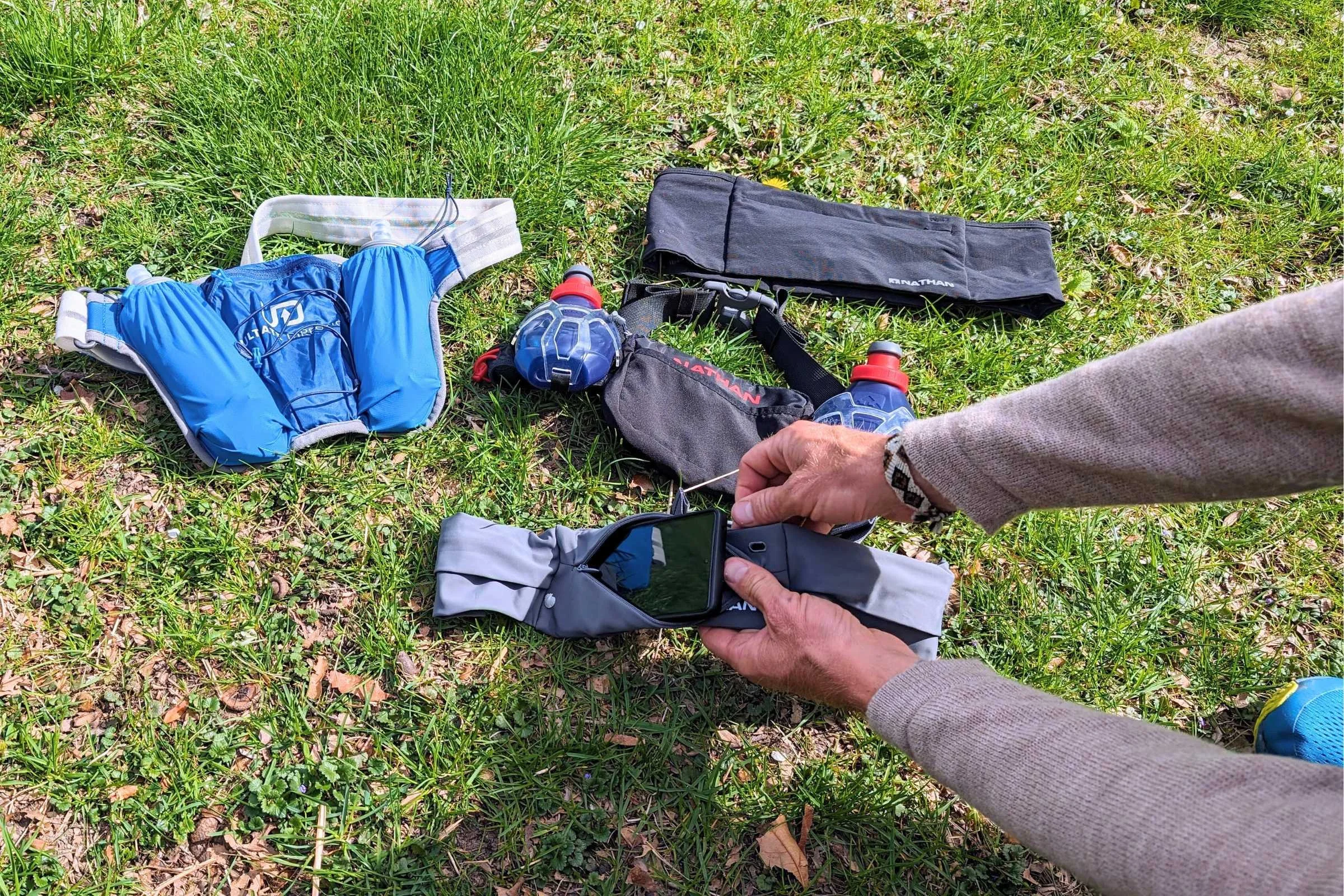
For many road runners, the main priority is finding a best running belt for large phones and keys. The Nathan Zipster Max solves the problem of security with two large, weather-resistant zippered pockets. I tested this with an iPhone 15 Pro Max, and there was zero movement. The continuous waistband design means there are no buckles to chafe against your skin, and the moisture-wicking fabric kept my phone dry even during a humid morning run in Chicago.
| Key Spec | Detail |
|---|---|
| Phone Fit | Fits iPhone 15 Pro Max / Pixel 8 Pro |
| Closure | Continuous loop (Step-in) |
| Pockets | 2 zippered, 2 stash |
| Waist Size | XS to XL |
Pros:
- Zippered pockets provide peace of mind for expensive tech.
- Low-profile enough to wear under a t-shirt.
- Available in a wide range of sizes.
Cons:
- Not ideal for carrying large water flasks.
- Can feel warm in extreme humidity.
4. Best Minimalist Pick: Flipbelt Classic Edition
The Flipbelt Classic remains a staple in the running world for a reason. It is the quintessential minimalist running waist pack for marathon runners. It’s a simple Lycra sleeve with four openings. You slide your gear in, flip the belt inward to lock everything against your body, and forget it's there. It’s my go-to choice for race day when I only need to carry a key, a phone, and a couple of gels.
Pros:
- Sleek, fashion-forward design with no hardware.
- Internal key hook is a lifesaver.
- Extremely durable; my original Flipbelt has survived 200+ washes.
Cons:
- Items can migrate around the belt if not packed tightly.
- No adjustable fit; you must get the sizing perfect.
5. Best for High Hydration: Nathan TrailMix Plus 3.0
If your primary goal is carrying fluids, the TrailMix Plus 3.0 is one of the top running hydration belts on the market. Unlike the sleeve-style belts, this one includes two 10-oz insulated bottles that sit on the small of your back. The tensioned straps allow for a highly adjustable fit, which is great as your waist size might slightly fluctuate during a long training block.
Pros:
- Includes two high-quality bottles.
- One-handed bottle access is very intuitive.
- Extra zippered pocket for snacks.
Cons:
- Hard bottles can feel "bouncy" if the belt isn't tightened significantly.
- Heavier than spandex sleeves.
6. Best Trail-to-Road Hybrid: Salomon ADV Skin
Salomon took the technology from their world-class vests and shrunk it down into the ADV Skin belt. It features a wide, breathable mesh back panel that provides incredible airflow. This is a top-tier no-bounce running waist pack because it uses a diagonal stowage system for soft flasks, which lowers the center of gravity and reduces movement.
Pros:
- Salomon’s "Sensifit" technology ensures a snug, non-restrictive fit.
- Includes a 500ml soft flask.
- Excellent storage for a light jacket or emergency shell.
Cons:
- The mesh can be slightly abrasive if worn against bare skin.
7. Best Budget & Visibility: Dimok Running Belt
You don't always need to spend $50 to get a quality gear carrier. The Dimok belt is a fantastic phone holder for runners on a budget. It features an adjustable strap, a water-resistant pocket, and a large reflective strip for safety during night runs. While it doesn't have the sophisticated suspension of the Raide or Ultimate Direction, it’s remarkably stable for its price.
Pros:
- Under $15.
- Highly reflective for low-light visibility.
- One size fits most (28" to 48" waists).
Cons:
- Material feels a bit "plasticky" compared to premium brands.
- The buckle can occasionally cause pressure points.
Buying Guide: How to Choose Your No-Bounce Running Waist Pack
The best running belts are not a one-size-fits-all solution. In 2024, the global running belt market reached a value of $1.42 billion, and with it growing toward a projected $2.43 billion by 2033, the options can be overwhelming.
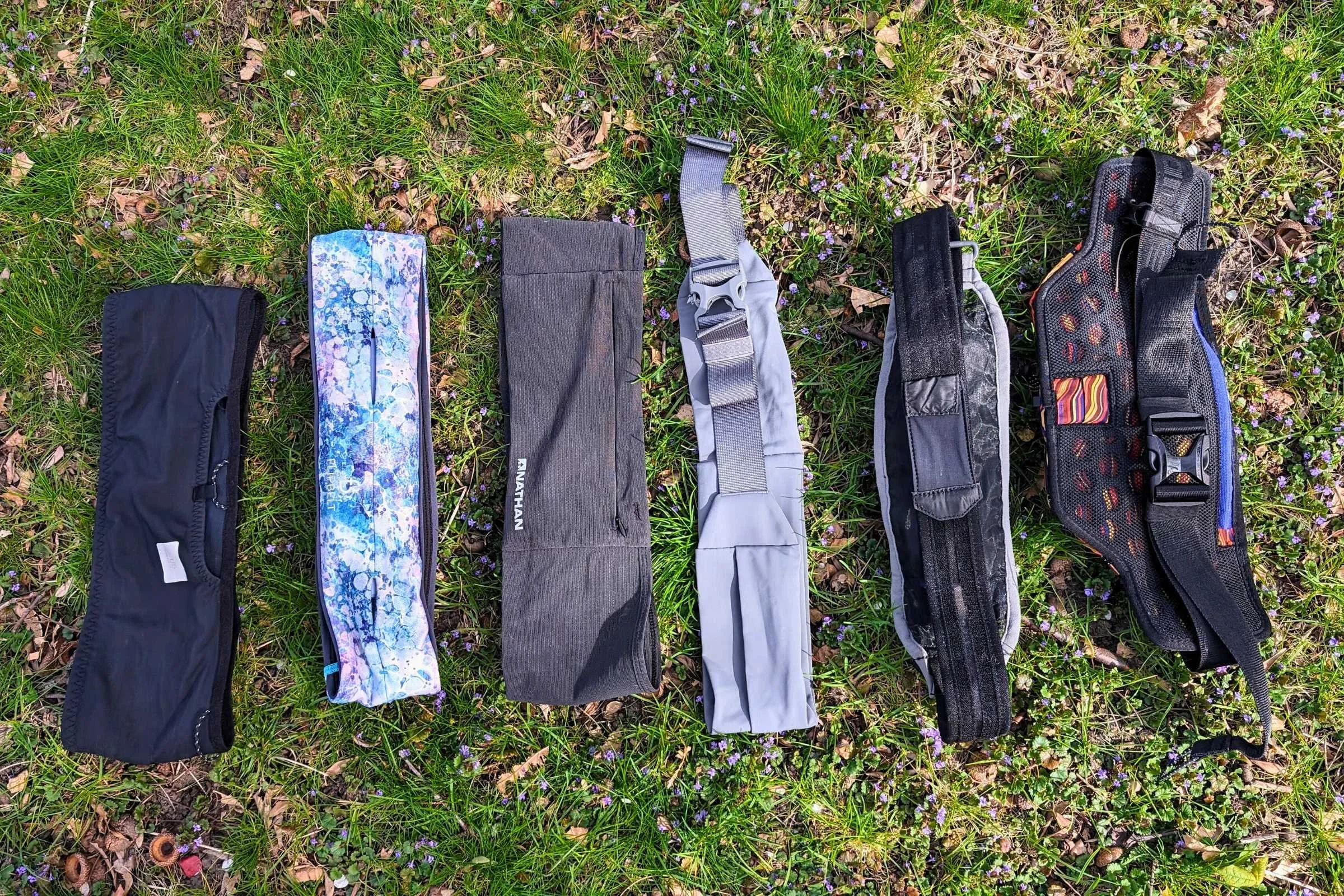
When shopping, first decide between a sized sleeve (like the Flipbelt or UD Utility) and an adjustable strap (like the Nathan TrailMix). Sized sleeves offer more comfort and a lower profile but require an exact measurement. If you are between sizes, I always recommend sizing down to ensure a snug fit. Adjustable belts are more versatile but can occasionally chafe where the buckle meets the skin.
Running Belt vs. Hydration Vest: Which Is Right for You?
One of the most frequent questions I get is about the running belt vs hydration vest for summer training. During the hottest months, a vest can act like an unwanted thermal layer, trapping heat against your back and shoulders.
A high-quality running hydration belt offers superior breathability. By keeping your back open to the air, your body can regulate temperature much more efficiently. Belts are perfect for runs under two hours or for race days with frequent aid stations. However, if you're heading into the deep backcountry where you need 2+ liters of water and a full first aid kit, the storage capacity of a vest is still hard to beat.
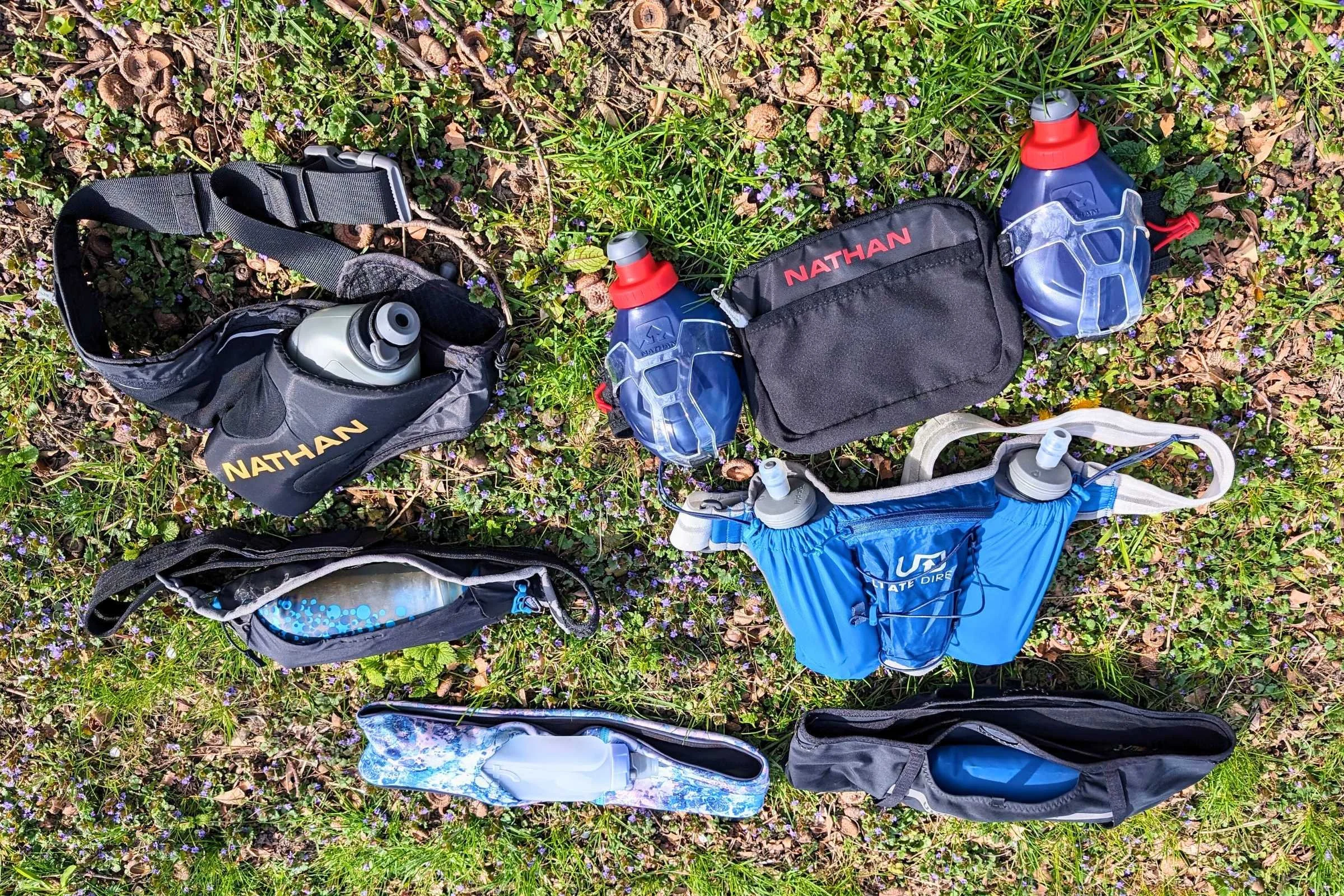
Pro Tips: How to Stop a Running Belt from Bouncing
Even the best running belts will fail if they aren't used correctly. To achieve a truly bounce-free experience, you need to ignore your natural waistline.
Industry professionals recommend positioning running belts low on the hips rather than around the narrowest part of your waist. When the belt sits on the wider part of your pelvic bone, it has nowhere to "slide" down to, creating a mechanical lock. Furthermore, always balance your load. If you have a heavy phone on the front, try putting your water flask or keys in the back to maintain an even center of gravity.

FAQ
How do I stop a running belt from bouncing?
The key is placement and sizing. Always wear the belt low on your hips, which is the widest part of your lower torso. This prevents the belt from riding up toward your waist. Additionally, ensure you have a snug fit—if the belt is even slightly loose, the weight of your phone will cause it to oscillate with every stride.
What is the best running belt for large phones and keys?
The Nathan Zipster Max is our top pick for large devices. Its weather-resistant zippered pockets are specifically designed to accommodate flagship phones like the iPhone 15 Pro Max or Samsung Ultra series while keeping them pressed firmly against the body to eliminate shaking.
Are running belts better than hydration vests?
It depends on the distance and the weather. For summer training, belts are often better because they allow for maximum breathability and prevent "sweaty back syndrome." However, for ultra-endurance events requiring significant gear (like mandatory race kits), a vest provides the necessary volume that most belts lack.
Conclusion: Finding Your Perfect Stride in 2026
The gear landscape has evolved significantly. We are no longer stuck with fanny packs that flap around like a loose limb. Whether you choose the all-around performance of the Ultimate Direction Utility Belt or the high-security features of the Nathan Zipster Max, the best running belts of 2026 are designed to disappear the moment you start your watch.
Stop fighting your gear and start focusing on your splits. Match your belt to your specific needs—whether that's hydration, phone security, or trail capacity—and enjoy the freedom of a truly no-bounce run.