Quick Facts
- Best Overall for 2025: The Platypus QuickDraw takes the top spot for its blazing 3 L/min flow rate, dual-cap leak protection, and a built-in integrity test that lets you verify it still works after a freezing night.
- Best for Thru-Hiking: The Sawyer Squeeze remains the undisputed king of the long trails. With a 0.1-micron absolute hollow fiber membrane rated for up to 1 million gallons, it offers the lowest cost-of-ownership at less than $0.01 per liter.
- Filter vs. Purifier: Most hikers only need a filter to remove bacteria and protozoa. If you are traveling internationally or to areas with poor sanitation, you need a purifier (like the MSR Guardian) to eliminate viruses.
- The Sleeping Bag Rule: Never let your hollow-fiber filter freeze. Once the wet fibers freeze, they expand and shatter, rendering the filter useless. In freezing temps, sleep with your filter in your sleeping bag.
There is nothing quite like the panic of a "midnight run" into the bushes to make you rethink your gear choices. I’ve been there—crouched behind a juniper tree in the High Desert, cursing a "budget" filter that failed to stop a rogue protozoan. After 3,500 miles of testing in environments ranging from the dusty Arizona Trail to the silt-heavy glacial streams of the Canadian Rockies, I’ve learned that the line between a world-class adventure and a medical emergency is often the 0.1-micron filter sitting in your side pocket.
For 2025, the market has matured. We are no longer just looking for "clean water"—we want speed, reliability, and systems that don’t require a degree in mechanical engineering to field-strip. Our team put the latest models through the ringer, measuring flow rates when new and after 100 liters of "muck water" to see which systems actually hold up.
Quick Comparison: 2025's Top Performers
| Model | Weight | Flow Rate | Lifetime | Est. Cost / Liter | Best For |
|---|---|---|---|---|---|
| Platypus QuickDraw | 2.9 oz | 3.0 L/min | 1,000 L | $0.04 | Best Overall |
| Sawyer Squeeze | 3.0 oz | 1.7 L/min | 3.7M L | <$0.01 | Thru-Hiking |
| Katadyn BeFree AC | 2.3 oz | 2.0 L/min | 1,000 L | $0.05 | Trail Running |
| MSR Guardian | 17.3 oz | 2.5 L/min | 10,000+ L | $0.35 | Global Travel |
| Platypus GravityWorks | 11.5 oz | 1.75 L/min | 1,500 L | $0.08 | Group Camping |
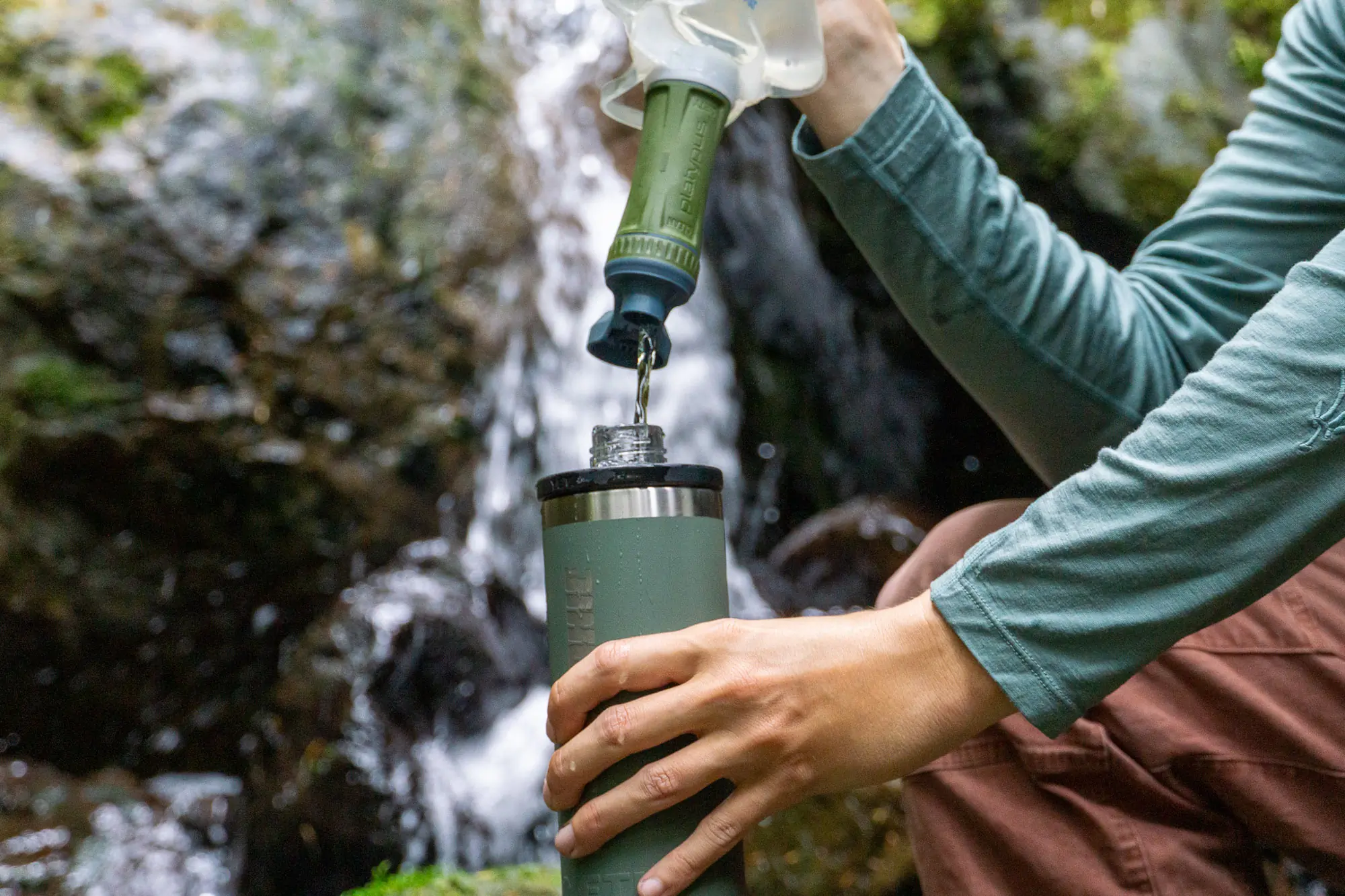
Best Overall Backpacking Water Filter: Platypus QuickDraw
If you’re looking for the Goldilocks of water filters, this is it. The Platypus QuickDraw has effectively addressed every minor annoyance hikers had with previous squeeze-style filters. During my trek through the North Cascades this summer, the QuickDraw was a revelation. It’s fast—clocking in at a consistent 3 liters per minute—and it features a "dual-thread" design that allows it to screw onto both Platypus reservoirs and standard plastic water bottles (like Smartwater).
What truly sets it apart for 2025 is the Integrity Test. If you suspect your filter froze overnight, you can perform a simple field test to check if the hollow fibers are damaged. It’s a peace-of-mind feature that I haven't seen executed this well on any other lightweight filter.
- Pros:
- Incredible flow rate that stays fast even after heavy use.
- Dual-cap design prevents "dirty water" from leaking into your pack.
- Tool-free cleaning; just shake it to restore flow.
- Cons:
- Proprietary threads are great, but it doesn't fit every brand of wide-mouth bladder.
Tech Specs:
- Weight: 2.9 oz (Filter only)
- Filter Type: Hollow Fiber
- Effective Against: Bacteria, Protozoa, Particulate
Best for Thru-Hiking: Sawyer Squeeze System
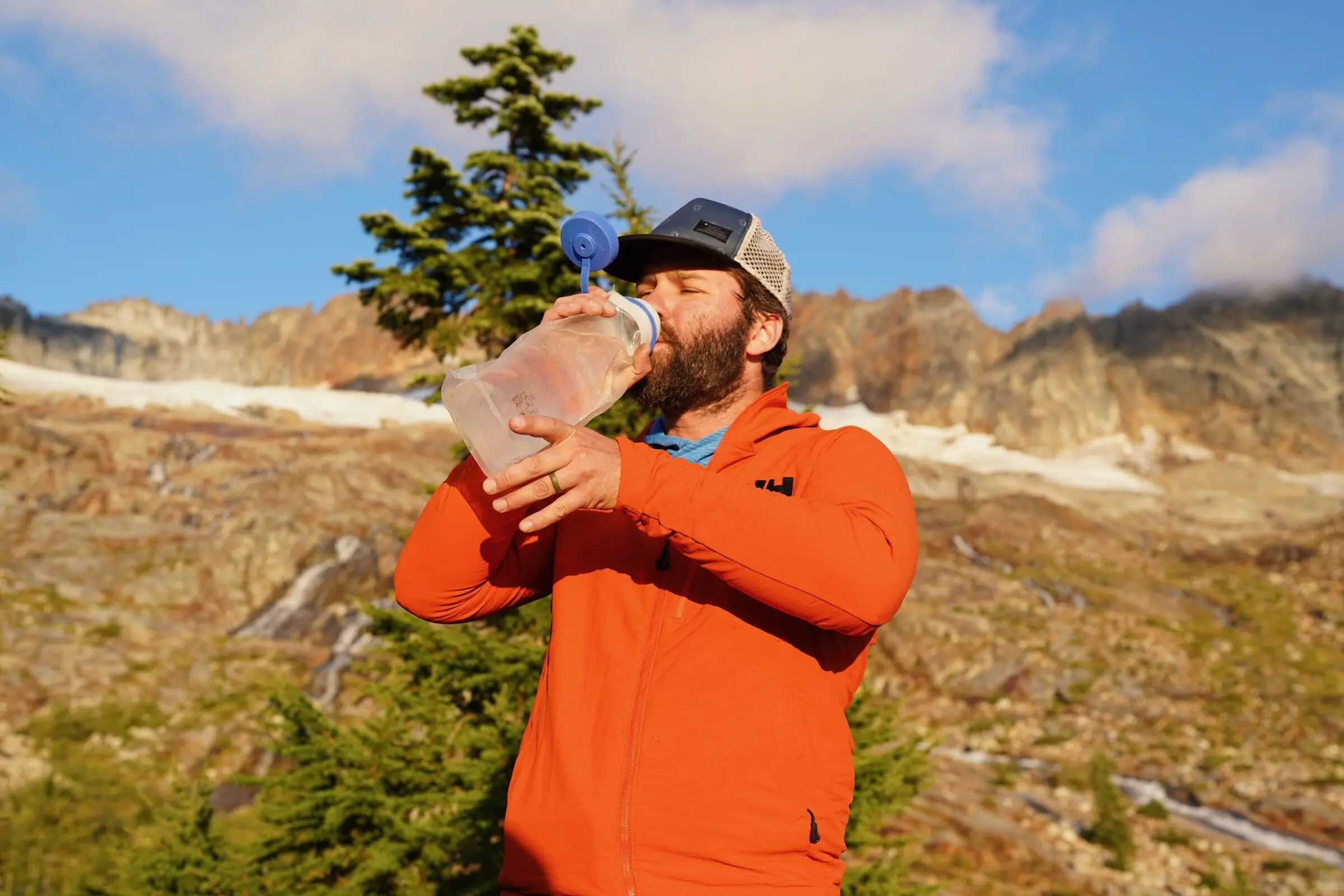
There is a reason why the Sawyer Squeeze is the most ubiquitous piece of gear on the Appalachian Trail. It is a tank. While newer filters might be flashier, the Sawyer’s 0.1-micron absolute hollow fiber membrane is rated for a lifetime of up to 1 million gallons. In our cost-analysis testing, the Sawyer offers the lowest cost-of-ownership at less than a penny per liter.
For 2025, I still recommend the "Standard" Squeeze over the Micro or Mini versions. The flow rate is significantly better and it’s less prone to clogging. To make this a pro-level setup, ditch the included Sawyer bags and pair the filter with a CNOC Vecto 2L bag. The wide-mouth opening of the CNOC makes scooping water from shallow puddles a breeze, and the threads are a perfect match for the Sawyer.
Expert Tip: To maintain that "day one" flow rate, you must backflush the Sawyer vigorously with the included syringe. Don't wait until it stops working; backflush every few days of active use.
- Pros:
- Unmatched longevity and durability.
- Extremely affordable over the long term.
- Versatile: Use as a squeeze, gravity system, or inline on a bladder.
- Cons:
- Included bags are prone to popping under pressure.
- Requires a syringe for effective cleaning.
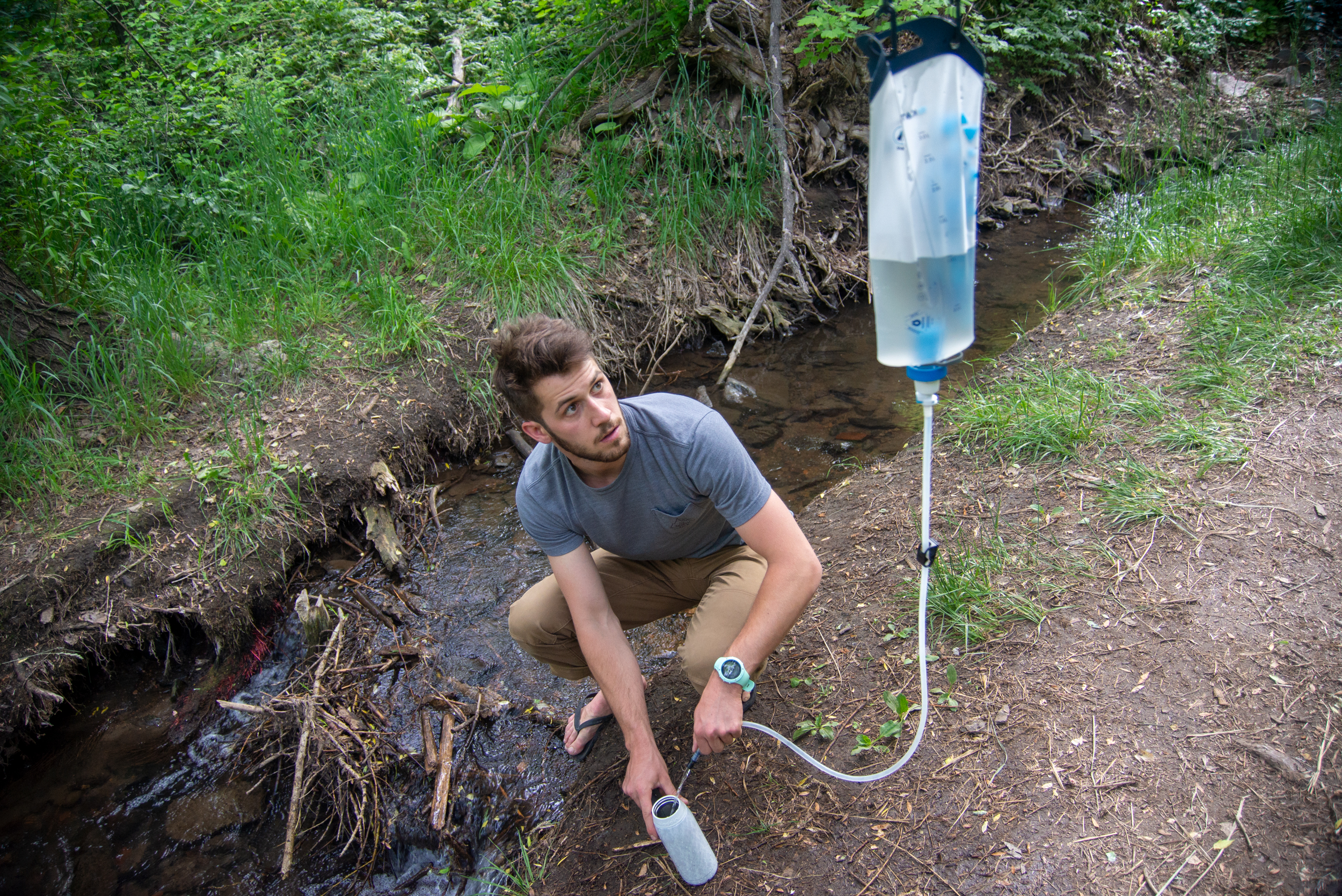
Best for Groups & Gravity Use: Platypus GravityWorks 4L
If you are hiking with a partner or a small group, stop squeezing and start hanging. The Platypus GravityWorks is the Cadillac of basecamp filtration. On a recent group trip in the Sierras, we'd roll into camp, fill the 4-liter "Dirty" bag, hang it from a pine branch, and walk away. By the time the tents were pitched, we had 4 liters of pristine water waiting in the "Clean" bag.
It’s an effortless system that saves your hands from the repetitive strain of squeezing bags for 20 minutes a day. The 2025 version features reinforced hanging straps and a more streamlined hose management system.
- Pros:
- Zero effort filtration.
- Massive capacity (8L total system).
- Fast flow for a gravity system (1.75 L/min).
- Cons:
- Heavy and bulky for solo hikers.
- Requires a tree or high point to function efficiently.
Best for International Travel: MSR Guardian Purifier
When I’m expeditions in regions like Southeast Asia or the Andes, I don't mess around with standard filters. You need a purifier. The MSR Guardian was originally designed for the military, and it shows. It uses an advanced hollow fiber system to remove viruses—something the Sawyer and QuickDraw cannot do.
The standout feature here is the self-cleaning mechanism. With every pump stroke, the system uses 10% of its water to flush the filter, meaning it never clogs, even in the siltiest, brownest river water you can find. It’s heavy and expensive, with a cost-per-liter of about $0.35 to $0.60 depending on cartridge life, but when the alternative is a hospital stay for Hepatitis A or Norovirus, it’s worth every cent.
- Pros:
- Removes viruses, bacteria, protozoa, and microplastics.
- Physically indestructible pump handle.
- Self-cleaning; no backflushing required.
- Cons:
- The most expensive and heaviest option on this list.
Best for Trail Running: Katadyn BeFree AC
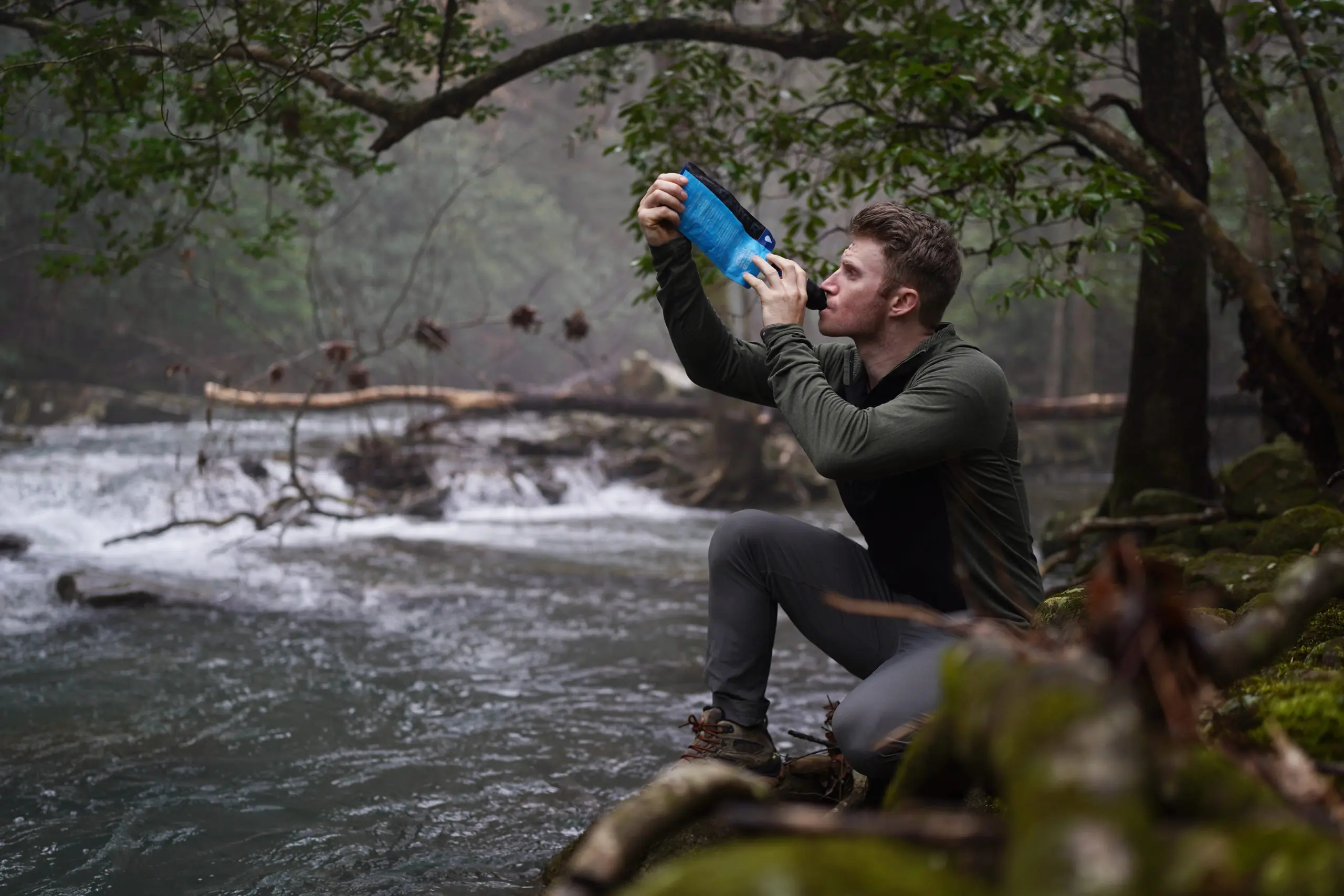
The Katadyn BeFree has long been the favorite for fast-packers due to its "collapsible flask" design. For 2025, Katadyn has introduced the AC (Activated Charcoal) version. Standard hollow fiber filters do nothing for the taste of the water; if your water source tastes like a swamp, it will still taste like a swamp after filtering. The BeFree AC adds a carbon element that significantly improves taste and reduces chemicals.
It is the fastest "drink-from-the-source" filter I’ve used. You simply scoop water into the soft flask, screw on the lid, and drink. However, be warned: the BeFree is more sensitive to silt than the Sawyer. If you are filtering muddy water, the flow rate will drop quickly.
- Pros:
- Ultralight and fits in a running vest pocket.
- The carbon filter makes "tundra water" taste like bottled spring water.
- Cons:
- Shortest lifespan of the bunch; requires frequent replacement.
Head-to-Head: Sawyer Squeeze vs. Platypus QuickDraw
This is the heavyweight matchup of 2025. Both are excellent, but they serve slightly different masters.
- Flow Rate: The QuickDraw wins hands-down. Out of the box, it is nearly 50% faster than the Sawyer.
- Maintenance: The QuickDraw can be cleaned by "shaking," whereas the Sawyer requires a backflush syringe. For convenience, QuickDraw wins.
- Durability & Lifespan: The Sawyer’s "million-gallon" rating is legendary. While the QuickDraw is durable, the Sawyer’s membrane is built for years of continuous abuse.
- Compatibility: The QuickDraw fits more bottle types natively. The Sawyer often requires adapters or specific plastic bottles.
The Verdict: If you are a weekend warrior or doing a 2-week trek, get the Platypus QuickDraw. If you are heading out for a 5-month thru-hike, the Sawyer Squeeze is still the more reliable long-term partner.
The Professional’s Buying Guide: How to Choose
Choosing a water system isn't just about weight; it's about understanding the biology of your environment.
Understanding Micron Ratings: Absolute vs. Nominal
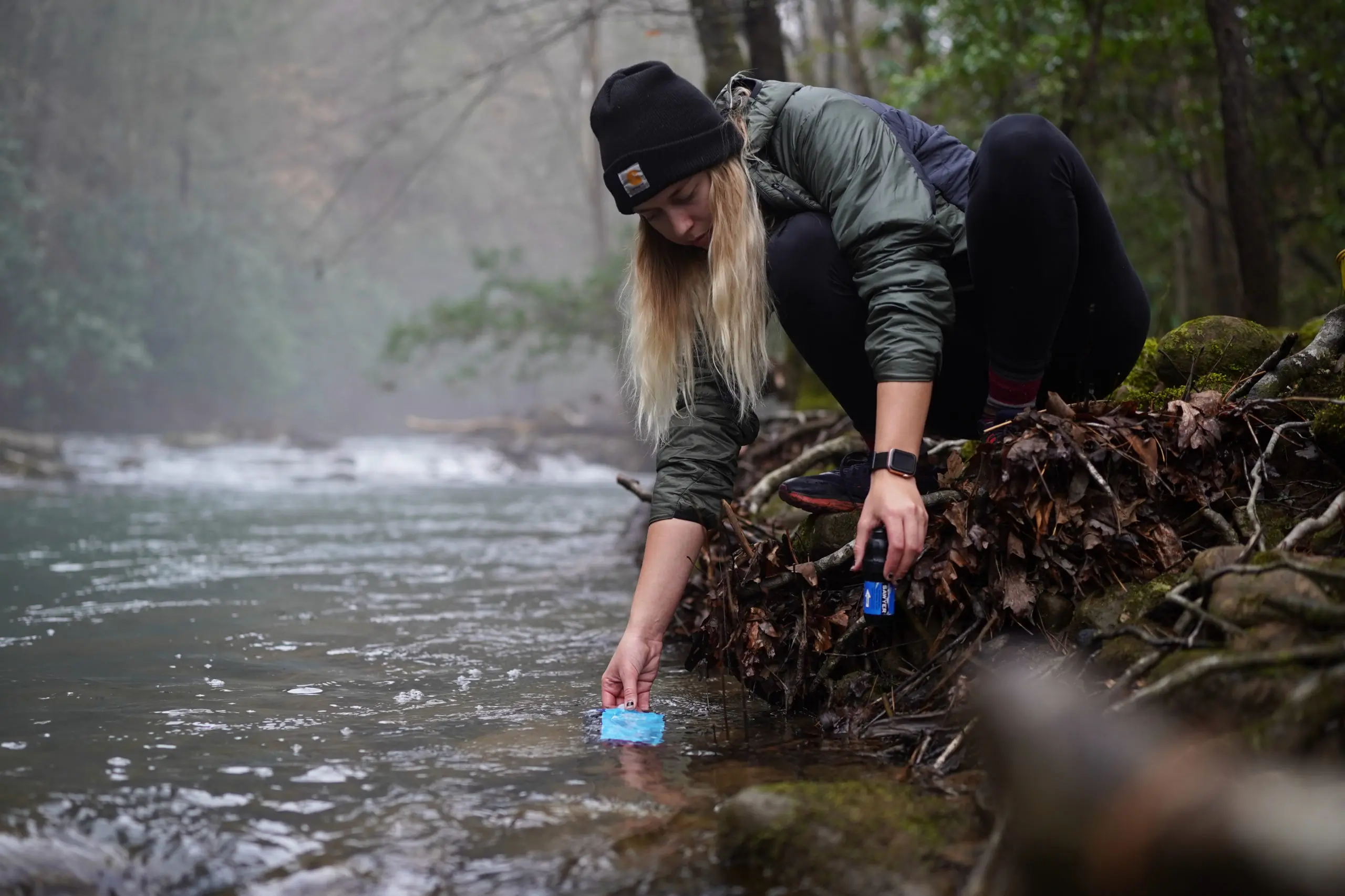
When you see a "0.1-micron" rating, look for the word Absolute. An "absolute" rating means that 100% of the pores are that size or smaller. A "nominal" rating means most of the pores are that size, but some might be larger, potentially letting nasty bugs like Cryptosporidium through. All the filters on this list use absolute ratings for your safety.
Filter vs. Purifier: When do you actually need virus protection?
In the North American backcountry, viruses are rarely a concern because they typically require a human host to spread. Standard filters are sufficient. However, if you are hiking near high-density human populations, agricultural runoff, or traveling to developing nations, a purifier is non-negotiable.
Weight vs. Convenience: Squeeze, Gravity, or Pump?
- Squeeze: Best for solo hikers who want to filter on the move.
- Gravity: Best for groups or those who hate the "work" of filtering.
- Pump: Best for drawing water from very shallow or difficult sources where you can't dip a bag.
FAQ
Q: Can I use my filter after it has frozen? A: Generally, NO. If your filter was wet and the temperature dropped below 32°F (0°C), the ice crystals could have punctured the delicate hollow fibers. The Platypus QuickDraw has an integrity test to check for this, but with most other filters, you should play it safe and replace it.
Q: Does boiling water work better than a filter? A: Boiling is the gold standard for killing everything (including viruses), but it is time-consuming and uses a lot of fuel. Use your filter for daily hydration and save boiling for emergencies or cooking.
Q: How often should I replace my filter? A: When the flow rate becomes "unbearably slow" even after backflushing, it's time for a new one. For a Sawyer Squeeze, this could be years; for a Katadyn BeFree, it might be every season.
Conclusion
Water is the heaviest thing in your pack, but it's also the most vital. In 2025, there is no excuse for carrying a heavy, slow, or unreliable filtration system. Whether you choose the lightning-fast Platypus QuickDraw for your weekend summits or the immortal Sawyer Squeeze for your cross-country odyssey, make sure you know how to maintain it.
Stay hydrated, stay safe, and I’ll see you at the next stream crossing.
Ready to upgrade your kit? Shop All Top-Rated Filters at REI →