Quick Facts
- Top Pick: The Gregory Maya 20 is our gold standard for 2025, offering an unmatched balance of adjustability and trail-to-town versatility.
- Heavy Duty Champion: For technical terrain and loads over 15 pounds, the Gregory Jade 28L dominates with its superior suspension and breathable back panel.
- Engineering Excellence: Our testing revealed that the Gregory Juno 24 holds the highest efficiency rating at just 1.29 ounces per liter of volume.
- Ergonomic Focus: True women-specific packs are defined by shorter back panels, narrower shoulder spacing, and an exaggerated S-curve harness to prevent chafing and improve weight distribution.
The Expert Verdict After putting over 80 models through the ringer on everything from Pacific Northwest scrambles to Appalachian humidity, our team has a clear winner. If you want one pack that does it all—from peak bagging to commuting—the Gregory Maya 20 is the best overall women's hiking daypack for 2025. However, if your adventures lean toward sunrise-to-sunset hauls or light overnights, the Gregory Jade 28L provides the heavy-duty support and ventilation you’ll need for those extra miles.
The Pursuit of the Perfect Fit: How We Tested
I’ve spent the better part of the last decade chasing horizons, and if there’s one thing I’ve learned, it’s that a bad pack can turn a five-star view into a one-star misery. To find the best women's hiking daypacks of 2025, our gear team didn't just look at spec sheets in a lab. We lived out of these packs. We pushed 80+ different models—both women-specific and unisex—to their absolute limits across varied terrain.
Our evaluation was built on five core metrics, weighted to reflect what actually matters when you’re five miles from the trailhead:
- Comfort (25%): We looked for hot spots, shoulder strain, and how the hip belt carries the load.
- Versatility (25%): Can it handle a technical scramble and a trip to the local coffee shop?
- Ease of Use (25%): How intuitive are the pockets? Can you reach your water bottle without being a contortionist?
- Weight-to-Volume Ratio (15%): A technical deep-dive into engineering efficiency.
- Construction Quality (10%): Testing the durability of zippers, mesh, and denier ratings.
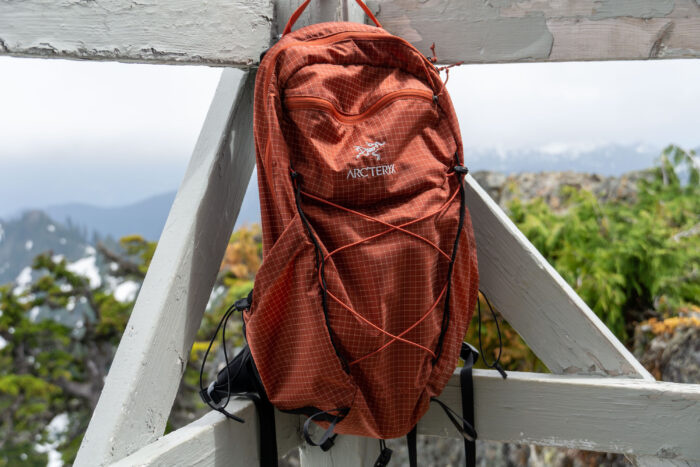
Best Overall Women's Daypack: Gregory Maya 20
If I had to pick one pack to live in for a year, it would be the Gregory Maya 20. This pack is the Swiss Army knife of the hiking world. During our field tests, the Maya 20 consistently rose to the top because it solves the biggest problem in women's gear: the "one size fits most" myth.
With a highly adjustable back panel (spanning 17" to 19"), it caters to a wide range of torso lengths, ensuring the weight sits on your hips rather than pulling on your shoulders. The BioStretch harness and hip belt are game-changers; they move with your body’s natural rhythm instead of fighting against it. We were particularly impressed by the "webbing keepers"—those small elastic loops that keep excess straps from flapping in the wind. It’s a small detail, but it reflects the thoughtful engineering Marcus Rivera-approved gear should have.
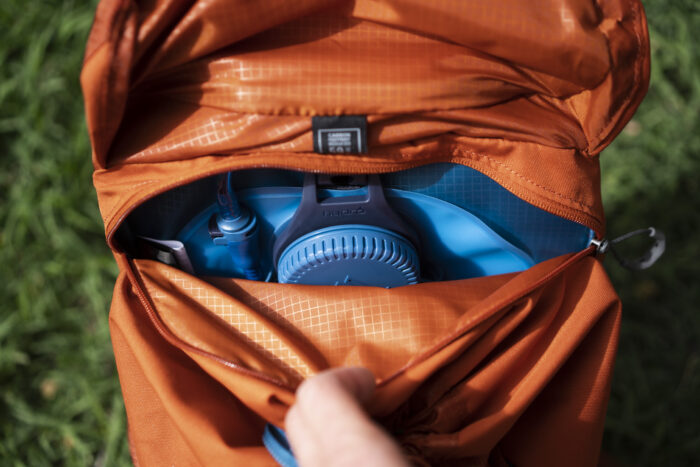
Performance on the Trail We found the Maya 20 thrives with loads up to 15 pounds. It feels incredibly light—boasting a 1.5 oz/L weight-to-volume ratio—yet it’s rugged enough to handle limestone scrapes. One of the standout features for the modern adventurer is the hydration sleeve. While it's designed for a 3L reservoir, our testers found it fits a 13-inch laptop perfectly, making this our top choice for travelers who want a single bag for the plane and the peak.
Pros:
- Exceptional adjustability for various body types.
- BioStretch harness provides a "hugged-in" feel.
- Transitions seamlessly from trail to travel.
Cons:
- The close-contact back panel can get warm during high-exertion summer climbs.
- 20 liters might be tight for those who carry "just in case" heavy layers.
Check Price on Gregory Maya 20 →
Best for Long Hikes & Heavy Loads: Gregory Jade 28L
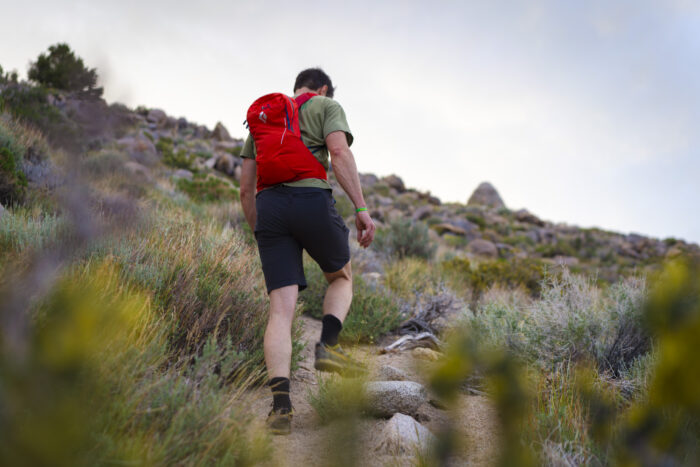
Sometimes, 20 liters just isn't enough. When your day involves unpredictable mountain weather, extra liters for a hardshell, a Jetboil, and a first-aid kit are non-negotiable. This is where the Gregory Jade 28L earns its keep.
While the Maya is about agility, the Jade is about support. The standout feature here is the "trampoline" style back panel. By suspending the pack away from your spine with a tensioned mesh, Gregory has created a chimney effect that dumps heat instantly. In our testing on 90-degree days in the high desert, the Jade 28L was the only pack that kept our shirts (mostly) dry.
Load Management For loads exceeding 15 or 20 pounds, the Jade’s plush hip belt is a revelation. It’s thick, padded, and wraps around the iliac crest to transfer weight directly to your legs. The U-zip main opening is another win; instead of digging through the top, you can peel the pack open like a suitcase to find that stray glove at the bottom.
Pros:
- Unrivaled back ventilation.
- Heavy-duty suspension for 20lb+ loads.
- U-zip access makes organization a breeze.
Cons:
- Higher base weight compared to minimalist daypacks.
- Can feel "overbuilt" for short, two-hour strolls.
Check Price on Gregory Jade 28L →
Best Efficiency (Weight-to-Volume): Gregory Juno 24
For the gear nerds who count every gram, the Gregory Juno 24 is a masterclass in efficiency. In our data analysis of the best women's hiking daypacks of 2025, the Juno 24 achieved the highest efficiency rating, coming in at a staggering 1.29 ounces per liter.
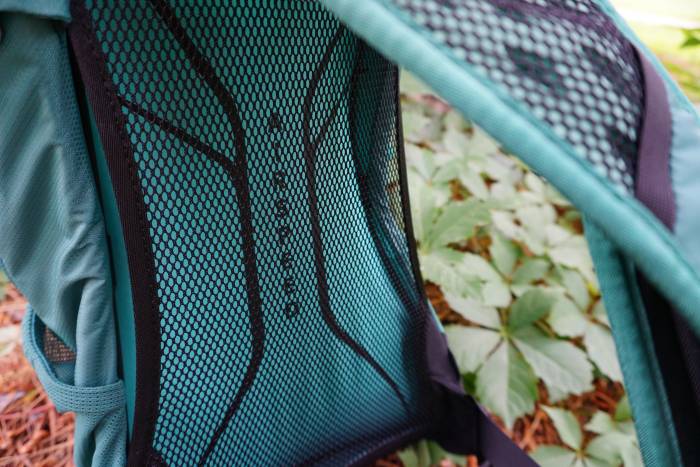
It hits the "Goldilocks" zone of capacity. At 24 liters, it’s large enough for a full day of winter hiking but remains sleek enough to never feel bulky. The Juno utilizes a moisture-wicking VaporSpan ventilated back panel that uses a proprietary leaf-spring lower back design. This ensures the pack remains stable even when you’re navigating technical "off-the-beaten-path" terrain that requires high mobility.
Pros:
- Best-in-class weight-to-volume ratio.
- Integrated rain cover (a huge value add).
- Large, zippered hip belt pockets that actually fit a modern smartphone.
Cons:
- Fixed torso length (ensure you measure before buying).
- Compression straps can occasionally interfere with side bottle pockets.
Check Price on Gregory Juno 24 →
Performance Comparison: 2025's Top Contenders
| Model | Capacity | Weight Ratio | Torso Sizing | Best Use |
|---|---|---|---|---|
| Gregory Maya 20 | 20L | 1.50 oz/L | Adjustable (14"-19") | All-around versatility & travel |
| Gregory Jade 28L | 28L | 1.85 oz/L | Adjustable (15"-20") | Long days, heavy loads, overnights |
| Gregory Juno 24 | 24L | 1.29 oz/L | Fixed (One Size) | Lightweight efficiency & ventilation |
| Osprey Tempest 20 | 20L | 1.62 oz/L | Adjustable | Fast and light technical trails |
Why Choose a Women’s Specific Pack?
You might wonder: Does the gender of a backpack actually matter? After testing 80+ models, the answer is a resounding yes—but not for the reasons you might think. It’s not about the color; it’s about the geometry of the human frame.
Women’s specific daypacks are engineered with three critical differences:
- Shorter Torso Lengths: Women generally have shorter torsos relative to their height. A pack that is too long will sit too low, causing the weight to pull away from your center of gravity.
- Narrower Shoulder Spacing: Unisex packs often have wide-set straps that can slide off narrow shoulders or cause chafing in the armpits. Women-specific models move the anchor points closer together.
- The S-Curve Harness: Unlike the straight straps of a unisex pack, women's straps feature an exaggerated "S" shape. This allows the straps to curve around the chest rather than crushing it, preventing pressure points and maximizing comfort on long climbs.
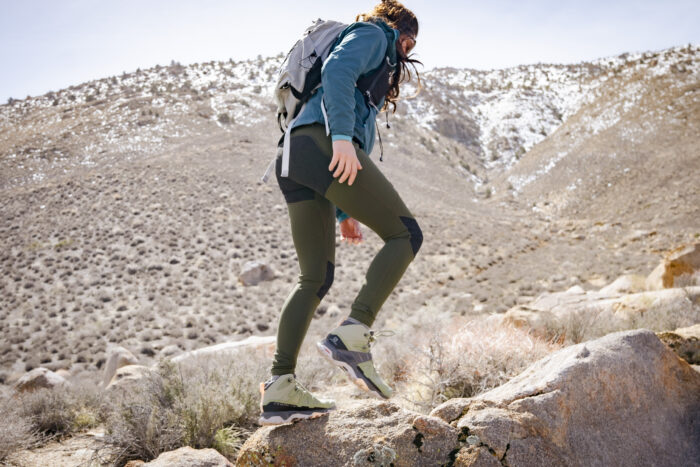
Buying Guide: How to Find Your Perfect Fit
Finding the right pack is like finding the right pair of boots; the "best" pack on paper is useless if it doesn't fit your body. When shopping for lightweight women's daypacks for hiking, keep these three factors in mind:
1. Torso Length vs. Waist Size
Ignore your height. I’ve seen 5'10" women with short torsos and 5'2" women with long torsos. To measure, find your C7 vertebra (the bump at the base of your neck) and your iliac crest (the top of your hip bones). Have a friend measure the distance between them along your spine. This is your torso length. Most women-specific packs fall between 14 and 19 inches.
2. Activity Profiling
- Peak Bagging: Look for high "Weight-to-Volume" efficiency (like the Juno 24) and external attachment points for trekking poles.
- Casual Trails: Prioritize comfort and easy access. Large stretch-mesh pockets on the front are great for stuffing a layer quickly.
- Technical Terrain: You want a pack that sits close to your back (like the Maya 20) to keep your center of gravity stable during scrambles.
3. Material Durability (The Denier Factor)
Don't get blinded by "ultralight" claims if it means sacrificing durability. We recommend a mix. Look for packs using 100D (Denier) Nylon for the main body to save weight, but ensure the bottom panel is at least 210D or 420D. This is the area that will see the most abuse when you drop your pack on granite for a lunch break.
Marcus’s Pro Tip: Always check for an integrated rain cover. While many high-end packs use DWR (Durable Water Repellent) coatings, nothing beats a physical nylon cover when a surprise Sierra storm hits. If the pack doesn't come with one, budget an extra $20 to buy it separately.
FAQ
Q: Can I use a 28L pack as a carry-on for flights? A: Absolutely. Most airlines allow bags up to 45 linear inches (length + width + height). The Gregory Jade 28L fits comfortably under most seats or in overhead bins, making it a fantastic "one-bag" travel companion for hiking trips.
Q: Is the Gregory Maya 20 vs Jade 28 review a matter of capacity only? A: No. While capacity is the obvious difference, the suspension systems are fundamentally different. The Maya is a "body-hugging" pack meant for agility. The Jade is a "suspended" pack meant for airflow and heavy weight distribution. Choose the Maya for speed and the Jade for comfort under load.
Q: How do I clean my hiking daypack? A: Never put it in a washing machine. The agitation can damage the foam and the heat can delaminate the waterproof coatings. Use lukewarm water, a mild soap (like Nikwax Tech Wash), and a soft brush. Hang it to dry in the shade—UV rays are the enemy of nylon longevity.
Ready to Hit the Trail?
The right gear doesn't just carry your stuff; it empowers you to go further, climb higher, and stay out longer. Whether you choose the versatile Gregory Maya 20, the supportive Jade 28L, or the ultra-efficient Juno 24, you’re investing in a piece of equipment that has been vetted by experts and tested by the elements.
Pick your pack, lace up your boots, and I’ll see you out there.