Quick Facts
- Heat Output: Dual 14,000 BTU burners provide a massive 40% increase in power over previous models, making it a beast for searing and rapid boiling.
- Boil Time: In standard conditions, this stove clocks a 1-liter water boil in exactly 3 minutes.
- Cold Weather Performance: Thanks to a regulated burner system, it maintains consistent flame pressure in temperatures as low as 20°F–30°F.
- Durability: After 4 years of heavy use, the powder-coated steel chassis remains rust-free and structurally sound, though the piezo ignitor has become temperamental.
- The Verdict: A premium "buy it once" workhorse for serious car campers and group expeditions who prioritize cooking speed over ultra-lightweight portability.
I’ve spent the better part of a decade waking up in the back of a truck or a pitched tent across the Western United States. If there’s one thing I’ve learned from 48 months of testing the GSI Selkirk 540+, it’s that not all BTUs are created equal. When you're standing on a frozen ridgeline in Idaho at 6:00 AM, desperate for coffee, you don’t want a "compact" stove; you want a flamethrower.
The GSI Selkirk 540+ has been my constant companion through snowy Montana winters and dusty Utah summers. It is, quite simply, the most reliable dual-burner camp stove I’ve ever beaten up. But it isn't perfect. After four years of searing steaks and simmering stews for groups of six, I’ve found the limits of this 10-pound steel briefcase. If you are tired of weak flames and "simmer-only" budget stoves, this review is for you.
Technical Specifications & Key Features
When comparing the GSI Selkirk 540+ vs. Coleman camp stoves or other entry-level options, the difference is immediately apparent in the build quality. The Selkirk 540+ is built like a piece of industrial equipment rather than a backyard accessory. It utilizes a 14,000 BTU per burner output, which is a significant jump from the 10,000 BTU industry standard found on cheaper models.
| Specification | Details |
|---|---|
| BTU Output | 28,000 Total (14,000 per burner) |
| Weight | 10 lbs (4.5 kg) |
| Dimensions | 21.4" x 12.9" x 3.8" |
| Boil Time | 3 minutes for 1 Liter |
| Ignition | Push-button Piezo |
| Material | Powder-coated steel, Nickel-Chrome supports |
The stove’s footprint is generous, comfortably fitting two 10-inch pans side-by-side without them fighting for space. The nickel-chrome cooking grate is heavy-duty, designed to support heavy cast iron—a must-have for my style of "overland" cooking.
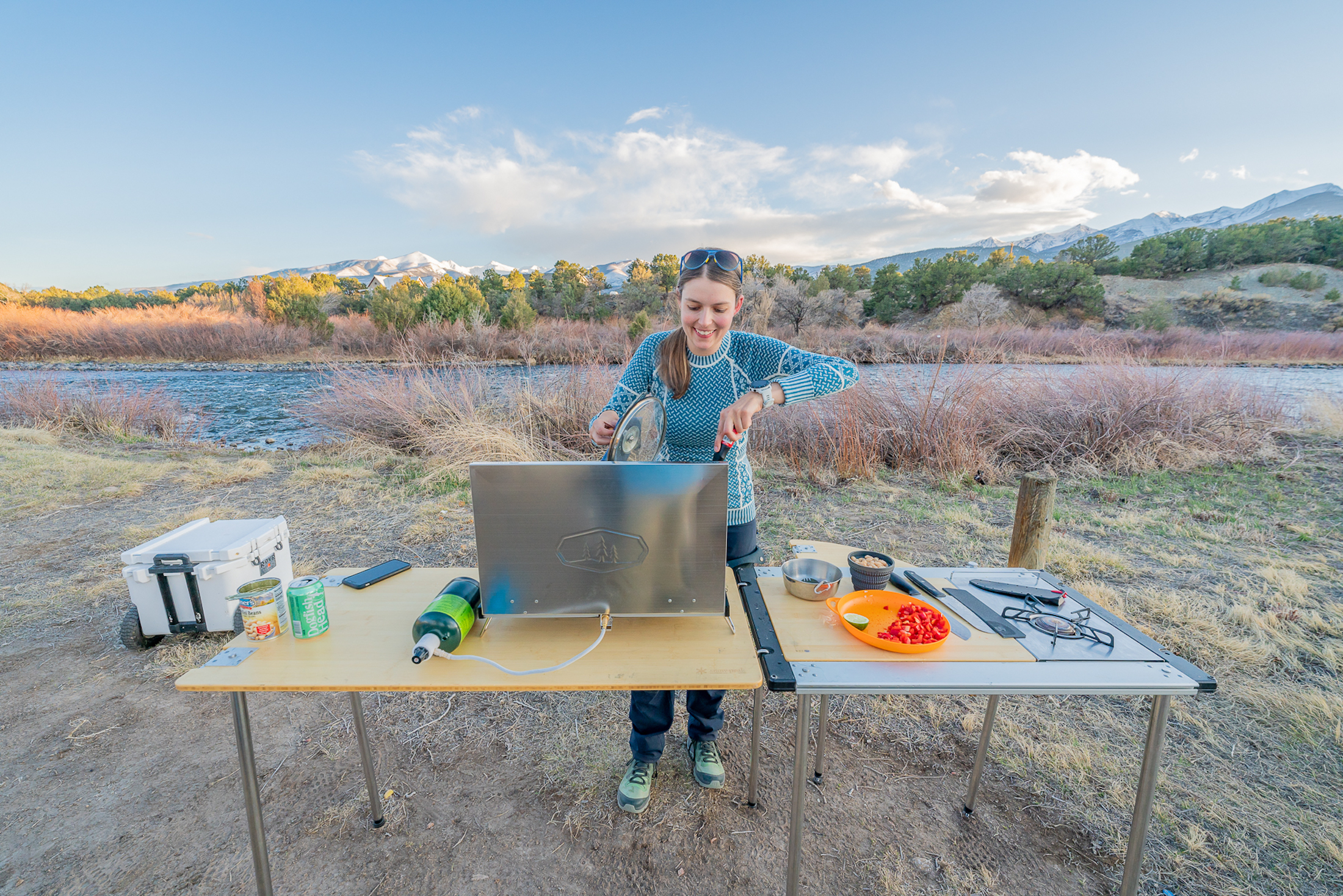
Field Test: 14,000 BTUs in the Real World
The core reason anyone buys the 540+ is for the heat. GSI claims a 40% increase in output compared to their standard Selkirk model, and in the field, you feel every bit of it.
High-Heat Performance: Searing and Stir-Frying
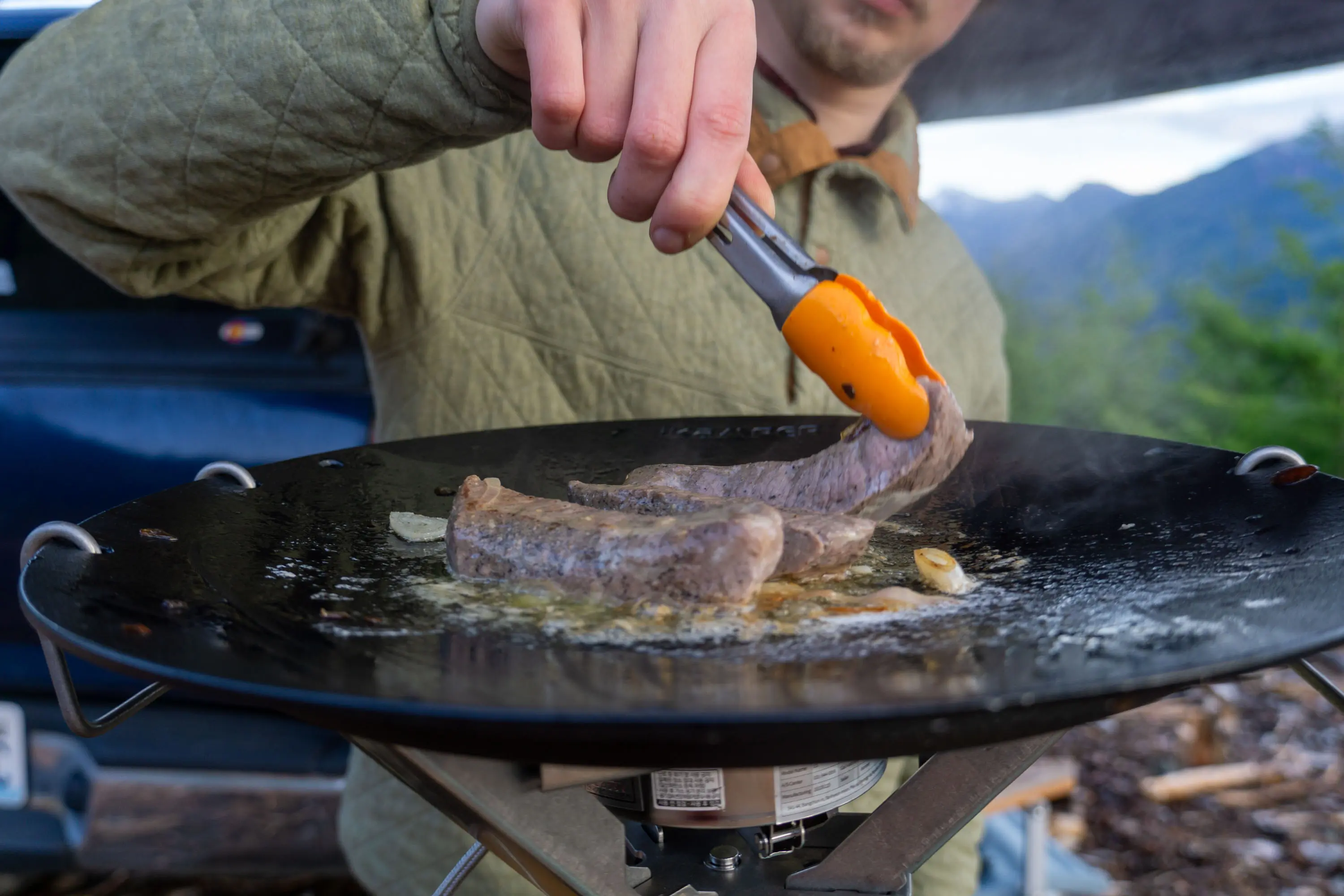
Most camp stoves struggle with heat recovery. You drop a cold ribeye onto a pan, and the temperature plummets, resulting in a grey, steamed steak instead of a crusty sear. The 540+ doesn't have that problem. I’ve used it to stir-fry vegetables at high heat where the wok stayed screaming hot, a feat usually reserved for home ranges.
Cold Weather Performance
One of the biggest selling points for me was the GSI Selkirk 540+ performance in cold weather. Standard propane stoves often "choke" when the mercury dips below freezing because the pressure in the canister drops. While testing in the High Sierras during a late October storm (temperatures hovering around 25°F), the 540+ maintained a consistent, blue flame. The regulator does an admirable job of managing gas flow even as the canister frosts over.
The Simmer Challenge
High heat is easy; low heat is hard. A common complaint with high-BTU stoves is that they only have two settings: "Off" and "Blast Furnace." The 540+ is better than most, but it takes a delicate touch. You can achieve a decent simmer for a pot of chili, but if you’re trying to cook delicate eggs on a thin aluminum pan, you’ll need to be vigilant. The control knobs have about a half-turn of "real" adjustment before they move into high-gear.
Field Note: If you're cooking something delicate like a bechamel sauce or slow-scrambled eggs, I recommend using a heat diffuser plate or a heavy-bottomed cast iron pan to help manage the 14,000 BTU output.
Long-Term Reliability: 4 Years of Wear and Tear
Four years is a long time for a piece of gear to live in the back of a bouncing Toyota Tacoma. I haven't been gentle with this stove. It has been rained on, dropped once on a gravel pull-out, and covered in more bacon grease than I care to admit.
The Piezo Ignitor: The Only Weak Link
If there is one "honest flaw" I have to report, it’s the ignitor. For the first two years, it was flawless. In years three and four, it became... temperamental. Occasionally, it takes four or five clicks to catch, and in damp weather, it sometimes refuses to spark at all. This is a common issue across almost all GSI Selkirk 540+ reviews. Pro tip: Always carry a long-neck lighter or a pack of waterproof matches. Don't let a $5 piezo part stand between you and your morning caffeine.
Physical Durability
Beyond the ignitor, the construction is bombproof. The powder-coated steel has resisted rust remarkably well, even after being stored in a damp garage for months. The latches are still tight, and the handle—which is integrated into the frame—hasn't wobbled once.
Cleaning is another high point. The stainless steel drip tray catches the inevitable boil-overs, and because the grates are removable, I can wipe the whole thing down in under a minute with a damp rag. After four years, it still looks 90% new once the dust is wiped off.
Comparison: GSI Selkirk 540+ vs. The Competition
If you are shopping in the $150–$180 price range, you are likely looking at three main contenders: GSI, Camp Chef, and Coleman.
GSI Selkirk 540+ vs. Camp Chef Everest 2X
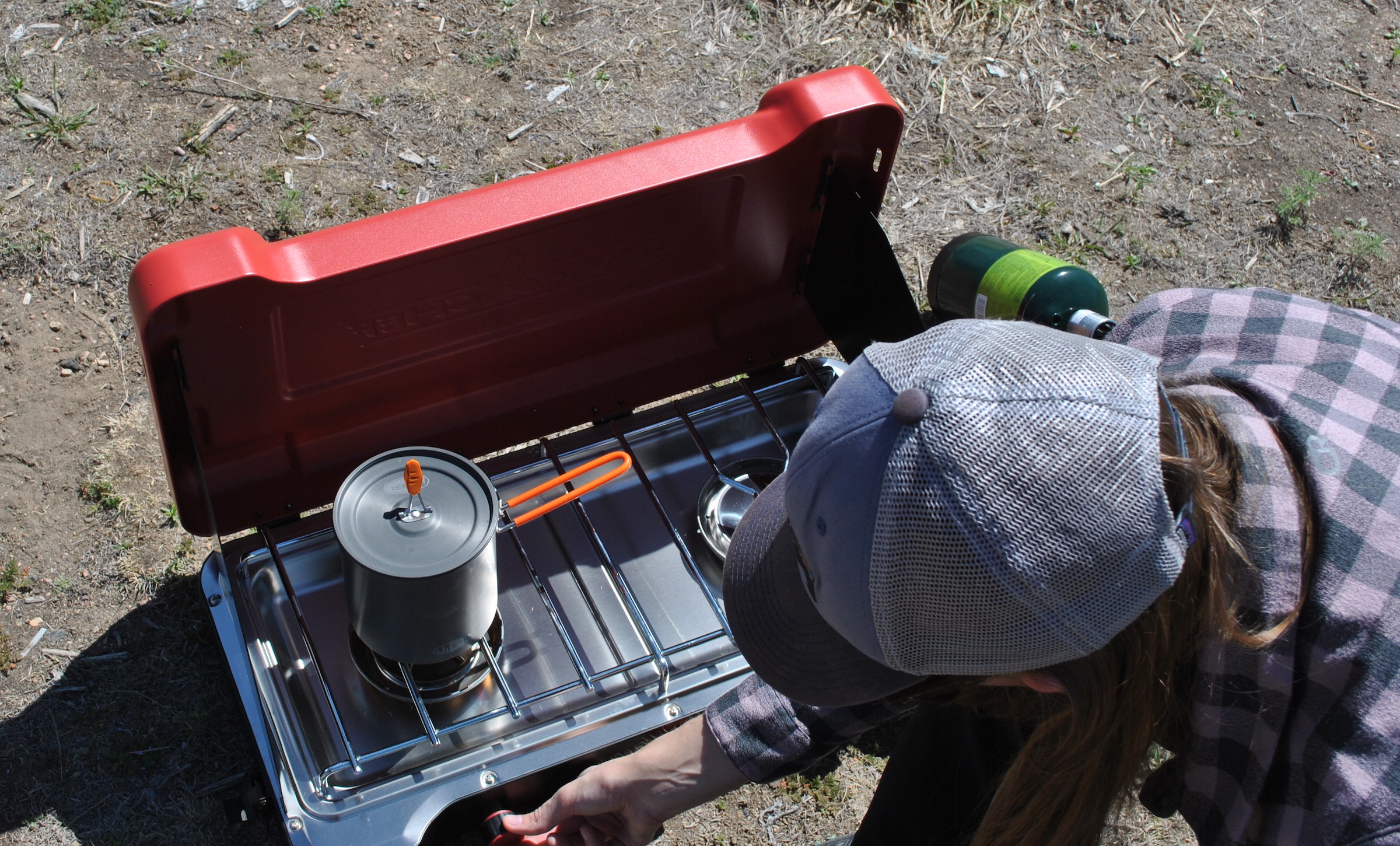
This is the closest rivalry. Both offer high-BTU outputs. The Camp Chef Everest is a legend in the community, but I find the GSI Selkirk offers a more "finished" feel. The Selkirk’s exterior is sleeker and fits into tight storage drawers more easily than the slightly bulkier Camp Chef.
GSI Selkirk 540+ vs. Coleman Cascade
The Coleman is the budget king. It’s significantly cheaper, but you feel the difference in the wind. The Coleman's windscreens are often flimsy, and the 10,000 BTU burners struggle when the wind kicks up or the temperature drops. If you camp twice a year in the summer, get the Coleman. If you camp every month, the GSI is worth the upgrade.
GSI vs. Modular Systems (Jetboil Genesis)
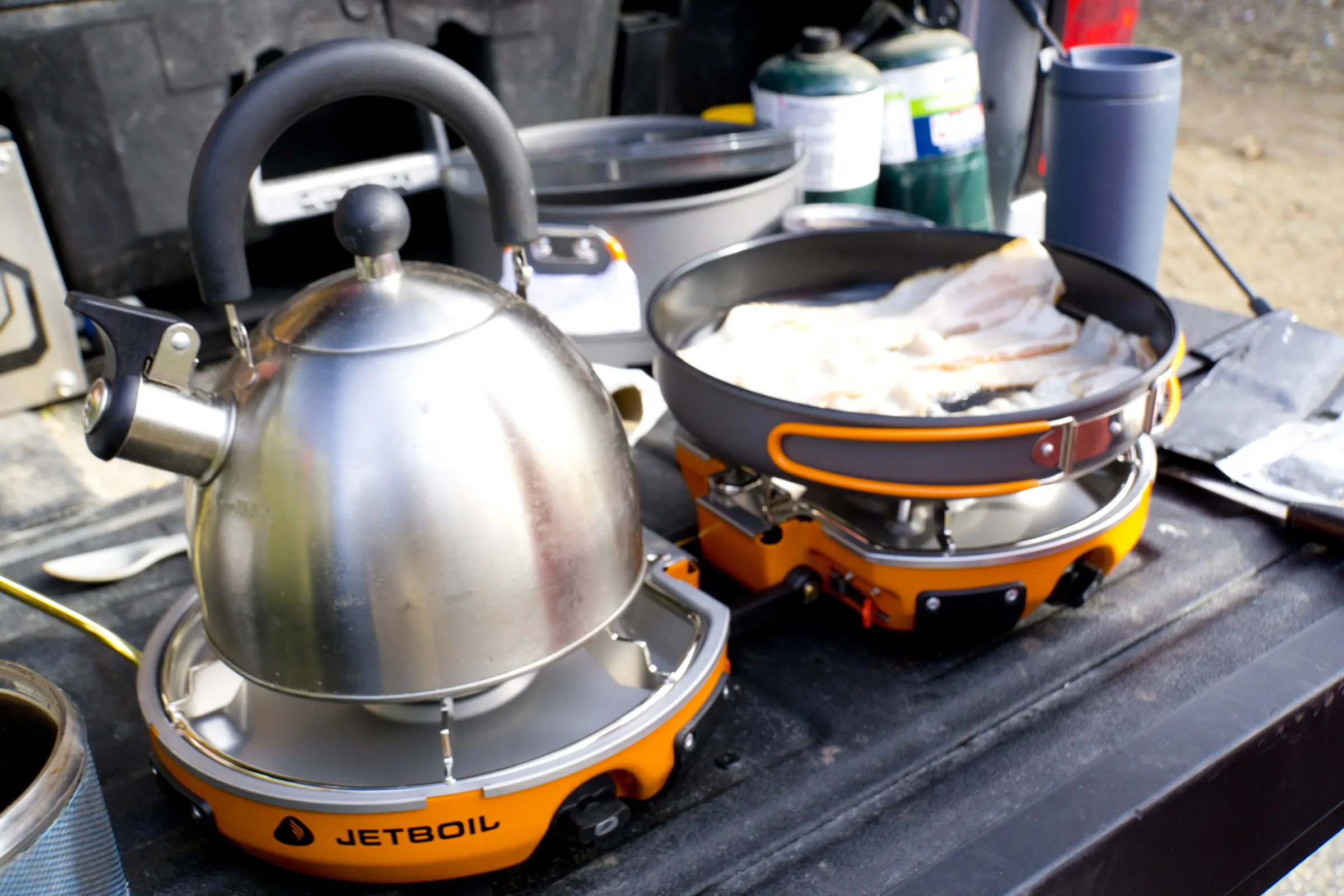
Some campers prefer the "clamshell" modular designs like the Jetboil Genesis Basecamp. While those are incredibly compact, they lack the "briefcase" protection of the Selkirk. In high winds, the Selkirk’s built-in windscreens are superior.
Wind Protection and Setup
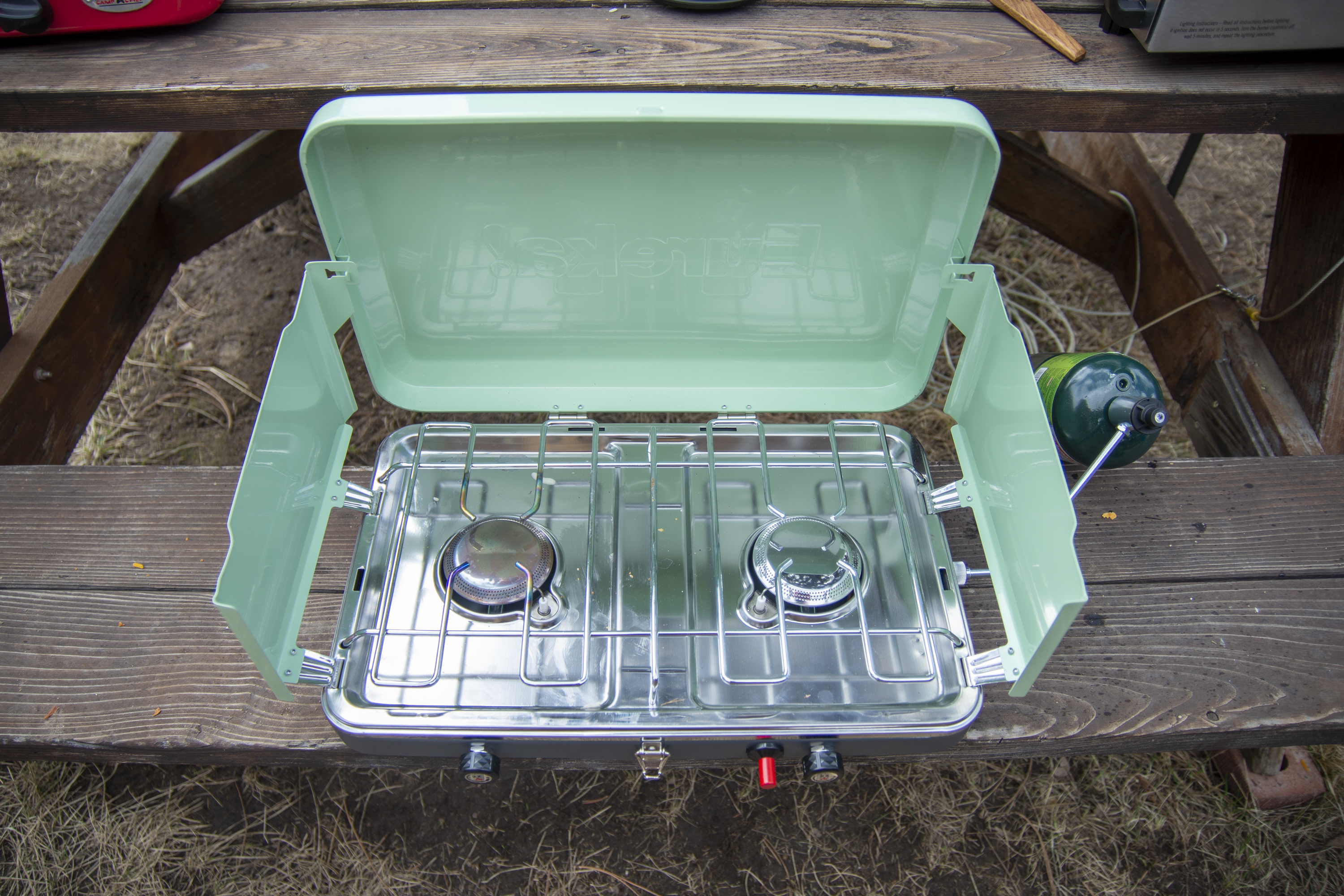
One of the most underrated features of the Selkirk 540+ is the wraparound windscreen. It fastens to the lid with simple wire clips. While they feel a bit low-tech, they work. I’ve cooked in 20mph gusts in the Mojave Desert, and while the flame flickered, it never blew out.
Setup is a 30-second affair. Flip the latches, open the lid, clip the windscreens, and screw in the regulator. One minor gripe: the regulator pipe is quite stiff when new, which can make it a little tricky to align with the propane bottle, but it loosens up after a dozen uses.
Final Thoughts: A Workhorse with One Flaw
After four years of testing, the GSI Selkirk 540+ remains my top recommendation for anyone who takes car camping seriously. It solves the two biggest frustrations of outdoor cooking: slow boil times and cold-weather failure.
Yes, the piezo ignitor might eventually fail you, and yes, it’s a bit heavy at 10 pounds. But when you are feeding a hungry group of friends after an 18-mile hike, or trying to make coffee while the frost is still thick on your windshield, you will be glad you have those 14,000 BTUs at your fingertips. It’s an investment in better camp meals and less time waiting for the water to boil.
FAQ
Q: Can I use a large 20lb propane tank with the GSI Selkirk 540+? A: Yes! While it comes with a regulator for the standard 1lb green canisters, you can easily use an adapter hose to connect it to a larger 20lb tank. This is actually my preferred setup for week-long trips.
Q: Is the GSI Selkirk 540+ too powerful for small pots? A: Not necessarily, but you need to be careful. Because the burner head is wide, the flames can wrap around the sides of a very small backpacking pot. It’s best used with standard 8" to 12" camp cookware.
Q: How do I fix the piezo ignitor if it stops working? A: Usually, the "sparker" wire just needs to be bent slightly closer to the burner holes. However, if the internal crystal is dead, you're better off just using a manual lighter. It’s a common wear-and-tear item on almost all propane stoves.
Q: Does it come with a carry bag? A: No, the stove is designed to be its own carry case with a built-in handle. However, GSI and third-party brands sell padded bags if you want to protect the powder-coated finish from scratches in your truck bed.